
Appeal expected after judge rules in city’s favor in soda tax lawsuit

The No on Z campaign mailed fliers to Santa Cruz voters, sent people door to door and blanketed social media and TV with advertisements ahead of the Nov. 5, 2024 election. (Photo collage by Jesse Kathan)
SANTA CRUZ >> The City of Santa Cruz has prevailed in a lawsuit that challenged its voter-approved sugary beverage tax after a Sacramento Superior Court judge denied a petition from the California Grocers Association, the American Beverage Association and other industry groups.
City voters approved Measure Z in November 2024 with more than 52% of the vote, in defiance of a state law that sought to ban local authorities from implementing soda taxes. At the time of the election, city leaders said a lawsuit was all but guaranteed if voters approved the tax — and were willing to take on the fight.
(function() { window.mc4wp = window.mc4wp || { listeners: [], forms: { on: function(evt, cb) { window.mc4wp.listeners.push( { event : evt, callback: cb } ); } } } })(); Stay informed on Santa Cruz County’s biggest issues. Santa Cruz Local’s newsletter breaks down complex local topics and shows residents how to get involved. Email address:mc4wp.forms.on('subscribed', function(form) { // gtag.js if(form.id == '6954') { gtag('event', 'subscribe', {'event_category': 'newsletter_prompt', 'event_label':'top_of_story'}); } }); Leave this field empty if you're human:
Beverage corporations including Coca-Cola Co., PepsiCo Inc. and Red Bull poured in more than $1 million dollars to oppose Measure Z and sent campaign mailers warning voters that if it was adopted it would lead to costly litigation from city coffers.
The judge’s ruling asserted that the state law, The Keep Groceries Affordable Act of 2018, does not prevent local municipalities like Santa Cruz from adopting a soda tax because the issue is not a statewide concern, the litmus test for when state law can override local charters.
In a press release sent to media June 30, Santa Cruz Vice Mayor Shebreh Kalantari-Johnson wrote that “the court’s ruling sends a clear message: local democracy can withstand even the deepest-pocketed opposition.”
The release stated that an appeal is expected. Once the court officially files the judge’s decision, the plaintiffs will have 60 days to file an appeal.
Questions or comments? Email info@santacruzlocal.org. Santa Cruz Local is supported by members, major donors, sponsors and grants for the general support of our newsroom. Our news judgments are made independently and not on the basis of donor support. Learn more about Santa Cruz Local and how we are funded.
Learn about membership Santa Cruz Local’s news is free. We believe that high-quality local news is crucial to democracy. We depend on locals like you to make a meaningful contribution so everyone can access our news. Learn about membershipThe post Appeal expected after judge rules in city’s favor in soda tax lawsuit appeared first on Santa Cruz Local.
Letter to the editor: Second Harvest helps nourish the American Dream
In a letter to the editor, the CEO of Second Harvest Food Bank Santa Cruz County welcomes Independence Day and notes her organization’s role in nourishing the American Dream.
Capitola affordable housing advances, construction expected by November

A proposal for 52 homes at 1098 38th Ave. could be constructed by May 2028. (Tyler Maldonado — Santa Cruz Local file)
CAPITOLA >> A proposal for 52 below-market-rate homes beside the Santa Cruz Branch Rail Line in Capitola is expected to break ground in November after its developer secured funding earlier this year.
The property at 1098 38th Ave. is the former site of a convalescent home that has sat empty for years. Foster City-based nonprofit developer MidPen Housing Corp. is behind the project that was first put forward in 2022.
The three-story project is expected to break ground in November and could finish in spring 2028. It is set to include four studios, 21 one-bedroom homes, 14 two-bedroom homes and 13 three-bedroom homes. Eligible renters must earn 60% of area median income or less, according to state-set income limits.
(function() { window.mc4wp = window.mc4wp || { listeners: [], forms: { on: function(evt, cb) { window.mc4wp.listeners.push( { event : evt, callback: cb } ); } } } })(); Stay informed on Santa Cruz County’s biggest issues. Santa Cruz Local’s newsletter breaks down complex local topics and shows residents how to get involved. Email address:mc4wp.forms.on('subscribed', function(form) { // gtag.js if(form.id == '6954') { gtag('event', 'subscribe', {'event_category': 'newsletter_prompt', 'event_label':'top_of_story'}); } }); Leave this field empty if you're human:
About half of the homes are expected to be filled from the Housing Authority of the County of Santa Cruz’s waitlist for recipients of a Housing Choice Voucher, formerly called Section 8. The remaining units could be filled from a lottery and waitlist administered by MidPen Housing, but no interest list has yet been established.
In May, the California Tax Credit Allocation Committee awarded the project roughly $34 million in tax credits, an essential source of funding for low income housing development. The project is now fully funded, said MidPen Housing Senior Vice President Joanna Carman.
See more housing projects and updates on Santa Cruz Local’s housing tracker.

Nonprofit developer MidPen Housing has secured financing for 52 units of affordable housing at 1098 38th Ave. in Capitola. (Naomi Friedland — Santa Cruz Local file)
Questions or comments? Email info@santacruzlocal.org. Santa Cruz Local is supported by members, major donors, sponsors and grants for the general support of our newsroom. Our news judgments are made independently and not on the basis of donor support. Learn more about Santa Cruz Local and how we are funded.
Learn about membership Santa Cruz Local’s news is free. We believe that high-quality local news is crucial to democracy. We depend on locals like you to make a meaningful contribution so everyone can access our news. Learn about membershipThe post Capitola affordable housing advances, construction expected by November appeared first on Santa Cruz Local.
Santa Cruz County robotics team captures world championship
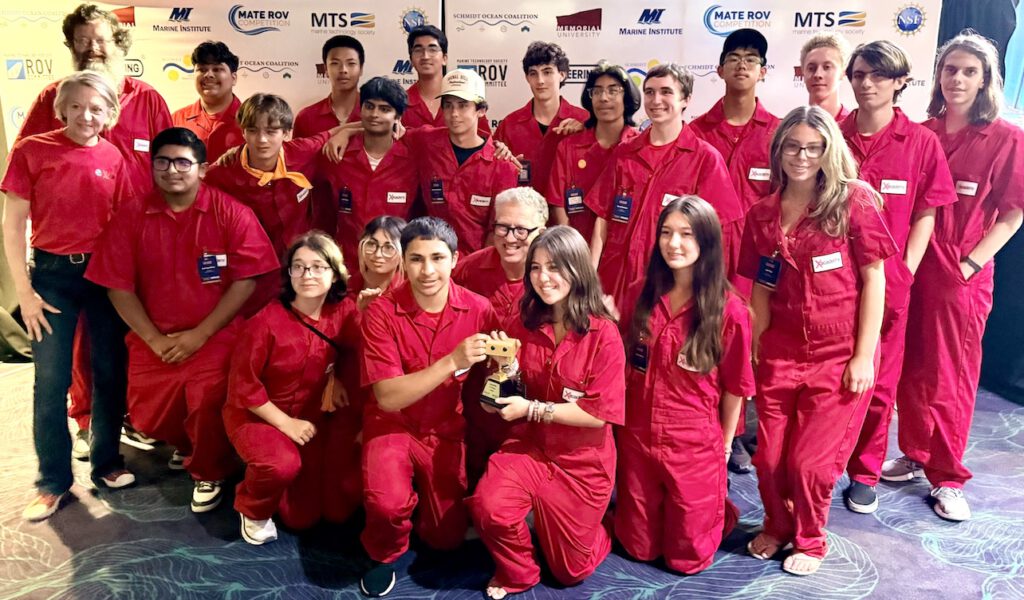
Nine months of late nights, countless repairs and more than 100 hours spent testing an underwater robot in a swimming pool paid off in a big way for a team of Santa Cruz County high school students.
Hephaestus Robotics, a 21-member team representing eight county high schools, captured first place in the Ranger Class at the 2026 MATE ROV World Championship on June 27 in St. John’s, Newfoundland and Labrador, Canada, earning the program’s first world title after finishing third in each of the past two years.
The victory came against 47 high school teams from 13 countries competing in the Ranger division, one of several classes at the international competition, which featured 86 teams from 16 countries.
Among the team members was Pajaro Valley High School student Raul Lopez, who said the experience changed the way he thinks about engineering and teamwork.
“This experience taught me how to work within a big team made of smaller teams, an experience I hope to contribute to building a MATE ROV college team at CSUMB,” said Lopez, who will attend Cal State Monterey Bay this fall to study mechatronics.
The team qualified for the world championship by winning the MATE Monterey Bay Regional ROV Competition in April.
At the three-day world championship, students operated a remotely operated underwater vehicle in facilities designed to simulate real ocean conditions, including a 1.7 million-liter flume tank and a wave basin.
Their robot completed a series of tasks modeled after real marine science and offshore engineering work, including replacing a simulated environmental DNA sensor, recovering an anchor buoy and deploying an autonomous float capable of maintaining depth while collecting data.
Students also used professional sonar equipment to locate simulated marine debris.
“Rather than simply simulating operations within a controlled pool, our team rose to the challenge of performing real-world ocean protection,” said Santa Cruz High School student Elle Williams, who piloted the robot during the bonus mission. “We deployed a professional sonar tool on our ROV to scan for and identify ghost gear and debris in the Atlantic Ocean. That was amazing.”
The competition extends well beyond building a robot.
Teams operate as mock engineering companies, preparing technical reports, budgets, marketing materials and formal presentations that are judged by professionals from the marine technology industry.
Mission Director Sam Imahara of Kirby School said the championship reflected months of persistence.
“Competing on the world stage against so many talented teams was an unforgettable experience,” he said. “As the electronics lead, seeing our countless hours of late-night troubleshooting, complex wiring, and system integration culminate in a world title is wildly rewarding.”
Float Team Vice President Amber Williams of Pacific Collegiate School said the team’s success was especially satisfying after setbacks earlier in the season.
“These many months of continuously fixing issues and dedication led us to finally achieving the full 85 points, something only three out of 47 teams managed to do,” she said. “After watching the float fail at regionals, having everything come together at worlds felt incredible.”
The team includes students from Pacific Collegiate, Sequoia, Soquel, Santa Cruz, Scotts Valley, Pajaro Valley, Sapphire and Kirby schools.
Tim Sylvester, founder of nonprofit X Academy and the team’s lead mentor, said the championship reflects the diversity of the students involved and the commitment they showed throughout the school year.
“Our team brought together students from across Santa Cruz County, including the children of Silicon Valley tech workers, doctors, carpenters, electricians, and farmworkers,” he said. “After nine months of hard work and more than 100 hours of practice in the pool, they truly earned this win.”
Hephaestus Robotics is part of the Santa Cruz County Office of Education’s X Academy Robotics Clubs, a partnership that gives students free, hands-on experience in engineering, computer science, entrepreneurship and project management.
Since the partnership began in 2023, X Academy mentors have worked with more than 200 students from 15 high schools through weekly robotics sessions in Santa Cruz and Watsonville.
Santa Cruz County Superintendent of Schools Faris Sabbah said the world championship highlights what students can accomplish when they have access to hands-on learning opportunities.
“This championship is the result of years of student leadership, mentorship, problem-solving, and persistence,” Sabbah said. “The Hephaestus Robotics Team has shown what is possible when students have access to rigorous, hands-on learning and a community of mentors who believe in them.”
For graduating Sequoia High School student Carlos Ortiz-Lopez, the lessons learned extend beyond robotics.
“Being a part of the Hephaestus Team taught me to be relentless and to not give up no matter what gets thrown your way,” he said. “I will use this to help me become an apprentice electrician with the IBEW.”
Photo story: Sudden U-turn causes crash

Watsonville Police shove a Mazda pickup off of Freedom Boulevard Monday morning following a two-vehicle crash. Just before 11am a green Ford Ranger and a white Mazda pickup were traveling north on Freedom Boulevard. On the 1600 block, the male driver of the Mazda reportedly attempted a sudden U-turn causing the Ford, with a male driver, to smash into its driver’s side, Watsonville Police said. The Mazda driver was temporarily trapped in his truck with minor injuries. (Tarmo Hannula/The Pajaronian)
Grand jury takes aim at pedestrian safety

Santa Cruz County’s cities and the county government should move more quickly to improve pedestrian safety by adopting formal Vision Zero action plans and taking a more proactive approach to maintaining sidewalks, crosswalks and traffic infrastructure, according to a new Santa Cruz County Civil Grand Jury report.
The report, titled ‘Walking in the County of Santa Cruz is Not for the Faint of Heart,’ concludes that while local governments have embraced the principles of Vision Zero—a strategy aimed at eliminating traffic deaths and serious injuries—they have yet to implement formal action plans with measurable goals and timelines.
The grand jury found that Santa Cruz County consistently ranks among California’s worst counties for pedestrian fatalities and serious injuries despite recent investments in transportation improvements.
“Pedestrian fatalities and serious injuries are a persistent public safety issue in the County of Santa Cruz,” the report states. “While the County and its cities have adopted modern transportation policies and safety frameworks, pedestrian safety outcomes remain poor relative to other California counties.”
The report cites Office of Traffic Safety data showing Santa Cruz County ranked among the top 20% of California counties for pedestrians killed or seriously injured in five of the seven years between 2017 and 2023. Watsonville fared even worse, ranking among the 10 worst California cities of comparable size in six of those seven years, including Number 1 in 2019.
The report says the county, Watsonville and Santa Cruz have all committed to pursuing Vision Zero through the Community Traffic Safety Coalition but have not adopted formal action plans.
According to the grand jury, doing so would establish measurable benchmarks, improve accountability and make local jurisdictions eligible for additional federal transportation grants.
The report also points to gaps in pedestrian infrastructure, including deteriorating sidewalks, faded crosswalk markings and incomplete sidewalk networks.
It cites the Highway 1 Whale Bridge as an example of successful infrastructure that still leaves pedestrians vulnerable because sidewalks disappear at one end, forcing people to navigate busy commercial driveways.
The grand jury also found that local governments rely largely on residents to report sidewalk hazards and faded pavement markings, and that many people are unaware of how to report those problems.
In addition, it says the cost of sidewalk repairs—which are typically the responsibility of adjacent property owners under California law—can discourage people from reporting hazards.
Watsonville was singled out for offering a loan program to help homeowners pay for sidewalk repairs, which the report suggests other jurisdictions consider.
The report also examines traffic enforcement, noting that Watsonville has one officer dedicated to traffic enforcement, while Santa Cruz has none. Both agencies focus much of their traffic enforcement on driving under the influence because of limited staffing.
The grand jury recommends that local officials periodically review crash data to ensure enforcement efforts strike an appropriate balance between DUI enforcement and speeding violations, another leading contributor to pedestrian deaths and serious injuries.
Among its recommendations for Watsonville, the grand jury urges the City Council to direct its Public Works and Police departments to work with the County Health Services Agency to develop and publish a Vision Zero action plan by June 1, 2027.
It also recommends expanding public outreach about reporting sidewalk hazards, adopting an annual review of sidewalks and faded pavement markings, and requiring the police chief to annually review pedestrian injury data to ensure enforcement priorities align with Vision Zero goals.
The report makes similar recommendations to the Santa Cruz County Board of Supervisors and the Santa Cruz City Council, including developing Vision Zero action plans, increasing public education, proactively identifying sidewalk hazards and considering financial assistance programs for sidewalk repairs.
The Santa Cruz County Board of Supervisors, the Watsonville City Council and the Santa Cruz City Council are required to respond to the grand jury’s findings and recommendations within 90 days.
Supervisors restore most arts funding in budget

The Santa Cruz County Board of Supervisors on Tuesday unanimously approved a revised $20.9 million budget for the Parks, Open Space and Cultural Services Department, restoring several services that had been slated for cuts while preserving most county funding for local arts organizations.
The spending plan comes one week after supervisors rejected an earlier proposal that would have eliminated the county’s contract with Arts Council Santa Cruz County and cut funding to the Santa Cruz Museum of Art & History in half to help close a $590,000 budget shortfall.
Instead, the board directed staff to find other ways to balance the budget.
The adopted budget reduces county funding for both the Arts Council and the MAH by 15%—a cut of $25,500 and $23,100, respectively—instead of the deeper reductions previously proposed. The Parks Recreation Grant Program also was reduced by 25%, or $12,000.
The revised budget restores seven-day operations at the Simpkins Family Swim Center, maintains portable restroom service at county parks and funds extra-help park maintenance staff to address vegetation management and deferred maintenance.
To close the budget gap, county staff assembled a package of one-time funding and targeted spending reductions totaling $590,000.
The largest contributions include $100,000 each from the Measure K environment and parks allocations in Supervisorial Districts 1 and 2, $68,400 from the Department of Community Development and Infrastructure, and three separate $50,000 contributions from General Services, Risk Management and Measure Q funds. Additional savings came from reduced information technology costs and a deferred $15,000 equipment purchase by the Sheriff’s Office.
Deputy Parks Director Rebecca Hurley credited county departments for working together to avoid reductions in park operations and staffing.
“This has really been a spirit of collaboration amongst other county departments,” Hurley said, calling the effort to close the budget gap without cutting services “a really big collaborative effort.”
The revised budget also rejects a proposed pay-to-park pilot program that had been included in earlier budget discussions.
Last week’s proposal drew strong opposition from dozens of residents, artists and community leaders who urged supervisors to preserve funding for the Arts Council and MAH, arguing the organizations provide essential cultural and educational services throughout the county.
Jim Brown, executive director of Arts Council Santa Cruz County, thanked supervisors and county staff for finding an alternative but cautioned that the solution is temporary.
“We all know that today’s situation is a stop-gap,” Brown said. “With future budgets projected to be even tighter, I urge the county to look for dedicated solutions for the arts.”
Overall, the budget funds four divisions—Parks Operations, Cultural Services, Art in Public Places and County Service Area 11—with 57 full-time equivalent positions.
County staff warned that the budget relies heavily on one-time funding sources that will not be available in future years. Without long-term solutions, the department could face additional reductions to programs, operations and staffing during development of the 2027-28 budget.
The board also approved an updated fee schedule, effective July 1, increasing many park rental, pool and recreation fees to reflect inflation and rising operating costs.
PVUSD approves $2.86 million water project at Renaissance High
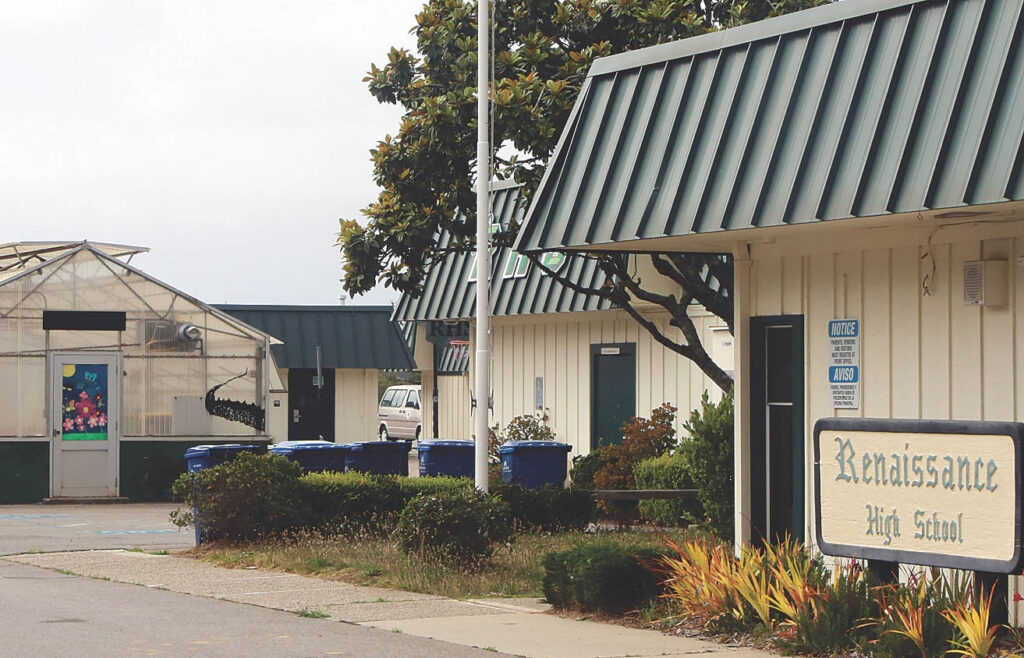
The Pajaro Valley Unified School District Board of Trustees on Saturday approved a $2.857 million state funding agreement that will connect Renaissance High School to the Soquel Creek Water District, replacing the campus’s groundwater system that has been plagued by elevated levels of hexavalent chromium.
The board held a special meeting to ratify a financial assistance agreement with the State Water Resources Control Board, allowing the district to move forward with the long-planned project.
The agreement provides $2.857 million in funding through the state’s Expedited Drinking Water Grant program. While structured as a loan agreement, the entire amount is designated as principal forgiveness, meaning the district will not have to repay the money if it completes the project and complies with the state’s reporting and funding requirements.
In a social media post, Trustee Gabe Medina praised the decision.
“This was an important vote because Renaissance High School students, staff, and families deserve access to safe and reliable drinking water,” he wrote on his Substack account. “Many students and staff have been asking the district to address this issue, and this project is one step toward meeting that responsibility.”
According to the agreement, the project’s purpose is to consolidate Renaissance High School’s water system with the Soquel Creek Water District “to address the hexavalent chromium maximum contaminant level violations” and provide “safe and reliable drinking water to the students and staff of the school.”
The project calls for extending a water main along San Andreas Road, installing a pipeline beneath the railroad tracks, constructing a booster pump station on campus and tying the new line into the school’s domestic water system. The project also includes installing a master meter and backflow prevention device and permanently abandoning the school’s two groundwater wells.
Construction is scheduled to be completed by Sept. 30, 2028, with the overall project wrapping up by Dec. 31, 2028. The district must submit its final reimbursement request by Feb. 28, 2029, and retain project records through Dec. 31, 2064.
State documents show the Water Resources Control Board determined the project will not create significant adverse water quality impacts. The agency relied on an Initial Study and Mitigated Negative Declaration prepared by PVUSD, which approved the project in 2025 and adopted a mitigation monitoring program addressing biological resources, cultural resources and noise.
Under the agreement, the district must comply with numerous grant requirements, including completing the project on schedule, documenting expenditures, submitting quarterly progress reports and obtaining state approval before advertising the project for construction bids or beginning construction. Failure to comply could jeopardize reimbursement or require repayment of funds.
The agreement also prohibits reimbursement for costs incurred before the eligible work start date and limits funding to approved project expenses. If project costs exceed the $2.857 million budget, the district must notify the state and seek additional funding or modify the project’s scope, although additional state funding is not guaranteed.
The project budget includes $1.1 million for construction, $364,000 for contingency costs, $739,000 for engineering and administrative costs, a $28,000 Soquel Creek Water District connection fee and $626,000 in conditional costs.
Letters to the Editor July 3-9
Regarding Cesar Chavez Middle School name change
Writing a letter to the editor to try to change or unchange something is a loser business. I’ve written a lot of letters and they’ve all ended up losers. Chalk up another loss with Cesar Chavez Middle School. Chavez has now been certified an evil rapist, forcer of abortions, and child molester. The worst of the worst, despite never being charged or convicted of said crimes. That said, The Pajaro Valley Unified School District trustees are going to allow Cesar Chavez images to remain on the school mural. So you are going to exterminate his name, but keep his image on the school. What’s with that? One trustee said the proposed name changes are “a no brainer.”
“No brainer.” indeed.
I propose this. Fusing both new school name recommendations. Jeff Tagami, is a poet who should be mentioned alongside those of Byron, Shelley, Keats, and Whitman, is a perfect addition. Mas Hashimoto, an excellent educator, who was also one of my history teachers. I did a report and speech on the Kaaba in Mecca and he liked it. Hashimoto is a great choice. Next name (Especially since you are keeping his image on the school) is none other than Cesar Chavez, with an asterisk * (for the aforementioned reasons) and finally Central Coast Middle School. So the name I propose is The Jeff Tagami, Mas Hashimoto, Cesar Chavez *(with an asterisk) Central Coast MIddle School. Or abbreviated The Tagami, Hashimoto, Chavez * Central Coast Middle School. Chalk up another loser.
Charles Birimisa
Watsonville
•••
LED street lighting needs changes
In the 1990s at Hewlett-Packard, we foresaw that white lighting for street lights could save money in two ways: overall energy reduction of 90%, and the ability to dim the lights during no traffic conditions. Our local LED street lighting does save on the overall energy, but misses out on the dimming.
During the night traffic is greatly reduced, especially during the late hours. The LED lights with motion sensing could be dimmed until there is traffic, making a huge savings. Why aren’t we doing that now? My wife and I visited Uzbekistan last fall and they are using dimming. It works great. Why not here?
Bill Beecher
Aptos
•••
Writer doesn’t want his tax money to fund ICE
Putin, Trump, Netanyahu, Hegseth, UFC fighter as head of DHS – “We’re good at bombing…”; “We like sinking ships”… How about “Killing people” to finish the sentence…? And we remember “Thou Shalt not Kill…”
I came from the 60s, Summer of Love, and this is not what we expected from the 21st century. I pay income taxes. I don’t really want my money part of the $70 Billion for ICE and its inhumane detention centers, or the $70 Billion to bomb other countries in “self-defense.”
But my few dollars are probably in there. All I can say is we must resist this takeover of what many of us are not supporting, and do what we can to bring Peace and Love to the World!
I don’t support a convicted felon, rapist and TV star to be having tantrums and ruling the world, like it was his little toy. The spineless Republicans, down on their knees, enabling him in lockstep.
Does anyone remember, “The Emperor has no clothes?”
Will it take some little child to speak out?
Sam Earnshaw
Watsonville
From Our Archives: New in Town

The city of Watsonville received this new Plymouth A-1 Ambulance in 1961. (photo by Sam Vestal, Pajaronian file)
Stuff the Bus returns to help 2,500 Santa Cruz County students start the school year ready to learn

Civic partner content: A collaborative initiative amplifying nonprofits’ missions, expanding community engagement and driving meaningful impact. Learn more here.
Annual campaign adds first-ever TK backpacks as nearly 2,900 local students face homelessness and housing insecurityBefore the first day of school arrives, United Way Santa Cruz County and the Santa Cruz County Office of Education are once again rallying the community to ensure every student has the tools they need to succeed.
Starting July 1, the 17th annual Stuff the Bus School Supply Drive invites residents, businesses and community organizations to help provide 2,500 backpacks filled with school supplies for students experiencing homelessness, housing insecurity and other hardships across Santa Cruz County.
This year marks a new milestone for the campaign: For the first time, Stuff the Bus will include smaller backpacks designed specifically for transitional kindergarten and early childhood students, helping meet the needs of some of the county’s youngest learners.
The need remains significant. According to the Santa Cruz County Office of Education, 2,866 students in grades TK through 12 experienced homelessness during the 2024-25 school year under the McKinney-Vento Act. That includes 2,322 students living doubled up with other families, 308 who were unsheltered, 171 living in shelters and 65 staying in hotels or motels.
“The first day of school should be a moment of excitement and belonging for every student,” said Santa Cruz County Superintendent of Schools Faris Sabbah. “For families facing homelessness, housing instability or other hardships, basic school supplies are one more financial burden. Stuff the Bus is one way our community shows students that they are seen, supported and ready to succeed.”
Organizers say that having a backpack stocked with notebooks, pencils and other essentials does more than prepare students academically — it helps them begin the year with confidence and dignity.
“A backpack filled with school supplies can help a student walk into class feeling prepared, confident and supported,” said United Way Santa Cruz County CEO Yvette Lopez Brooks. “Stuff the Bus reflects what is possible when our community comes together around children and families, and we are grateful for the donors, volunteers, sponsors and partners who make this campaign possible each year.”
Community members can support the effort in several ways, including making direct donations, sponsoring backpacks, organizing workplace supply drives or volunteering during the annual Stuff-A-Thon. A contribution of $30 provides one student with a fully stocked backpack.
The campaign culminates with the Stuff-A-Thon on Saturday, Aug. 1, from 10 a.m. to 1 p.m. at Kaiser Permanente Arena in downtown Santa Cruz. Volunteers of all ages will help fill thousands of backpacks that will be distributed to students and families throughout the county.


Held in partnership with the Santa Cruz Warriors and with support from UPS, the event brings together community volunteers, local businesses and nonprofit partners to ensure students across Santa Cruz County can begin the school year ready to learn.
The campaign is rooted in a simple idea: Every child deserves to start school with the materials they need to thrive. By coming together as a community, Santa Cruz County can help remove barriers to learning and create a stronger foundation for student success.
To donate, sponsor or volunteer, visit unitedwaysc.org/stb.

The post Stuff the Bus returns to help 2,500 Santa Cruz County students start the school year ready to learn appeared first on Lookout Santa Cruz.
Best of Santa Cruz County entertainment, arts & food events this weekend, July 2-5
With the long holiday weekend nearly here, check out things to do around Santa Cruz County with a recommendation from Lily Belli and a specially curated list from Lookout’s BOLO events calendar.
Reflections from the 2026 Youth & Adult Partnership Summit

On June 11, I had the opportunity to attend the Youth & Adult Partnership (YAP) Summit at Cabrillo College’s Horticulture Center. I attended the event as a member of the United Way of Santa Cruz County’s team helping facilitate the event and as a Cal State Monterey Bay student. I am passionate about youth voice and community change for the betterment of future generations. Throughout the day, youth leaders, educators, nonprofit professionals and community partners had an opportunity to come together and discuss how we can strengthen youth-adult partnerships as well as create spaces where young people are not only invited into conversations but are empowered to create the change they want to see in the world, as Gandhi would say.
On the day of, I helped support the event behind the scenes. While I was helping, I also had the opportunity to take a step back and witness the conversations taking place. I was able to see youth and adults engage in meaningful conversations about leadership, decision-making and what it honestly means to share perspectives across generations.

One of the themes that I connected with most was the distinction between giving youth a chance to speak and genuinely listening to what they have to say. Speaking for myself, I feel that young people are invited into spaces as participants, but not always as partners. The YAP Summit is different that way – it challenges partners and community leaders to think differently. The summit created an environment where youth feel valued, heard and respected. This event gives youth the opportunity to be heard and collaborate with leaders in their community.
Throughout the day, I had the opportunity to hear directly from different peers whose experiences reflected the impact that meaningful youth engagement can have.
Alina C., a member of Pathways to Possibility (P2P), shared:
“Being in P2P for the last eight months has been super rewarding! One memory that really stands out to me is when we had our New Year’s party and played the Saran wrap game – it was a great bonding experience. To me, P2P acts as a program that has allowed me to grow both as a person and a peer, therefore allowing me to become a better member of our community.”
Alina’s reflection reminded me that youth leadership programs are more than just projects, meetings or presentations. They are about young people creating relationships with their community, and helping young people recognize the value they bring to their communities.
I was also inspired by Giovanni (“Gio”), who attended the summit for the first time and participated as both an attendee and presenter.
“Being able to attend this Youth and Adult Partnership Summit for the first time was an experience I will never forget. I went not only as an attendee but also as a part of one of the presentations. Working alongside United Way has been a choice I will never regret. They allow young people, including me, to show up and be something bigger. Getting to meet the different people that make all of this possible is a surreal experience, and it was inspiring to see not only adults but other youth in the room as well.”
One of Gio’s most powerful takeaways captured the meaning of the summit:
“It isn’t the youth changing to fit with the adults, but the adults changing to fit with the youth. It shouldn’t be on the youth to morph who they are to fit in. If adults want to work with youth, they should be willing to create spaces where young people can show up as themselves.”
Gio’s words stayed with me because they challenged a common assumption that youth have to adapt to existing systems. Instead, Gio showed us that authentic partnership requires adults and organizations to reflect on how they can better support and learn from young people. We have ideas and opinions, and with adult experience and guidance, think of what we can accomplish together.
Another perspective that stood out came from Crystal H., an All Children Thrive (ACT) coach supporting the Pathways to Possibility initiative. Crystal reflected:
“It felt refreshing to share space with youth and adult leaders and dig into how young people can serve as real experts and partners in systems change. I’m bringing those ideas back to the ACT team to strengthen how we amplify youth voices and build genuine partnership, not just participants. Excited to build and strengthen Pathways to Possibility!”
She also shared:
“The YAP Summit gave me real, usable ideas. I’m bringing them back to the ACT team to strengthen how we amplify youth voice and create genuine opportunities for partnership. Youth engagement isn’t a checkbox; it’s a partnership. The summit sharpened how I think about that, and I’m taking those ideas straight to the ACT team and our projects.”
YAP Summit was a reminder of why this work matters in Santa Cruz County. Growing up here and now as a young adult, there have been moments when I’ve questioned whether my voice would make a difference. Being in a room filled with youth and adult leaders who were actively discussing how to collaborate and better their community, it reminded me that change is possible when people are willing to listen and learn from one another. Events like this are important to this community; they give us the opportunity to learn from people of different walks of life.
I left the 2026 YAP Summit feeling confident that the ideas shared throughout the day have an opportunity to turn into action. The youth leaders who attended this meeting shared their experiences with adult partners so that the adults reflect on how they can improve when collaborating with young people. United 4 Youth’s mission is to “uplift youth voice, expand access to resources and champion youth well-being.” The summit showed what can happen when communities are invited to learn from one another and create change.
As I continue my journey professionally and as a member of this community, I will take all the lessons, conversations and stories from this year’s YAP Summit and let them empower me to listen and understand other people’s perspectives. I will carry the responsibility to help create spaces where young people are not just present, but encouraged to lead, influence decisions and shape the future of our communities.
Acucar “Sookie” Ramos is a Cal State Monterey Bay student & the Community Impact Coordinator for United Way of Santa Cruz County
The post Reflections from the 2026 Youth & Adult Partnership Summit appeared first on Lookout Santa Cruz.
10 ways to make a difference this July: Volunteer in Santa Cruz County

From beach cleanups to delivering meals, here’s how to join a community built on hope, joy, and belief in people.
Last week at Harvey West Park, something beautiful happened. Volunteers of all abilities gathered to revitalize the Friendship Garden, a special space dedicated to community members with disabilities. They planted, raked, laughed, and connected. It was a simple project with a powerful message: when people come together, communities thrive.
That’s the spirit of volunteering, and the motto of Volunteer Center of Santa Cruz County. For forty-four years, under the leadership of Executive Director Karen Delaney, the organization has built something rare: a culture where hope and joy aren’t just words—they’re the backbone of how we show up for each other.
 After 44 years as Executive Director, Karen Delaney is stepping into retirement. Her belief: everyone can make a difference. Let’s carry her torch forward – join your community in service today!
And, this is your personal invitation to join the hope and joy club, where everyone is welcome, and every gift matters!
Here’s 10 ways to volunteer (and nurture that hope and joy) this month:
- July 5: Community Coastal Clean Up at Twin Lakes Help Twin Lakes Beach bounce back after the Fourth of July: collect litter, protect marine life, and meet people who care about keeping our coastline clean. Bring reusable gloves, water, and comfortable shoes. Learn more & sign up →
- Every Saturday: Food Sort With Second Harvest Pack fresh produce and food for families in need at the Watsonville warehouse (7:45am-11am or 11:15am-2:30pm shifts). Bring your family or friends—ages 13+ welcome.
- Child Care Safety Plan Support Help parents plan for the unexpected and protect their children’s future.
- Life Lab Summer Camp Inspire the next generation of gardeners as an assistant camp counselor for children ages 7-10.
- Give Rides to Seniors Be a friendly driver for seniors in need—flexible hours, you choose your schedule, county-wide need – you can be the difference!
- Childcare during Support Groups Watch children while parents attend sobriety support groups—flexible hours, morning and evening shifts available.
- Youth Planning Committee: Queer, Trans & Allied Summit Help plan an inclusive summit for LGBTQ+ youth and allies on the Central Coast.
- Library Council for Teens Teens! Shape your library’s future and have your voice heard on what comes next.
- Teen Kitchen Project – Delivery Angels Deliver medically tailored meals and brighten the day of someone who needs it most.
- Evergreen Cemetery Friday Work Party Preserve local history and restore this beautiful site. Join us every Friday 9:30am-12pm, all abilities welcome.
 Hands in the work, joy in the heart. The joy in these faces is what volunteering looks like.
Looking for something else? Visit scvolunteernow.org for 150 more volunteer opportunities, or meet with our volunteer matchmaker and get paired with your new favorite activity.
About the Volunteer Center
At the Volunteer Center of Santa Cruz County, we connect people for good because meaningful service is the heart of a strong, vibrant community and a healthy, happy life.
For 60 years, Santa Cruz County has trusted the Volunteer Center to help people connect for good, turning compassion into belonging and lasting impact. Our vision is a community where giving is the way of life — where everyone’s gifts matter, kindness is celebrated, and together we build a stronger, healthier, more connected community where everyone thrives.
Learn more at scvolunteercenter.org

The post 10 ways to make a difference this July: Volunteer in Santa Cruz County appeared first on Lookout Santa Cruz.
‘We’re going to keep escalating’: Dominican Hospital nurses decry proposed layoffs

Nurses and their supporters hold an informational picket at Dominican Hospital on June 30. (Amaya Edwards — Santa Cruz Local/CatchLight Local)
LIVE OAK >> Dominican Hospital nurses rallied in front of the medical center on Tuesday, one month after layoff notices were sent to about 20 nurses and staff. Drivers honked their horns in support as they passed dozens of nurses and their supporters chanting, waving signs and blowing whistles.
Hospital workers say the proposed cuts would jeopardize patient safety by stretching the staff thin and taking time away from patient care. CommonSpirit Health, which owns the hospital and more than 2,000 other health care centers in the U.S., did not say why the cuts were proposed.
CommonSpirit did not make anyone available for an interview with Santa Cruz Local. In an emailed statement, spokesperson Christina Zicklin wrote that “the safety of our caregivers and patients is our highest priority,” and said hospital operations were not affected by the rally.
Born and raised in Santa Cruz, Carly Chavez-Ellis has worked as a nurse at Dominican for three years. She said the cuts would slash “critical” staff positions. In the cardiac unit where she works, they are set to lose the person responsible for coordinating patient transportation and fielding phone calls from family members, other hospitals, doctors, nursing homes, patients who were discharged, and more.
(function() { window.mc4wp = window.mc4wp || { listeners: [], forms: { on: function(evt, cb) { window.mc4wp.listeners.push( { event : evt, callback: cb } ); } } } })(); Stay informed on Santa Cruz County’s biggest issues. Santa Cruz Local’s newsletter breaks down complex local topics and shows residents how to get involved. Email address:mc4wp.forms.on('subscribed', function(form) { // gtag.js if(form.id == '6954') { gtag('event', 'subscribe', {'event_category': 'newsletter_prompt', 'event_label':'top_of_story'}); } }); Leave this field empty if you're human:
“It’s scary, because all the nurses are wondering who’s going to take that role,” she said from the picket line. “I fear that nurses will be expected to step up and do those things, and that’s going to take nurses away from the bedside with direct patient care.”
Chavez-Ellis said the cardiac unit lost a staffer a couple years ago when CommonSpirit reduced the number of aides to three from four.
“Safe staffing saves lives,” she said, adding that the cuts are “under the guise of saving money, but their CEO made $14 million in 2025.”

Carly Chavez-Ellis, left, and Clara Hernandez rally against proposed layoffs at Dominican Hospital. (Amaya Edwards — Santa Cruz Local/CatchLight Local)
Tax returns from the nonprofit show that the 30 top-paid employees each made more than $1 million in the fiscal year ended June 2025, and brought in more than $128 million collectively. CommonSpirit reported a total of $822 million spent on salaries for its roughly 160,000 employees. Top-heavy executive compensation is not unusual for large hospital systems.
Rory O’Moore, who’s worked in health care for nine years and has been at Dominican for two, said the decisions are being made by executives who don’t necessarily understand the direct effects cuts have on patients.
“This is people’s lives that they’re playing around with, and they just want to save a couple dollars,” O’Moore said. “We’re going to keep escalating until we have something.”
O’Moore said that ostensibly the reason for the cuts is the effect of the Republican-backed One Big Beautiful Bill Act, that decimated funding for Medicaid, but that the effects of that bill also mean fuller emergency rooms and the need for staff has only increased.
“It’s very short-sighted,” O’Moore said of the proposed cuts.

Rory O’Moore, left, and his twin sister, Elaine O’Moore, are nurses at Dominican Hospital. They hold union signs that read ‘Some cuts don’t heal.’ (Amaya Edwards — Santa Cruz Local/CatchLight Local)
Lauren Bailey works in the ER at Dominican and said she is also concerned about the effects on patient outcomes if the cuts go through.
“If these ancillary services get cut, then more is going to be on the plate of the nurses, which means less time with patients, less time being able to review charts, to get reports from the ER nurses trying to get patients upstairs,” she said. Fewer staff would slow the process of moving patients from the ER to other units, she said, which also means fewer available ER beds.
Proposed cuts include the staff responsible for answering call lights from patients, she said, which come from “patients who are asking for emergent things. ‘I have to go to the bathroom. I need pain medicine.’ Basic human needs. And again, that’s going to fall on the plate of the nurses.”
She added, “when you’re in a scenario where you feel like you’re stretched too thin, things get missed.”

Evelia Carter, an environmental services technician, blows a whistle during an informational picket at Dominican Hospital on June 30. (Amaya Edwards — Santa Cruz Local/CatchLight Local)
Questions or comments? Email info@santacruzlocal.org. Santa Cruz Local is supported by members, major donors, sponsors and grants for the general support of our newsroom. Our news judgments are made independently and not on the basis of donor support. Learn more about Santa Cruz Local and how we are funded.
Learn about membership Santa Cruz Local’s news is free. We believe that high-quality local news is crucial to democracy. We depend on locals like you to make a meaningful contribution so everyone can access our news. Learn about membershipThe post ‘We’re going to keep escalating’: Dominican Hospital nurses decry proposed layoffs appeared first on Santa Cruz Local.
Judge shoots down Trump’s homeless funding shift: ‘The hallmark of unreasoned decision making’

This story was originally published by CalMatters. Sign up for its newsletters.
California scored another win against the Trump administration in their battle over how to address the homelessness crisis here and nationwide.
A federal judge this week shot down the federal Department of Housing and Urban Development’s 2025 attempt to divert money away from permanent housing and instead fund temporary shelters and programs that require sobriety. But the judge stopped short of banning the Trump administration from making such changes in the future.
“The federal court’s decision to reject the Trump-Vance Administration’s attempt to disrupt essential housing services for people experiencing homelessness, including families, seniors, veterans, and people with disabilities, is both appropriate and just,” Renee Willis, chief executive of the National Low Income Housing Coalition, wrote in a media release.
In November, the Department of Housing and Urban Development said jurisdictions applying for about $4 billion in federal Continuum of Care funding can’t spend more than 30% of it on permanent housing – a move that would result in a significant cut to the type of long-term housing that for years has been a cornerstone of the fight against homelessness.
Last year, California communities spent about 90% their share of that money on permanent housing.
A group of states, including California quickly sued. San Francisco, Santa Clara County and a group of national homelessness nonprofits filed a separate lawsuit. In December, a federal judge in Rhode Island temporarily blocked the changes. In February, Congress ordered HUD to renew grants from 2025 under the old rules.
This week, U.S. District Judge Mary McElroy partially granted the plaintiffs’ request for summary judgement in both cases. She ruled that the federal agency did not try to foresee the harm its “breakneck” transition away from the country’s longstanding “housing first” model – which prioritizes getting people into housing without first forcing them to seek treatment – would have on the country’s homeless individuals.
“Overall, the actions undertaken by HUD in attempting to hastily eliminate its housing first approach serve as the hallmark of unreasoned decision making,” McElroy wrote.
HUD did not immediately respond to a request for comment.
The ruling wraps up both cases, unless the Trump administration decides to appeal.
But the fight isn’t over. The Trump administration tried again last month, moving to shift 2026 federal funding away from permanent housing and the housing first framework. Housing advocates tried to challenge that latest shift in the prior lawsuit. The judge rejected that attempt, but welcomed the plaintiffs to file a new lawsuit.
The housing advocates said they are weighing their next steps.
Have something to say? Lookout welcomes letters to the editor, within our policies, from readers. Guidelines here.
The post Judge shoots down Trump’s homeless funding shift: ‘The hallmark of unreasoned decision making’ appeared first on Lookout Santa Cruz.
Thursday morning traffic: Highway 9 lane closures, July 4 parade road closures
This post is updated throughout the day to reflect the latest incidents. It was last updated at 9:31 a.m..
Here’s what’s happening on the roads this morning…

▼︎ new incidents ▼︎ long-term incidents
Road incidents as of 9:30 a.m. on July 2- Alternating lanes are closed on Highway 9 at Riverdale Park in San Lorenzo Valley because of bridge work. The closure is expected to last until 6:59 a.m. on April 30, 2027.
- There is one-way traffic on Highway 9 at Cascade Avenue in San Lorenzo Valley because of ongoing work. This closure will last until August 31.
- Highway 9 is facing closures in both directions at Pool Drive in San Lorenzo Valley because of bridge work. The closure will end at 5:59 a.m. today.
- A lane on North Highway 9 at Two Bar Road in San Lorenzo Valley is closed for bridge work. The closure will end at 6:01 a.m. today.
- A lane is closed on westbound SR-152 at Clifford Drive/Ohlone Parkway in Watsonville/Pajaro for asphalt paving. The closure will last until 5:59 a.m. tomorrow.
- CHP helped with construction work at the intersection of Highway 9 and San Lorenzo Ave. in San Lorenzo Valley today.
These have been going on for a while, but are still worth keeping in mind.
- Mill St. between Main St. and Highway 9 in Ben Lomond will be closed to general traffic on July 4, August 1, September 5, and October 3 from 8 a.m. to 3 p.m. each day. Emergency vehicles and local driveway access will still be allowed.
- Pine St. (between Hwy 236 and Harmon St.) and Lomond St. (between Pine St. and Railroad Ave.) in Boulder Creek will be closed for the Boulder Creek 4th of July Parade.
- Soquel Drive between State Park Drive and Trout Gulch Road in Aptos will be closed on July 4 from 9:30 a.m. to 2 p.m. for the annual Aptos 4th of July Parade.
- Playa Boulevard will be closed between Palma Avenue and Benito Avenue in La Selva Beach on July 4 from 11:00 a.m. to 1:00 p.m. for the annual La Selva Beach 4th of July Parade.
Disclosure: Traffic incidents are partially generated by artificial intelligence. We are constantly working to improve the accuracy and quality of our AI-generated content. However, there may still be errors or inaccuracies. If you have any questions or concerns, please contact us.
The post Thursday morning traffic: Highway 9 lane closures, July 4 parade road closures appeared first on Lookout Santa Cruz.
The Pajaronian’s Male Athlete of the Year: Jacob Jimenez

One of the most difficult situations for a young athlete is having to sit on the sidelines following a major injury.
Mostly because they are so used to being active.
Thus was the case for St. Francis High graduate Jacob Jimenez, who went on the “injured reserve” list for three weeks during the football season while he nursed his ailing ribs.
“It was definitely hard, but I just try to be out there, try to coach [my teammates] up, and be there for them as much as possible,” he said.
During that same time, one of his teammates was also out with an injury. But instead of moping around, they pushed each other until both players were ready to get back on the field.
St. Francis athletic director and head football coach John Ausman paid close attention to how Jimenez handled what could’ve been a potential crisis.
“You really get to see the character of someone when things go rough, how they respond, and what’s their demeanor,” Ausman said.
Ausman believes it’s what separates superb athletes such as Jimenez apart from others, and allows them to have success.
“I knew [he’d return] because of his mentality, because of his character,” Ausman said.
Jimenez overcame the adversity, and earned All-Pacific Coast Athletic League First Team honors in the Mission Division–North. He went on to earn all-league second team honors in boys basketball in the winter, and won a pair of division championships for the track and field team in the spring.
“What he’s done on the court, on the field and on the track speaks for itself, but what I admire the most is what he does outside of that,” Ausman said. “How he treats all those around him, his family, his little sister whenever she shows up every time. Not only is he a great athlete, great student, but he’s just a better young man, and I couldn’t be more fortunate to have coached him for the last four years.”
Academics was also important to Jimenez, who graduated with a 3.9 grade point average. He was a member of the Varsity Council, and part of the Sports Med Club where he learned the basics of what athletic trainers do.
“It’s always student before athlete,” he said. “I just take pride in getting good grades and just putting all my effort into the classroom, as well as the field. I owe it to my parents because they sacrificed a lot for me, so the least I could do is try hard in school and just get into good colleges. And hopefully make something out of my life.”
Jimenez is what most coaches and teachers would consider the ideal student-athlete, which is why he was named The Pajaronian’s Male Athlete of the Year for the 2025-26 school year.
“It’s an honor,” he said. “I just like to thank my coaches, my friends, my teammates, my family for just pushing me through everything and helping me get to this point. It just feels good to see all the hard work get noticed.”
The rib injury occurred just two weeks into the young football season in a non-league game against Pajaro Valley on Sept. 6.
Jimenez waited patiently for his time to return as he continued to put in the work by himself, even when nobody was watching.
“They get these accolades, which are well deserving, but it’s knowing they truly deserve them,” Ausman said. “Not just because of what God has given them, but taking those gifts and putting in the work to make them the best version of themselves.”
Jimenez hauled in 23 receptions for 435 receiving yards and a pair of touchdowns in seven games played, according to the Monterey Bay Preps website.
Yet, it was his ability to block defenders and sometimes act as a decoy that separated him from other wide receivers.
“I always try my hardest,” he said. “It’s not all about catching it. What you do off the ball is how you show your love to your teammates. So, if you block for someone, then that’s how you can tell that you care for him.”
For Jimenez, there’s no other sport like football. He talked about working every day just to play one game a week, and the brotherhood that’s created during those grueling summer workouts.
“You’ll never make that type of bond anywhere else because you go through the same stuff,” he said. “You win together, you lose together, you go through everything together, so it’s definitely a brotherhood.”
In the winter, Jimenez reunited with his teammates on the basketball team – another clique he’s been a part of since his freshman year. He finished with an average of 16.2 points per game, according to Monterey Bay Preps.
Jimenez said once all the hard work came together, there was nothing better than being on a team with a bunch of guys working towards the same goal.
St. Francis was in a tight race for the Mission Division crown during most of the season. In the end, they fell short to league co-champions Hollister and Marina.
“I knew it was my last season, so I was just trying to make the most out of every game,” he said. “Just put the pedal to the metal, and then just not let up.”
After the Sharks were eliminated from the Central Coast Section playoffs, Jimenez transitioned to the track team.
It wasn’t always that way, though. He was once a member of the baseball team during his freshman and sophomore years.
Jimenez said it was fun at first because all his friends were on the squad, yet he began to feel he wasn’t progressing. He was then convinced by track and field coach Britney Hill to join their program, which boosted his confidence to perform at a high level.
“Sometimes I do miss baseball,” he said. “But track’s good because it’s a team sport, but it’s also just you versus you within your events.”
Jimenez was the PCAL Cypress Division champion in both the high jump and triple jump events, and runner-up in the long jump. He was the top qualifier in the high jump at the PCAL Masters Meet, which earned him a spot to the CCS Championships.
Jimenez has had plenty of role models throughout his athletic career, starting with his parents, Holly and Jaime. He said they sacrificed a lot for him and doesn’t know where he’d be without them.
However, it wasn’t until he met Ausman, who Jimenez said became another father figure by showing players how to be good young men.
“Trying to teach us how to grow up and just be respectable,” Jimenez said.
One of Jimenez’s favorite questions Ausman would ask often was “Rent is due, what are you gonna do?”
Jimenez said when it comes down to the line, and the family’s banking on the paycheck, just put the head down and grind. Always just trying to improve.
“I feel like that’s always been my goal, just to be the best person I can,” Jimenez said. “But the thing that motivates me is probably my family, just wanting to be good for them and being around for them.”
Jimenez will continue his football career at San Jose City College this upcoming fall.
#tdi_1 .td-doubleSlider-2 .td-item1 { background: url(https://pajaronian.com/wp-content/uploads/2026/07/PAJ2627-Jacob-Jimenez-2025-26-Male-AOY-football-WEB-1-80x60.jpg) 0 0 no-repeat; } #tdi_1 .td-doubleSlider-2 .td-item2 { background: url(https://pajaronian.com/wp-content/uploads/2026/07/PAJ2627-Jacob-Jimenez-2025-26-Male-AOY-basketball-WEB-1-80x60.jpg) 0 0 no-repeat; } #tdi_1 .td-doubleSlider-2 .td-item3 { background: url(https://pajaronian.com/wp-content/uploads/2026/07/PAJ2627-Jacob-Jimenez-2025-26-Male-AOY-WEB-1-80x60.jpg) 0 0 no-repeat; } 1 of 3 Team White's Jacob Jimenez is tackled by Team Black's Gabriel Prieto of Gonzales during the 40th Annual Central Coast High School All-Star Football Game at Rabobank on Saturday, Jan 31. (Raul Ebio/The Pajaronian)
 St. Francis High graduate Jacob Jimenez finished with an average of 16 points per game for the boys basketball team during the 2025-26 winter season. (Juan Reyes/The Pajaronian)
St. Francis High graduate Jacob Jimenez was named The Pajaronian's Male Athlete of the Year for the 2025-26 school year. Jimenez competed for the football, boys basketball and track and field teams during his senior year. (Juan Reyes/The Pajaronian)
St. Francis High graduate Jacob Jimenez finished with an average of 16 points per game for the boys basketball team during the 2025-26 winter season. (Juan Reyes/The Pajaronian)
St. Francis High graduate Jacob Jimenez was named The Pajaronian's Male Athlete of the Year for the 2025-26 school year. Jimenez competed for the football, boys basketball and track and field teams during his senior year. (Juan Reyes/The Pajaronian)
Santa Cruz County eased rules for ‘granny flats’ – so why did construction plummet by half?
Santa Cruz County homeowners embraced backyard cottages after state and local reforms made accessory dwelling units, or ADUs, far easier to build, but that boom is already fading. Rising construction costs, high interest rates and other economic headwinds have sharply slowed new ADU projects, making it harder for the county to meet its housing goals.
The British voice of Santa Cruz’s Firecracker Run gets a fitting Fourth of July tribute
The annual Santa Cruz Sunrise Rotary Firecracker Run will honor longtime emcee and community booster Rod Caborn, who died in January after battling ALS, with a new spirit award celebrating the joyful, patriotic flair that made him a beloved Fourth of July fixture.