
Hola Puerto Rico

Don’t Be Blindsided

Rejoice, Rejoice

Beyond the Scale

Pajaro Valley Health Care District seeks applicants for Measure N oversight committee
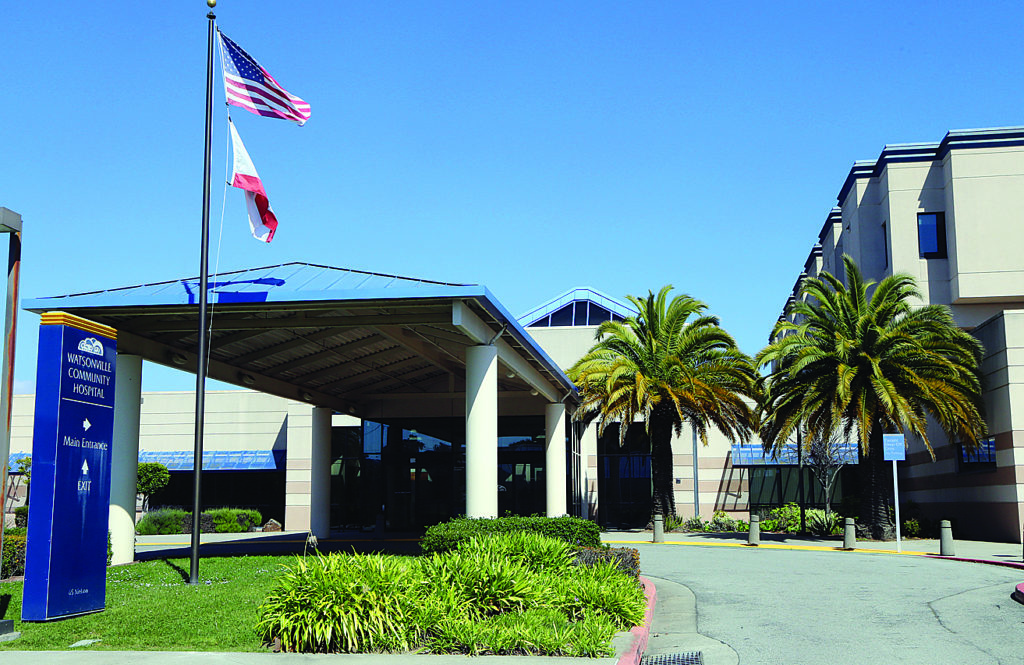
The Pajaro Valley Health Care District is seeking community members to serve on the Measure N Citizens’ Oversight Committee, which monitors spending of bond funds approved by voters for improvements at Watsonville Community Hospital.
The district board will appoint up to three members to two-year terms beginning in August. Applications are due by July 31.
Measure N, a general obligation bond approved by district voters in 2024, provides funding for capital improvements at the hospital. The oversight committee is tasked with providing independent public accountability and ensuring bond proceeds are spent as intended.
Committee members review Measure N expenditures, inform the public about how bond funds are used and prepare the committee’s annual report.
Applicants must be at least 18 years old and live within the boundaries of the Pajaro Valley Health Care District.
District and Watsonville Community Hospital employees, officials, vendors, contractors and consultants are not eligible to serve.
The district board is expected to make appointments at its August meeting. Terms will run through August 2028.
Applications and additional information are available at pvhcd.org under the Governance section and Measure N page.
The Pajaro Valley Health Care District was formed in 2022 to help preserve and strengthen local hospital services. The public health care district oversees Watsonville Community Hospital and is governed by an elected five-member board.
County budget includes cuts to Santa Cruz Museum of Art & History

Santa Cruz County supervisors are set to make final decisions Wednesday on a proposed $1.3 billion county budget that would restore more than $1 million to the Public Defender’s Office while cutting funding for local arts organizations, including a 50% reduction in county support for the Santa Cruz Museum of Art & History.
The proposed 2026-27 budget comes after numerous hearings and revisions as county officials grappled with what they describe as one of the most challenging fiscal environments in more than a decade. The spending plan relies on approximately $43 million in one-time funding sources to remain balanced.
Among the most contentious last-minute changes is a proposal to redirect arts and cultural funding to restore parks and recreation services.
Under the plan, the county would cut its contract with the Museum of Art & History by 50%, saving $77,297, and eliminate a cultural services contract with Arts Council Santa Cruz County, saving $170,046.
The money would help fund $590,000 in restorations for Parks, Open Space and Cultural Services, including seven-day operations at Simpkins Family Swim Center, portable restroom services and park maintenance.
In a message to supporters this week, MAH Executive Director Ginger Shulick Porcella warned that the reduction would bring county support to its lowest level in the museum’s 30-year history and force significant program cuts.
According to Porcella, the reduction would end MAH programming and events at Evergreen Cemetery, including Qingming and Día de los Muertos celebrations, historic tours and artist residency programs.
It also would halt programming at Davenport Jail, including the upcoming Davenport Days celebration, and reduce museum outreach, school tours and planned upgrades to history exhibits.
“The MAH is a place that this community needs and is worth fighting for,” Porcella wrote, urging residents to contact their supervisors before the vote.
The museum cuts are part of a broader effort to preserve county services elsewhere in the budget.
Supervisors are also expected to approve a revised Public Defender budget that restores $1.06 million after concerns were raised about an earlier proposal that would have altered the county’s indigent defense system.
The revised plan maintains the current conflict-defense model, fully funds contracts with the county’s conflicts attorneys and avoids layoffs within the Public Defender’s Office. County officials say layoffs would be particularly damaging because the office handles about 85% of indigent defense cases in Santa Cruz County.
The budget package also includes a proposal to transfer $20.3 million in federal disaster-recovery funds into the county’s General Fund disaster reserve and authorize an internal $5 million loan intended to improve county cash flow.
County officials say the budget protects the county’s workforce and maintains essential services despite growing fiscal pressures and uncertainty surrounding future federal funding. The final adopted budget is expected to return to the board for formal adoption in September.
•••
If you go
The Board of Supervisors will meet at 9am Wednesday in the supervisors chambers in Room 525 on the fifth floor of the County Government Center, 701 Ocean St., Santa Cruz.
Monica Martinez named Pride Month honoree

Santa Cruz County Supervisor Monica Martinez has been selected as state Sen. John Laird’s 2026 Pride Month honoree and was recognized Tuesday at the California State Capitol during the California Legislative LGBTQ Caucus’s annual Pride Month celebration.
Martinez, who represents Santa Cruz County’s Fifth District and serves as chair of the Board of Supervisors, was among 15 Californians honored during the caucus’s Pride Month Floor Ceremony for contributions to the LGBTQ+ community and for serving as role models.
Laird said Martinez has dedicated her career to public service and expanding opportunities for residents.
“Supervisor Martinez has dedicated her career to expanding opportunity, strengthening communities, and serving those most in need,” Laird said in a statement. “As the first openly LGBTQ+ person elected to the Santa Cruz County Board of Supervisors, she has helped break barriers while remaining deeply committed to public service.”
Martinez made history in 2024 when she became the first openly LGBTQ+ person elected to the Santa Cruz County Board of Supervisors and the first woman elected to represent the county’s Fifth District.
Before joining the board, Martinez served for more than a decade as chief executive officer of Encompass Community Services, a Santa Cruz County nonprofit that provides behavioral health, housing and family support services. During her tenure, she oversaw programs serving vulnerable populations throughout the region.
As a county supervisor, Martinez has focused on healthcare access, youth and family services, disaster preparedness and public safety, according to Laird’s office. She has also advocated for LGBTQ+ youth, inclusive healthcare and policies aimed at expanding opportunity for residents.
Martinez said the recognition was especially meaningful because of her experiences growing up without many openly LGBTQ+ public figures.
“Growing up in a conservative family in Bakersfield, I did not see many openly LGBTQ+ leaders in public life, and I understand how powerful representation can be, especially for young people who are still learning who they are and where they belong,” Martinez said.
She said she hopes her election and leadership demonstrate that LGBTQ+ people “belong in every space where decisions are being made” and that their perspectives strengthen communities.”
The California Legislative LGBTQ Caucus, made up of openly LGBTQ+ members of the state Senate and Assembly, hosts the annual ceremony to recognize Californians who have advanced representation, equality and inclusion across the state.
Highway 9 crash kills three on Monday night

Three are dead following a solo crash on Highway 9 in the Santa Cruz Mountains on Monday night.
At 9:36 p.m. on Monday, officers from the California Highway Patrol’s San Jose-area division responded to a report of a vehicle crash on Highway 9 west of Redwood Gulch Road. Once at the scene, officers quickly confirmed that the crash involved fatal injuries, according to a media release.
Although the accident was still under investigation Tuesday, initial information suggested that a 2024 BMW M3 was heading eastbound when the driver lost control of the vehicle and veered off the road down a steep embankment.
The driver, a 21-year-old man from Yuba City, and two passengers, a 27-year-old man from Salem, Oregon, and a 17-year-old male from San Jose, died in the accident.
San Jose CHP Officer Ross Lee told Lookout on Tuesday that the cause of the crash has not yet been determined. Witnesses or anyone with information can call the San Jose CHP office at 408-961-0900.
Have news that should be in Lookout Briefs? Send your news releases, including contact information, to news@lookoutlocal.com.
MORE LOCAL COVERAGEThe post Highway 9 crash kills three on Monday night appeared first on Lookout Santa Cruz.
California intends to sue Trump administration over deal to end offshore wind project
California intends to sue the Trump administration over its deal to end an offshore wind project proposed off Morro Bay on the Central Coast.
Santa Cruz County business filings: Week of June 23

Businesses operating in Santa Cruz County must register with the county clerk. Lookout Santa Cruz reviews the public filings from local businesses to report on new businesses starting in the area.
Here is what’s new in local business recently.
New businesses- A.M. MANAGING & CONSULTING was registered at 138 Victoria Lane, Aptos, by Angela Renee Manson as an individual business on June 8.
- DREW’S USED TOOLS was registered at 5000 Scotts Valley Dr., Suite 4, Scotts Valley, by Te Woo Kim as an individual business on June 8.
- COAST2COAST FIREPLACE SERVICE was registered at 20 Laurel St., Watsonville, by Juan Daniel Morales Aguirre as an individual business on June 8.
- EUCASEA was registered at 142 Baldwin St., Santa Cruz, by Christy Natsumi LLC as a limited liability company on June 8.
- CASTRO PRODUCTIONS was registered at 824 Encino Dr., Aptos, by Jacob Jean Glenn as an individual business on June 8.
- MERIDIAN COFFEE AND ELIXIR BAR was registered at 2910 Leotar Circle, Santa Cruz, by Santa Cruz Ski Lodge LLC as a limited liability company on June 9.
- ROOTED MEDICINALS LLC was registered at 66 San Tomas Way, Watsonville, by Rooted Medicinals LLC as a limited liability company on June 9.
- FOR HOP’S SAKE BREWING was registered at 317 Oak Creek Blvd., Scotts Valley, by James G. Johnson as an individual business on June 9.
- SC MOBILE MARINE AND AUTOMOTIVE was registered at 1870 Wharf Rd., Capitola, by Michael Devon Aylsworth as an individual business on June 9.
- CAPITOLA HOTEL was registered at 210 Esplanade, Capitola, by Capitola Inn, LLC as a limited liability company on June 9.
- PLEASURE POINT DESIGN was registered at 2825 S. Rodeo Gulch Rd., Suite 10, Soquel, by PPD Multimedia LLC as a limited liability company on June 10.
- GOPHERS LIMITED was registered at 317 Las Lomas Dr., Royal Oaks, by Neil Benjamin Evans as an individual business on June 10.
- EL BUEN TACO was registered at 101 Civic Center Dr. #314, Scotts Valley, by Gerardo Velasco Morales as an individual business on June 11.
- SIDEWALK was registered at 4637 Scotts Valley Dr., Scotts Valley, by Patricia Pollock as an individual business on June 11.
- DEMARK STUDIO was registered at 3611 Portola Dr., Santa Cruz, by Davis Maddry Architecture Studio as a corporation on June 12.
- VILLALOBA ESTATE was registered at 2570 Freedom Blvd., Watsonville, by Jose Villanueva Martinez as an individual business on June 12.
Have news that should be in Lookout Briefs? Send your news releases, including contact information, to news@lookoutlocal.com.
MORE LOCAL COVERAGEThe post Santa Cruz County business filings: Week of June 23 appeared first on Lookout Santa Cruz.
Tuesday morning traffic: Highway 9 one-way traffic, SR-152 lane closed, overnight Hwy 1/9/17 work
This post is updated throughout the day to reflect the latest incidents. It was last updated at 6:31 a.m..
Here’s what’s happening on the roads this morning…

▼︎ new incidents ▼︎ long-term incidents
Road incidents as of 6:30 a.m. on June 23- Highway 9 at Cascade Avenue in San Lorenzo Valley has one-way traffic due to ongoing work. This closure will last until August 31.
- A lane on westbound SR-152 at Clifford Drive/Ohlone Parkway in Watsonville and Pajaro is closed for asphalt paving. The closure will last until July 3 at 5:59 a.m.
- There will be alternating lane closures on Highway 9 at Pool Drive in San Lorenzo Valley because of bridge work. The closures will continue until April 30 at 6:59 a.m.
These have been going on for a while, but are still worth keeping in mind.
- Mill St. between Main St. and Highway 9 in Ben Lomond will be closed to vehicles from 8:00 a.m. to 3:00 p.m. on 6/6, 7/4, 8/1, 9/5, and 10/3 for the Ben Lomond Village Market event. Traffic control and detour signs will be posted.
- Overnight road work to improve bridges and ramps on Highway 1, Highway 9, and Highway 17 in Santa Cruz County will start Tuesday, May 26. There will be overnight closures at different times and locations through July.
Disclosure: Traffic incidents are partially generated by artificial intelligence. We are constantly working to improve the accuracy and quality of our AI-generated content. However, there may still be errors or inaccuracies. If you have any questions or concerns, please contact us.
The post Tuesday morning traffic: Highway 9 one-way traffic, SR-152 lane closed, overnight Hwy 1/9/17 work appeared first on Lookout Santa Cruz.
How new owners revived the Davenport Roadhouse and turned it into a North Coast destination
A year after purchasing the historic Davenport Roadhouse, business partners Ginny Miller and Gavin Parsons have transformed the North Coast landmark into a destination with renovated guest rooms, an upgraded restaurant, expanded event spaces and a renewed focus on serving locals and travelers.
County contract with Arts Council on chopping block amid tough budget year; MAH funding cuts also proposed
Santa Cruz County staff are proposing to cut a $170,000 contract with the Arts Council and reductions to a contract with the Santa Cruz Museum of Art & History to address a funding gap in the county’s parks department in a tough budget year.
Watsonville police charge woman with criminal threats after social media comment
Watsonville police officers arrested a 22-year-old woman Friday after they say she posted a threatening comment on Instagram directed at the Pajaro Valley Unified School District board.
A Lookout View: Coral Street toilet shortage a stark contrast to local pandemic response – why doesn’t public health matter more?

Editor’s note: A Lookout View is the opinion of our Community Voices opinion section, written by Community Voices Editor Jody K. Biehl and Lookout founder Ken Doctor. Our goal is to connect the dots we see in the news and offer a bigger-picture view — all intended to see Santa Cruz County meet the challenges of the day and to shine a light on issues we believe must be on the public agenda. These views are distinct and independent from the work of our newsroom and its reporting.
There is something profoundly wrong happening on Coral Street in Santa Cruz.
Coral Street has been a city problem for years. But the unsanitary conditions have worsened since April 1, when nonprofit Housing Matters stopped offering day services, including public toilets and showers used by 50 to 100 (possibly more) unhoused people regularly.
When bathrooms disappear, people still need bathrooms.
Residents and service providers who work around Coral Street and the Tannery describe increasing odors of urine and feces. Every Thursday, city sanitation crews and police officers now move through the area to clean up conditions that everyone knew would follow the loss of basic facilities.
Staff at the Homeless Persons Health Project, which operates a clinic near Coral Street, have warned that the consequences extend far beyond inconvenience. Lack of sanitation drives infections, worsens chronic conditions and increases the risk of communicable disease. One case of giardia has already surfaced. If a more contagious gastrointestinal illness like shigella spreads through the unhoused population, it will not stay contained there.
Public health is exactly that: public.
To be fair, the City of Santa Cruz did respond, although many city leaders point out that providing services is a county responsibility. The city installed four portable restrooms and handwashing stations at three locations: two at Depot Park, one at the downtown library and one at parking Lot 32 in Midtown on Soquel Avenue.
The efforts deserve recognition. But they do not solve the problem.
The people most affected by the closure remain concentrated around Coral Street, while the replacement facilities sit 1 to 4 miles away.
A mile or two might not sound like much to people who have transportation, stability or housing. But if you have to carry everything you own, are dealing with illness or disability or addiction or simply trying to survive day to day, it is a great distance. “It might as well be in San Francisco,” one service provider told Lookout.
People do not walk miles every time they need a bathroom. The question is not whether toilets exist somewhere in Santa Cruz. The question is whether they exist where people actually need them.
Right now, they do not.
And there are still no showers.
City and county officials insist they are “working on it” and have identified possible locations on the outskirts of downtown. Again, we applaud these efforts. We just believe they should have happened faster.
The contrast to the COVID-19 response is hard to miss. During the pandemic, local governments moved quickly to install handwashing stations and sanitation facilities on Coral Street because they understood that disease prevention protects everyone. Today, many of those same agencies are tolerating the disappearance of sanitation infrastructure without a comparable sense of urgency.
County Public Health Officer Lisa Hernandez has told us she is not part of these ongoing discussions. Why not? Where is the Health Services Agency? Where is the county’s health equity officer? Where are the elected officials who routinely speak about dignity, compassion and public health when discussing homelessness?
The Santa Cruz County Board of Supervisors has acknowledged the problem. Its primary response has been that it cannot dictate Housing Matters’ decisions.
That is true.
But county leaders can still act. They can identify locations. They can put real funding on the table, despite a budget deficit. They can work with the city instead of waiting for a solution to materialize. Some of that collaboration happens in monthly meetings, but the public does not see results. And the whole process is just too slow.
The public deserves to know what is happening and how much it would cost to provide permanent restroom and shower facilities.
Yes, Housing Matters’ decision, announced in October 2025, came as a surprise to many. Its reasoning makes sense: As it shifts its focus toward permanent supportive housing, it no longer wants to serve those working to change their lives and those still living on the streets. But could it not have participated in a better workaround?
The City of Santa Cruz spends roughly $11 million annually on homelessness-related programs and services. Can it direct some of that to bathrooms?
Santa Cruz City Manager Matt Huffaker told Lookout that the portable toilets and handwashing units cost about $8,000 per month to operate ($96,000 per year), funded through the city’s general fund, while city officials pursue a longer-term solution. Mayor Fred Keeley said he is open to adding toilets and showers to the budget, but that other services would need to be cut.
That is a good start – and the public should be aware of those trade-offs.
Let’s be clear: The problem does not affect only unhoused people.
Businesses, residents, healthcare providers, sanitation workers — everyone who shares public space absorbs the impact when basic sanitation disappears.
Community groups have stepped up to help. Temple Beth El and the Belonging Collaborative have raised $2,000 for hygiene support. Service providers are trying to organize mobile showers.
Their efforts matter.
But access to bathrooms and showers should not depend on community volunteers.
It is a fundamental public health responsibility.
The city believes it responded. Technically, it has. But if people still cannot realistically reach the replacement facilities, then the problem has not been solved.
Mail services, another offering Housing Matters ended on April 1, also remain largely unreplaced. The county’s Human Services Department has started holding government-related mail for one year, as it is required to do by law. But beyond that, people without housing cannot get mail unless they can afford a post office box.
That makes something as basic as maintaining a mailing address a privilege — a dividing line between people who can stay connected to jobs, benefits and services and those who cannot.
Bathrooms. Showers. A mailing address.
None of these are complicated services. Yet almost three months after Housing Matters ended them, local officials still do not have adequate replacements in place.
The city and county can continue debating responsibility. Or they can recognize what should be obvious: When basic services disappear, the consequences do not stay confined to Coral Street.
The public deserves a clear plan, a timeline and a commitment to move faster. Local leaders knew this problem was coming. Now they need to solve it.
Have something to say? Lookout welcomes letters to the editor, within our policies, from readers. Guidelines here.
The post A Lookout View: Coral Street toilet shortage a stark contrast to local pandemic response – why doesn’t public health matter more? appeared first on Lookout Santa Cruz.
Could early education bring down rising costs to serve California students with disabilities?

This story was originally published by EdSource. Sign up for its daily newsletter.
At first glance, the preschool classroom in Paso Robles looks like any other: young students sing “Wheels on the Bus,” listen to stories and learn colors and shapes through play.
But unlike most preschool classrooms, children with disabilities in this Marie Bauer Early Education Center classroom are learning alongside their peers who do not require special education services. This is unusual in California, where only 1 in 3 students with disabilities receive their preschool education in a classroom with their peers, according to an EdSource analysis of 2024-25 federal education data.
Parents, educators and researchers say this inclusive model improves outcomes for students with disabilities and reduces the need for more intensive — and costly — special education services in older grades.
“Kids with special needs, who have an IEP, need to be in programs with other, typically developing kids,” said Diana Makowetski, a special education teacher at Marie Bauer Early Education Center, referring to the individualized education program. “They need good language models. They need good social models.”
Supporters of inclusive early education argue that it can address one of the fastest-growing costs facing school districts: rising numbers of students who qualify for special education. In the upcoming state budget, school districts could see as much as a 43% bump in special education over the past year to address rising costs.
This new funding could be a golden opportunity not just to cover rising special education costs but to stop them from ballooning, according to Anjanette Pelletier, a special education finance expert and director of management consulting for School Services of California, Inc. In a recent report, she called for districts to invest in inclusive preschool settings, “one of the strongest opportunities for both educational and fiscal return.”
“Early education is not cheap,” said Heather Wahlberg, director of early childhood education at Paso Robles Joint Unified School District.
But Wahlberg said that the district’s investment in early education has paid dividends. The number of students placed in special day classes with high staffing requirements has been cut in half, and 12% of students no longer require special education services in kindergarten at all.
Why don’t more districts offer inclusive preschools?Researchers say that preschool is a great time for inclusion, because any gaps between students with disabilities and those without them is at its narrowest point. But the youngest children with disabilities are largely educated separately from their peers — in different classrooms, with different teachers — and sometimes even with different recess and lunch schedules.
That approach runs counter to the spirit of inclusion, which is enshrined in federal and state laws requiring students with disabilities to be educated in the least restrictive environment possible alongside their peers. The stakes are high in these early years.
“Once a child is not included, they’re almost never included after that,” said Karin Garver, an early childhood education policy specialist at the National Institute for Early Education Research. “So if we’re putting children in self-contained settings as preschoolers, we’ve kind of determined their fate as school children beyond that.”
Only 33% of California preschoolers with disabilities learn alongside their peers, compared with 45% nationally, according to federal data.
Moving to an inclusive model takes time, coordination and up-front investment, Pelletier said.
Teachers and staff need professional development. Districts might need to modify classrooms and playgrounds to make them accessible for students with disabilities. Funding an inclusive preschool classroom requires districts to navigate a patchwork system of funds that could have complex staffing and licensing requirements, such as the California State Preschool Program.
Preschool funding isn’t like K-12 funding. This patchwork system means that where a child attends preschool, in practice, often depends on how much income their family earns or whether they have a disability — even within the same district.
“We, as a district, used to have a state preschool, a [general education] preschool, and our special [education] preschools all operating in separate silos,” said Wahlberg. “We finally came together as a district and said, ‘Those are all future Bearcats” — the mascot of the Paso Robles High School — “being educated in separate buildings by separate departments and by separate teachers.’”
Rather than maintaining separate programs, Paso Robles Joint Unified chose to bring all students together in inclusive classrooms. Depending on the child, Marie Bauer Early Education Center might receive state preschool funding, district funds for special education students or parent tuition payments.
The California Early Childhood Special Education Network is tasked by the California Department of Education with assisting school districts working to make the transition to inclusive classrooms. The state also provides grants for planning and implementation.
“That really helped begin the conversation and alleviate some of that startup fears that many districts have about the funding,” said Wahlberg. “Having a grant like that and having that conversation happening at the state level was really supportive and powerful.”
Pelletier argues that the state should go even further. If inclusive early education can reduce the need for more intensive and costly services later, she said, districts should be required to invest more of their special education money in these early years.
 Diana Makowetski, a special education teacher at Marie Bauer Early Education Center, helps students struggling with their speech skills. Credit: Emma Gallegos / EdSource
‘Leaps and bounds’
Diana Makowetski, a special education teacher at Marie Bauer Early Education Center, helps students struggling with their speech skills. Credit: Emma Gallegos / EdSource
‘Leaps and bounds’
For families, the benefits of inclusive early education are often visible long before students reach kindergarten.
Michelle Robinson said her 4-year-old grandson, Everest — “like the mountain, but he’s little” — was born prematurely and experienced delays in speech and motor development. He began attending Marie Bauer Early Education Center two years ago. Robinson said it’s made a world of difference.
“I have just seen this little guy grow by leaps and bounds,” she said. “Because it’s been such a positive experience, he’s super excited next year to go into TK.”
Her older grandson likely would have benefited from this program, Robinson said. But because of pandemic disruptions and a lack of awareness about available services, he never attended preschool.
“When he got to kindergarten, it was a challenge for him,” she said.
That’s become a common story, according to Wahlberg. Kindergarten teachers in Paso Robles Joint Unified have told her they can often tell which students attended the preschool. They are better at regulating themselves and have better language, social skills and fine motor skills.
The most common challenge in young children is delayed speech and language development. Speech-language pathologist Ashley Tsudama said children might struggle with communication because of developmental delays or autism. Children who were isolated during the pandemic or who spend a lot of time on screens also have limited opportunities to develop language skills.
Paso Robles Joint Unified is beginning to see signs of that impact. According to Wahlberg, behavioral issues among students who attended preschool have declined. For 2022-23, 14 preschool students were placed in either transitional kindergarten or kindergarten special day classes — a number that dropped to six for the upcoming school year. These classes are costly because they require heavier staffing than general education classrooms: one teacher plus aides for every 10 students.
When children struggle to communicate or regulate their emotions, those challenges can spill into the classroom and become more serious as academic expectations grow.
“We always say when we’re building our students’ ability to maintain regulation during disappointment and frustration, we’re building future mathematicians and problem solvers and readers,” Wahlberg said.
Have something to say? Lookout welcomes letters to the editor, within our policies, from readers. Guidelines here.

The post Could early education bring down rising costs to serve California students with disabilities? appeared first on Lookout Santa Cruz.
California gave every student in prison a laptop. How community colleges are using them

This story was originally published by CalMatters. Sign up for its newsletters.
Across California, every incarcerated individual taking a college course now has a tool those of us on the outside take for granted: a laptop.
In the past three years, the prison system spent $23.2 million to distribute 30,000 laptops to all incarcerated students. Almost half of those went to the 13,000 inmates enrolled in community college, who are increasingly doing their coursework online.
The growth of online learning marks a shift away from correspondence courses, where inmates receive assignments in physical packets, fill them out and mail them back to colleges, with limited feedback. While some community colleges still offer those types of courses, the laptops are starting to replace the packets.
Meanwhile, students and faculty alike debate whether online courses are as effective as in-person courses. Some teachers say online options reduce disruptions when students have to miss class due to court hearings or prison lockdowns. Some students say they prefer in-person courses because they can build invaluable connections. In either mode of learning, inmates say using laptops helps them prepare for life on the outside.
“The more we understand about today’s world, the better we’ll be equipped to get out into the workforce as things continue to change,” incarcerated student Richard Moye said in an interview. “We don’t want to get left behind. … Tech literacy is of the utmost importance behind prison walls.”
Online courses could increase enrollmentIn 2024, the state Legislative Analyst’s Office recommended improving the California Community Colleges’ prison education program, called Rising Scholars. The Legislature’s spending and policy adviser recommended addressing limited classroom space by offering more online courses. The office also suggested Rising Scholars prioritize enrollment for students still pursuing their first degrees, to allow for greater student access.
Today, 104 of the 116 community colleges in the state partner with prisons to provide courses and degree programs. According to data tracked by the community colleges, over 21,000 courses took place in prisons during fall 2025. Twenty colleges offer courses in person, with a faculty member commuting to the prison to teach the course. The rest teach courses either online or, with diminishing frequency, via mail correspondence, according to the California Community Colleges Chancellor’s Office.
The true number of online versus mail correspondence courses taken by incarcerated community college students is unknown. While community colleges have the option to track courses using the data labels “correspondence” or “text one-way,” there is no consistency as far as which ones they use, according to the Chancellor’s Office.
In-person classes can be difficult to get into because of enrollment caps and limited classroom space. The average in-person course generally ranges from 18 to 40 students. Many colleges enroll students on a first-come, first-served basis, enabling people on their second or third degree to “crowd out” those on their first degree, according to Orlando Sanchez Zavala, a policy analyst for the Legislative Analyst’s Office.
 The Project Rebound study room at Cal State Northridge. Credit: ules Hotz for CalMatters
Sanchez Zavala said prioritizing enrollment for people pursuing their first degree would have the most impact on lowering recidivism rates.
Leaving prison with a degree can make parolees eligible for a wider range of jobs, and more prepared to enter the workforce, reducing their likelihood of reoffending. According to the prison system’s recidivism report, during the 2018-19 fiscal year, those who earned an associate’s degree while incarcerated had a 8.5% conviction rate in the three years after getting out, compared to a 41.9% conviction rate for all individuals released that same year.
Sanchez Zavala also suggested utilizing correspondence and online classes to open more courses with lower enrollment caps, allowing more incarcerated people to access community college.
Incarcerated students face multiple barriersFor in-person courses, a major challenge is finding classroom space in prisons. Though prisons have classrooms, they are also used for other programming and group meetings. Sometimes, classes take place in gyms or dining areas.
Joseph Bruno Martinez, 40, said he struggled to get into classes when he was incarcerated at high-security facilities, where institution-wide lockdowns sometimes interrupted learning.
Formerly incarcerated student Garret Eiferman, 56, said he found that prison correctional officers were not always amenable to helping incarcerated students complete degrees. He had to build relationships with officers so he could use the classrooms past 7 p.m., and, at times, even convince officers to allow his classmates to leave their buildings to attend class.
 Graduate student Garret Eiferman on campus at Cal State Northridge. Credit: Jules Hotz for CalMatters
He cited other obstacles to his instruction as well, including out-of-date textbooks with the hard covers ripped off for safety reasons, little to no feedback on his correspondence coursework, and challenges balancing work and other prison programs with classes.
Though he didn’t take any online-only courses when he was in prison, Eiferman said he can see the benefits for students as they grapple with the obstacles he went through trying to take in-person courses.
Online courses improve tech literacyThe new laptops offer much to the inmates: education, enrichment, and — for those who will go free one day — future employment.
For Moye, online education is important for technology literacy. Moye, 44, has been incarcerated for 16 years and takes courses online and in person through Solano Community College at California Medical Facility in Vacaville.
Moye said a lack of emphasis on tech literacy in prisons is a “disservice to this community” as jobs on the outside require applicants to be skilled at using computers and other tech. Online learning is closing this gap for incarcerated people.
Students and teachers told CalMatters they now complete much of their coursework and grading through the online learning site Canvas, which is used across the state’s higher education systems for assigning and submitting work, as well as messaging between students and instructors.
Isela Ocegueda is the vice president of instruction at Coastline College and teaches an online English course to incarcerated students. She says using Canvas streamlines an incarcerated student’s transition from school on the inside to school on the outside. At her college, 80% of instruction is online.
Until 2023, Coastline College provided courses in prisons through mail-in correspondence. The college calls its new online format “Canvas-supported correspondence.”
Ocegueda says the online format allows instructors to offer more creative assignments and thorough feedback. Her first assignment to her English class last semester was a journal entry, in which she asked students to introduce themselves and tell her how she can help them throughout the class.
The class final is a research paper, on which Ocegueda can give instant feedback and edits to students who can turn in multiple drafts, which was nearly impossible through snail-mail correspondence.
“Imagine just trying to receive essays in the mail and then make your corrections and then send them back,” Ocegueda said. “That was really hard to do in the mail version of correspondence. … Canvas-supported correspondence allows more for that writing process to actually happen.”
Obstacles to online instructionWhile major improvements to Wi-Fi connectivity and research materials for inmate coursework have been made, there are still obstacles. Wi-Fi access varies from prison to prison, and it can often take up to a week for students to get reading materials approved by prison librarians for them to access.
Students at Pelican Bay State Prison in Del Norte County and California Institution for Women in San Bernardino County say they can’t access Canvas in their cells due to a lack of Wi-Fi, while students at Folsom State Prison and San Quentin Rehabilitation Center say they are able to complete coursework from their cells, where the Wi-Fi is strong. According to a state prison system spokesperson, inmates have Wi-Fi access in the housing units at all but four state prisons. All prisons have Wi-Fi in education areas and classrooms, though signal strength may vary, according to the spokesperson.
Some students pursuing bachelor’s degrees in prisons reported to CalMatters last year ongoing challenges with Wi-Fi and limited access to research materials, with some wishing they could do a simple Google search for information.
Solano College English professor Ben Brookeshire’s main teaching challenge is delay in students accessing what he calls the “information space.” Some documents his students might need to explore on digital research libraries require approval from prison librarians.
In-person courses boost engagementEiferman, now a Cal State Northridge graduate student, did most of his in-prison coursework via correspondence courses from Palo Verde and Coastline colleges from 2009 to 2019. Eiferman holds an associate in arts, an associate in science and a business certificate from his time incarcerated. He was also pursuing a U.S. history degree when he paroled in 2020.
“The bulk of my interaction with professors during the degree completion was very minimal. It’s distance learning, so that means it’s all done with an envelope and a stamp, and feedback was never a thing,” Eiferman said. “It was extremely challenging to transfer out here to the university, thinking that I knew stuff that I didn’t or stuff that I knew that needed to be retaught and relearned correctly.”
 Garret Eiferman, a graduate student, uses one of the computers inside the Project Rebound study room at Cal State Northridge. Credit: Jules Hotz for CalMatters
Eiferman took his first in-person course through Bakersfield College at Golden State Community Correctional Facility, a medium-security prison in the southern San Joaquin Valley. It was a math class, a subject he had always struggled with, but Eiferman said he had “aha moments” and was even able to help teach his fellow students. He said he took people “under his wings” to conduct “spirit building” and encourage them to stay in class.
Moye said in-person classes allow students to more clearly understand teachers’ expectations. They also offer group interaction, peer support, tutoring and collaboration on class assignments.
Data tracked by the community college system indicates a 77% success rate for internet-based and correspondence instruction, and an 85% success rate for in-person instruction, for incarcerated students in spring 2025. “Success” means the student earned a C or higher, or a “pass” in non-letter graded courses. Incarcerated students have a success rate 10% higher than community college students overall in in-person courses.
“I’m a fan of in-person learning,” Moye said. “That’s my favorite style of learning, because to me, it resembles most what’s going on in society. If we’re trying to prepare incarcerated men and women for society, we have to have it look as much like society as possible.”
Brookeshire said he has seen his peers debate the merits of online versus in-person courses in the prisons. He said he knows online courses are inevitable, but he strictly teaches in person because it’s the best way for him to connect with students.
“I’m very passionate,” Brookshire said. “I really believe there’s magic in a classroom, and I really believe that face-to-face instruction is irreplaceable.”
Joe Garcia contributed to this story.
Ella Carter-Klauschie is a contributor with the College Journalism Network, a collaboration between CalMatters and student journalists from across California. CalMatters higher education coverage is supported by a grant from the College Futures Foundation.
Have something to say? Lookout welcomes letters to the editor, within our policies, from readers. Guidelines here.
The post California gave every student in prison a laptop. How community colleges are using them appeared first on Lookout Santa Cruz.
Lookout in the Classroom 2025-26: A year of growth, student voices and connection

As another school year comes to a close, we’re reflecting on the students, educators and community partners who helped make this our most impactful year yet.
2025-26 impact snapshot10,000-plus students reached through Lookout in the Classroom.
450 educators engaged across Santa Cruz County through Lookout for Teachers.
130 student submissions to our Student Journalism Scholarship, our largest cohort to date.
Dozens of classroom visits, workshops and student engagement opportunities throughout the county.
National recognition from the American Press Institute for innovative youth engagement and media literacy work.
Student voices elevated through classroom projects, scholarship stories and published Student Stories.
Expansion beyond Santa Cruz County as Lookout in the Classroom launched in Eugene-Springfield, Oregon.


Five years ago, Lookout set out to strengthen local journalism in Santa Cruz County, and one main focus has always been helping young people engage with trusted local news and better understand the communities they call home.
This past year, Lookout in the Classroom and our new Lookout for Teachers initiative continued to grow, creating opportunities for students and educators to engage with local journalism as a tool for civic participation, media literacy and community connection.
Expanding access to local journalismOne of the year’s biggest milestones was the launch of Lookout for Teachers.
Thanks to the generosity of donors, sponsors and community supporters, hundreds of middle and high school educators now receive free access to Lookout’s journalism, along with classroom-ready resources designed to help students connect local news with their learning.
The program reflects a simple belief: Every student deserves access to trusted information about the community in which they live – and teachers are the key.
Critical to the success – and growth – of our student and school programs is your support. All Lookout memberships help, but our new One-for-One Membership supports them best. Each membership purchase gives one membership to a local teacher! Sign up for one today, or upgrade to it, and you’ll be supporting this great work in the high schools and middle schools across Santa Cruz County.
Support free teacher access with your Lookout membershipYou can help Lookout expand local news access for educators by joining or upgrading your membership. For every member who joins at the One-for-One level, Lookout is able to offer free access to an additional local teacher — including when members upgrade their existing membership!
Give a teacher free local news access Student voices at the centerA cornerstone of our work is ensuring students don’t simply consume journalism – they help create it. This year, students reported stories, interviewed local leaders, explored community issues and shared their perspectives through a variety of programs.
Our annual Student Journalism Scholarship saw record participation, with more than 130 students submitting profiles of local unsung heroes. Their reporting celebrated the people who strengthen Santa Cruz County every day while helping students develop skills in interviewing, research, writing and storytelling.
From personal reflections and community reporting to opinion pieces and feature stories, Student Stories provides a space where young people can contribute to local conversations and see their work published for a wider audience.
The resulting stories offered powerful reminders that young people have important perspectives to contribute to community conversations.
Journalism in action across Santa Cruz CountyThroughout the school year, Lookout partnered with educators and schools across the county to bring journalism directly into classrooms.
- Students at Watsonville’s Diamond Technology Institute continued the program’s founding tradition by engaging in hands-on journalism experiences and community storytelling.
- Student journalists at Soquel High School demonstrated the power of youth reporting through thoughtful, community-centered work.
- At Santa Cruz’s Mission Hill Middle School, students combined climate science and storytelling to better understand environmental challenges affecting their region.
These partnerships illustrate how local journalism can become a bridge between classroom learning and civic engagement.
 National recognition for local impact
This spring, Lookout in the Classroom earned national recognition from the American Press Institute, which highlighted our work as a model for connecting local journalism, education and civic engagement.
While the recognition was meaningful, it also served as a reminder that the program’s success belongs to our community. Teachers, students, families, donors, members and partners have all played a role in building something that extends far beyond a traditional classroom program.
Together, they have helped create opportunities for young people to become informed, engaged participants in local democracy.
Investing in the next generationThis year also brought the opportunity to work alongside an exceptional group of student interns.
Our interns contributed to classroom engagement efforts, educator outreach, content creation, research and storytelling projects throughout the year. Their curiosity, creativity and dedication strengthened our programs and enriched our newsroom.
As they conclude their internships, we invite you to read their reflections on what they learned about journalism, community engagement and the role local news can play in strengthening communities. Their experiences are a powerful reminder that investing in young people today helps shape the journalists, educators and civic leaders of tomorrow.
Looking aheadAs Lookout continues to celebrate its fifth anniversary, we’re reminded that none of this work happens alone. Every classroom visit, scholarship submission, student story and educator membership is made possible through a community that believes local journalism has a place in education.
As we prepare for the 2026-27 school year, our goals remain ambitious: reach more students, support more educators, publish more student voices and continue building meaningful connections between journalism and learning.
Thank you to every teacher, student, member, donor, sponsor and community partner who helped make this work possible.
Together, we’re not just building stronger journalism. We’re helping cultivate the next generation of informed, engaged community members.
Help us keep growingIf you believe local journalism belongs in classrooms, consider supporting Lookout’s mission. Every membership, donation and partnership helps expand opportunities for students and educators throughout our community.


The post Lookout in the Classroom 2025-26: A year of growth, student voices and connection appeared first on Lookout Santa Cruz.
Learning beyond the classroom; reflections on the school year

I didn’t know quite what to expect when I started the school year as Lookout’s Educational Programs Assistant, but I was excited to challenge myself and learn more about the Santa Cruz County community I became a part of a year before, when I started my college journey at UC Santa Cruz. Nine months later, I can recognize what a valuable learning experience this internship has been.
For one, I’ve been able to transfer skills I’ve gained in my academics into a new context and put them to use in a different way. As a literature major, I’ve practiced close reading and careful textual analysis to extrapolate a deeper meaning in my classes, a skill that has helped me when writing weekly educator newsletters for Lookout, in which I must understand and expand on the significance of recent Lookout articles in order to pose discussion questions that teachers are invited to use in their classrooms.
I’ve also been able to expand my ability to structure ideas effectively in text. I’ve grown used to using this skill for formal academic essays, but at Lookout, I’ve been able to practice this in a variety of forms of writing – writing educator newsletters, Inside Lookout reflections about Lookout’s educational initiatives and while conducting outreach. At Lookout, I especially have to consider my changing audience, and let that influence how my tone and how I structure my writing – for example, experimenting with spacing and visuals more than I have in my academic work in order to be attention-grabbing and engaging.
Besides developing tangible skills, this internship has shown me that learning is achieved in more places than just the classic classroom or a lecture hall. Learning can be through community events (such as Lookout’s election forums), through classroom workshops, through internship or work experience, and through challenging yourself to discover what’s possible.
 YFIOB Luncheon 2026
With this year’s Student Journalism Scholarship, students learned what they were capable of, dove deeper into the inspiring stories they’d heard from their community heroes and used their voice to share the stories of these local heroes with the rest of us.
I am proud to have been a part of this project by spreading awareness of it to local educators, reading and evaluating the 130 submissions Lookout received (a new record!), helping to coordinate the winning stories’ publication, and meeting the wonderful winners themselves at this year’s Your Future Is Our Business annual luncheon. I encourage you to learn about the community through these students’ eyes by checking out their “unsung hero” profiles, as well as the rest of the student-authored stories from this school year.
I joined a handful of Lookout’s 20 classroom workshops this school year, which covered a variety of topics, from career panels to the importance of journalism in democracy. Lookout also had its first visit to a middle school classroom, where we talked to a seventh grade science class about the importance not just of science, but also of how to communicate scientific topics.

Exercising my communicative skills, I got to take the lead for parts of the presentation and practice holding the attention of a middle school classroom. Having stickers to hand out to participants definitely helped, but so did paying attention to how my phrasing was landing and making adjustments for the next class.
Because climate change can be hard to talk about, even for adults, we helped students identify effective science storytelling and journalistic practices – information gathering, interview techniques, the value of talking to people affected, how to decide what to include and how to consider one’s audience.
It was a real treat to be invited back to see these students put these fundamentals to work at their Climate Change Symposium, where I saw how each student used their own unique creativity to make the project their own, be it an interactive game, sculpture, comic book, news anchor-style video or something else. To me, this is what learning is all about – curiosity and engagement, no matter where that learning takes place or in what form.

Reading over student reflections after all of these classroom visits, it became clear that the visits not only helped students understand effective storytelling, but also helped them walk away from these workshops feeling empowered to engage more with their local community and keep themselves informed about local issues.
These reflections were motivating to read, and I too look forward to continuing to engage with Santa Cruz County and learning more about this special place. Though I’ll be home in the East Bay for the summer working as a writing tutor, I’ll return to Lookout Santa Cruz next school year as a Lead Educational Programs Fellow.

Ava Salinas is a student at UC Santa Cruz and an intern at Lookout Santa Cruz through the Humanities EXCEL program led by the UC Santa Cruz Humanities Division with strategic support from The Humanities Institute.
The post Learning beyond the classroom; reflections on the school year appeared first on Lookout Santa Cruz.
Letter to the editor: Capitola must preserve Capitola Boat & Bait
In a letter to the editor, a Pleasure Point resident outlines the importance of Capitola Boat & Bait to the village’s tourism and business.