
U.S. rides wave of confidence into World Cup knockout-round match in Santa Clara
After winning its group in the opening round of the World Cup, the U.S. team brings that momentum to Levi’s Stadium for a win-or-go-home match against Bosnia-Herzegovina on Wednesday afternoon.
Santa Cruz County has some of the strictest fireworks laws in California. Here’s what you need to know ahead of July Fourth

Fourth of July weekend is typically one of the busiest times of the year in Santa Cruz County, and this year should be no different. Thousands are expected to flock to the city from around the Bay Area to tan on the beach, participate in the annual Sunrise Rotary Firecracker Run and watch the Fourth of July Parade in Seabright.
However, those who plan to come to the city to watch fireworks or wave sparklers on the beach are flat out of luck. The county has among the strictest fireworks laws in the state, enforcing a total ban on all fireworks, including on all beaches.
Here is everything you need to know about the fireworks laws in the county to stay safe from fines and fires this Independence Day:
Why are fireworks prohibited?According to Chapter 7.92 of the Santa Cruz County Code, fireworks are prohibited because they can damage the environment, harm pets, cause fireworks-related injuries and spark wildfires.
What areas of the county have to adhere to the ban?All types of fireworks are prohibited on California State Parks beaches. All cities in the county must adhere to the fireworks ban, as do the unincorporated areas of Santa Cruz County such as Bonny Doon, Felton, Ben Lomond, Live Oak, Soquel, Aptos and Davenport, among others.
Capitola and Watsonville are the only cities in the county where any type of fireworks are allowed, in this case “safe and sane” fireworks. Watsonville will permit these fireworks from only July 1 through midnight on July 5, and according to the Capitola Police Department, Capitola will allow them only on private property.
 A selection of “safe and sane” fireworks from a booth along Green Valley Road in Watsonville. Credit: Kevin Painchaud / Lookout Santa Cruz
What are “safe and sane” fireworks, and where can you purchase them?
A selection of “safe and sane” fireworks from a booth along Green Valley Road in Watsonville. Credit: Kevin Painchaud / Lookout Santa Cruz
What are “safe and sane” fireworks, and where can you purchase them?
They are state-approved fireworks that do not explode or leave the ground. Some examples include fountains, sparklers and pinwheels. Starting Wednesday, July 1, TNT Fireworks stands and tents will pop up in Watsonville, selling only state fire marshal-approved safe and sane fireworks. Fireworks that do not have the state marshal’s seal of approval are illegal.
What are some ways to prevent injuries and fires while using “safe and sane” fireworks?Never use fireworks near dry grass or other flammable materials, light one firework at a time, keep a bucket of water and a hose nearby and sweep up all debris afterward to help keep trash out of storm drains.
What fines could you get for fireworks violations?Starting Friday, July 3, at 8 a.m., the Santa Cruz Police Department will enforce a citywide safety enhancement zone until 8 a.m. July 7. This means fines for violations of the city’s municipal code, including the illegal discharge of fireworks, will be tripled. This can add up to a ticket as expensive as $1,000, and a possible arrest.
If you witness the use of illegal fireworks, whom can you contact to report it?The Santa Cruz County Sheriff’s Office non-emergency line is 831-471‐112; the Santa Cruz Police Department non-emergency line is 831-471-1131; Capitola PD non-emergency is 831-471-1141; Scotts Valley PD non-emergency is 831-440-5670, and Watsonville PD’s is 831-471-1151.
Have something to say? Lookout welcomes letters to the editor, within our policies, from readers. Guidelines here.
The post Santa Cruz County has some of the strictest fireworks laws in California. Here’s what you need to know ahead of July Fourth appeared first on Lookout Santa Cruz.
Newsom’s parting gift: A budget that delays California’s deep cuts to 2027

This story was originally published by CalMatters. Sign up for its newsletters.
Following weeks of negotiations, Gov. Gavin Newsom and Democratic legislative leaders have agreed on a $351.7 billion budget next year that raises some taxes, sets aside $6.4 billion for the year after and softens or delays billions of dollars in planned social service cuts.
The budget, Newsom’s last, will leave the California budget balanced for two consecutive years and reduce future year deficits significantly, state leaders say. Lawmakers were poised to adopt the deal on Monday.
“This budget demonstrates responsible choices that protect our fiscal strength while continuing to invest in what matters most,” Newsom said in a statement.
The state faced a steep funding cliff in January amid ballooning costs of Medi-Cal, the state’s healthcare program for low-income Californians, and the threat of losing tens of billions of federal dollars under President Donald Trump’s budget bill.
But since then, tax revenue has grown faster than expected, thanks to the artificial intelligence-driven economic boom. The final budget agreement largely relies on that windfall and new taxes Newsom has championed, along with delayed healthcare cuts and suspended payments to K-12 schools and state reserves to balance the books and slash future deficits.
The Newsom-backed tax measures, which the Legislature approved earlier this month, will apply a sales tax to everyday computer software, cap business tax credits and raise the tax rate on commercial healthcare providers.
The budget deal also requires the next governor to consider penalizing big corporations for having employees on Medi-Cal — an idea from Senate Democrats — unless Congress repeals Trump’s Medi-Cal cuts before then. Sen. María Elena Durazo, a Los Angeles Democrat and a member of the legislative Latino caucus, said the plan does not go far enough to discipline companies that pay low wages.
“Another cycle of large corporations paying nothing while their underpaid workers stay on Medi-Cal, and we foot the bill as taxpayers,” Durazo said during a Monday hearing.
“This is a budget that bought time. Medi-Cal delayed, not resolved, not restored.”
While Newsom proposed deeper cuts in May, the final budget softens the blow and includes new spending. It delays most cuts to Medi-Cal services and preserves funding for in-home care for low-income Californians. It gives counties $900 million in homelessness funding, almost double the $500 million Newsom wanted. It also adds 22,700 state-funded child care spaces to address the need to care for children three and under.
Newsom and lawmakers couldn’t settle on a full spending plan for the Greenhouse Gas Reduction Fund, the state’s main source of cash for climate programs, punting negotiations to the summer. They did agree to tap the fund for electric vehicle incentives and to backfill the fire department budget.
The holdup is largely due to the new climate rules Newsom’s administration adopted in May, which could cut the fund in half, sparking a fight between Senate Democrats and Newsom over funding priorities.
Republicans blasted the budget deal, criticizing Democrats for passing policies through the budget process without much advance notice. The process allows state leaders to fast-track complicated policies instead of facing scrutiny in months of public hearings.
“It’s an abuse of the process that we have unfortunately got all too accustomed with,” said Sen. Roger Niello, a Roseville Republican, on Monday.
Delaying most Medi-Cal cutsThe deal includes $300 million to subsidize private healthcare to lower costs for low- to middle-income Californians, a Newsom priority. The governor proposed it in May to erase premiums for lowest-income residents and reduce out-of-pocket costs for middle-class households.
It also includes $250 million in grants to public hospitals and up to $140 million for those in “significant financial distress.” Several hospital advocates, including the California Association of Public Hospitals and Health Systems, had advocated for $500 million in funding as hospitals risk scaling back services or closing altogether due to the lost federal funds.
The state also agreed to give counties $200 million to more frequently verify low-income people’s eligibility to receive health and food benefits, which the Trump administration requires. But the budget deal leaves out $125 million the Legislature wanted to give counties to set up an indigent care system to care for those falling off of Medi-Cal.
Counties urged state leaders to pursue an alternative before the legislative session ends in September. Otherwise, “counties will be forced to cut core services — threatening public safety, slashing behavioral health and public health services, and driving up homelessness,” according to a joint statement from the California State Association of Counties and other county associations.
Newsom agreed to scrap his proposed cuts to the In-Home Supportive Services program, which provides in-home care to roughly 900,000 low-income Californians, after the Legislature’s opposition.
They also agreed on a less restrictive Medi-Cal asset test for seniors and those with disabilities than Newsom proposed: In addition to the income tests, starting July 2027, individuals must own $21,000 in assets or less ($31,000 for couples) to qualify for Medi-Cal. The current ceiling is $130,000 for individuals and $195,000 for couples.
While Newsom wanted to increase the monthly premium for undocumented adults enrolled in Medi-Cal from $30 to $50, the final deal leaves the decision to the next governor.
The deal preserves immigrant healthcare by delaying many cuts: By January, the state will start transitioning roughly 2 million Medi-Cal enrollees — most of whom are undocumented immigrants — to a fee-for-service system by Jan. 1, 2027.
The change will allow the state to continue receiving funding for Medi-Cal and save $470 million next year, but those immigrants will lose access to benefits such as case management, housing assistance and medically tailored meals.
Starting July 2027, the state will limit state-funded healthcare coverage for some refugees, asylees and human trafficking survivors, to emergency and pregnancy care only. The budget plan also delays other cuts, including dental benefits for undocumented Medi-Cal enrollees and clinic reimbursements for Medi-Cal services, until July 2027.
“While we are relieved this agreement spares immigrant communities from losing access to doctors, dentists and trusted community providers this year, our work is far from over,” said Kiran Savage-Sangwan, executive director of the California Pan-Ethnic Health Network.
Newsom gets wins school chiefs overhaulThe deal largely preserves Newsom’s May spending plan for K-12 education.
It increases special education funding by $2.4 billion and gives school districts and community colleges higher cost-of-living increases to provide 14 weeks of pregnancy leave for their employees, something teachers unions have championed for years.
But the latest spending plan also withholds $3.9 billion in constitutionally guaranteed funding from K-12 schools, an accounting mechanism Newsom wanted to use in case the state overcommits with a revenue forecast that is too optimistic. If the state collects more tax revenue in the next year than projected, the budget deal requires the state to use a portion of that to pay down what it owes the schools.
Disappointed education advocates criticized state leaders for shortchanging school districts. The California Teachers Association, the state’s largest teachers union, accused state leaders of violating the state Constitution and said it would consider suing.
“At a time when both public schools and the voting rights of our communities face growing attacks from the federal government, California lawmakers should be standing up for our students and exercising the democratic principles that have made California the nation’s progressive leader,” CTA President David Goldberg said in a statement.
The deal also allows Newsom to radically diminish the authority of the elected state superintendent of public instruction, shifting K-12 school governance to a new education commissioner appointed by the governor. Starting Jan. 15, 2027, the superintendent will become one of 13 members on the State Board of Education led by the commissioner.
Newsom proposed the idea in January to make education governance more coherent, gaining support from a wide array of education advocates. California is one of nine states that still elect a schools chief, whereas other states allow the governor to appoint them.
The CTA, some senators and candidates running for superintendent were skeptical of the promised outcome and slammed Newsom for jamming the policy through the budget process, especially when voters in November are already set to vote for a superintendent whose duties will be significantly pared down.
California voters have rejected four ballot measures to abolish the superintendent role, according to the nonpartisan Legislative Analyst’s Office.
“To me, it feels very deeply democratically cynical,” said Sen. Chris Cabaldon, a Napa Democrat, during a May hearing of the proposal. “That the voters four times before have said no to making these reforms. That we’re just gonna try to do it without them and leave in place the shell of what the constitution requires, in order to get around that.”
New EV incentiveWhile state lawmakers punted most of the climate money negotiations, they agreed with Newsom to allocate $1.25 billion in the greenhouse gas fund for the state’s fire department.
They also agreed to set aside $356 million for zero-emission or hybrid vehicle incentives, with $115 million coming from the climate fund. That includes $85 million over the next five years to help low-income Californians replace old gas-powered vehicles with cleaner ones.
 A line of electric vehicles at a Hyundai dealership in Fresno. Credit: Larry Valenzuela / CalMatters/CatchLight Local
Roughly $135 million is reserved for electric trucks and buses. Another $135 million will help first-time buyers of new light-duty electric vehicles priced at $50,000 or less and used ones at $25,000 or less.
The deal allows the California Air Resources Board, the state’s climate regulator, to set the incentive amount.
Lawmakers also agreed with Newsom to fund the state’s community air protection program established in 2017 to reduce the harm of air pollution, most of it from the state general fund.
Have something to say? Lookout welcomes letters to the editor, within our policies, from readers. Guidelines here.
The post Newsom’s parting gift: A budget that delays California’s deep cuts to 2027 appeared first on Lookout Santa Cruz.
Supporting pets, people and community: Santa Cruz SPCA joins Lookout’s Civic Partner program

Civic partner content: A collaborative initiative amplifying nonprofits’ missions, expanding community engagement and driving meaningful impact. Learn more here.
At Lookout Santa Cruz, our Civic Partnerships are rooted in a shared commitment to community care. We’re proud to partner with the Santa Cruz SPCA, an organization that has spent decades supporting both pets and people across Santa Cruz County through rescue, adoption, education and outreach.
Since 1934, the Santa Cruz SPCA has served Santa Cruz County with the mission of caring for animals and the people who love them. As an independent nonprofit animal shelter and welfare organization, the SPCA relies entirely on community support, volunteers and donations to sustain its work, which touches thousands of lives across the county every year.
The SPCA is much more than a shelter. It provides pets and humans with a second chance and is a space of belonging and care through its many programs. Every day, the organization rescues and rehomes dogs and cats, helping connect animals with loving families through thoughtful adoption and fostering programs. Their team supports new pet owners with vaccinations, microchipping, spay and neuter services and medical care, ensuring pets and people can begin their new lives together with confidence and support.

Through humane education programs, classroom visits, camps and youth volunteering opportunities, the organization helps cultivate a new generation of compassionate animal guardians. Its senior outreach program ensures that older adults living on fixed incomes can continue experiencing the companionship of pets, with waived adoption fees and veterinary care assistance for senior pet owners.
And every Sunday, the SPCA’s pet food pantry distributes hundreds of pounds of dog and cat food to Santa Cruz County residents who need a helping hand – a reminder that caring for animals also means caring for the people behind them.
In many ways, the SPCA embodies something essential about Santa Cruz County: the belief that community care matters. That kindness matters. That every life has value.
Through this civic partnership, Lookout Santa Cruz is excited to help share the SPCA’s stories, amplify its mission and connect our readers to opportunities to volunteer, foster, adopt, donate and support the organization’s work. Together, we hope to celebrate the people and institutions building a more compassionate community for both animals and humans alike.
As a civic partner, the SPCA represents the kind of community-centered work we’re proud to spotlight at Lookout Santa Cruz: practical, compassionate and deeply rooted in service. We’re excited to work together to share their mission and help connect more residents to the many ways they can get involved.
The post Supporting pets, people and community: Santa Cruz SPCA joins Lookout’s Civic Partner program appeared first on Lookout Santa Cruz.
Monday morning traffic: Highway 9 closures, fire near Hwy 1, hit and run
This post is updated throughout the day to reflect the latest incidents. It was last updated at 11:32 a.m..
Here’s what’s happening on the roads this morning…

▼︎ new incidents ▼︎ long-term incidents
Road incidents as of 11:30 a.m. on June 29- There was a report of a fire with black smoke visible on the ocean side near Highway 1 and Wilder Ranch State Park in the Bonny Doon and Davenport area. The incident was reported today.
- A hit and run crash happened at the intersection of Soquel Ave. and Soquel Dr in the Eastside / Live Oak area. No one was hurt, but the reporting party’s car had damage to the rear bumper. The other car, a BMW, left before officers arrived. The incident was reported today.
- Highway 9 is facing closures in both directions at Pool Drive in San Lorenzo Valley because of bridge work. The closure will last until 5:59 a.m. on July 2.
- Highway 9 at Cascade Avenue in San Lorenzo Valley has one-way traffic due to ongoing work. This closure will last until August 31 at 7:01 a.m.
- A lane on westbound SR-152 at Clifford Drive/Ohlone Parkway in Watsonville/Pajaro is closed for asphalt paving. The closure will last until 5:59 a.m. on July 3.
- A lane on North Highway 9 at Two Bar Road in San Lorenzo Valley is closed for bridge work. The closure will last until July 2 at 6:01 a.m.
- Alternating lanes are closed on Highway 9 at Riverdale Park in San Lorenzo Valley because of bridge work. The closure will last until April 30 at 6:59 a.m.
- A lane on Highway 1 at Ocean Avenue in the Bonny Doon and Davenport area is closed for utility work. The closure is expected to end at 3:59 p.m. today.
- South Highway 1 is facing closures at Buena Vista Drive in Watsonville / Pajaro for drainage work. The closure is expected to end at 3:59 p.m. today.
- A lane is closed on eastbound and westbound SR-129 at Highway 1 in Watsonville and Pajaro for curb, gutter, and sidewalk work. The closure will end today at 2:59 p.m.
- A lane is closed on SR-129 at Salsipueda Creek Bridge in the Watsonville / Pajaro area for curb, gutter, and sidewalk work. The closure is expected to end at 2:59 p.m. today.
- A lane is closed on westbound SR-129 at the Walker St. railroad crossing in Watsonville/Pajaro because of utility work. The closure will end today at 3:30 p.m.
- Southbound Highway 17 in Scotts Valley is facing closures for asphalt paving. The closure will end at 6:01 a.m. today.
- One lane is closed on South Highway 9 at Graham Hill/Bennett St. in San Lorenzo Valley because of shoulder work. The closure will end at 3:59 p.m. today.
- Alternating lanes are closed on East and West SR-129 at Coolidge Avenue in Watsonville and Pajaro because of striping work. The closure is expected to end at 5:59 a.m. today.
- CHP helped with construction at 1100 Mm9 N Scr 11.00 in San Lorenzo Valley. The assistance was scheduled to last until 3:30 p.m. today.
- There is one-way traffic on SR-236 at Moon Drive in San Lorenzo Valley because of tree removal. This is expected to end at 1:30 p.m. today.
- A vehicle was parked with its wheels blocking the pedestrian and bike path at 23850 E Cliff Dr in Eastside / Live Oak, creating a traffic hazard. This was reported today.
These have been going on for a while, but are still worth keeping in mind.
- A section of Coolidge Drive between High Street and Hagar Road will be closed to northbound traffic from 8:30 a.m. to 4:00 p.m. each day from today through July 1 to allow County crews to do pavement work.
- Soquel Drive between State Park Drive and Trout Gulch Road in Aptos will be closed on July 4 from 9:30 a.m. to 2 p.m. for the annual Aptos 4th of July Parade.
- Playa Boulevard will be closed between Palma Avenue and Benito Avenue in La Selva Beach on July 4 from 11:00 a.m. to 1:00 p.m. for the annual La Selva Beach 4th of July Parade.
- Mill St. between Main St. and Highway 9 in Ben Lomond will be closed on July 4, August 1, September 5, and October 3 from 8 a.m. to 3 p.m. each day for scheduled events or activities. Emergency and local driveway access will still be available.
- Pine St. (between Hwy 236 and Harmon St.) and Lomond St. (between Pine St. and Railroad Ave.) in Boulder Creek will be closed for the Boulder Creek 4th of July Parade.
Disclosure: Traffic incidents are partially generated by artificial intelligence. We are constantly working to improve the accuracy and quality of our AI-generated content. However, there may still be errors or inaccuracies. If you have any questions or concerns, please contact us.
The post Monday morning traffic: Highway 9 closures, fire near Hwy 1, hit and run appeared first on Lookout Santa Cruz.
Supreme Court rules states can count late-arriving mailed ballots, rejecting Trump-led challenge
The Supreme Court on Monday ruled that states can count ballots that arrive after Election Day, rejecting in a 5-4 decision a Republican-led attack on laws in more than half the states and the District of Columbia that permit mailed ballots to arrive and be counted some number of days after the election, provided they are postmarked by Election Day.
Over 100 seats across Santa Cruz County are up for election. Here’s why they matter.
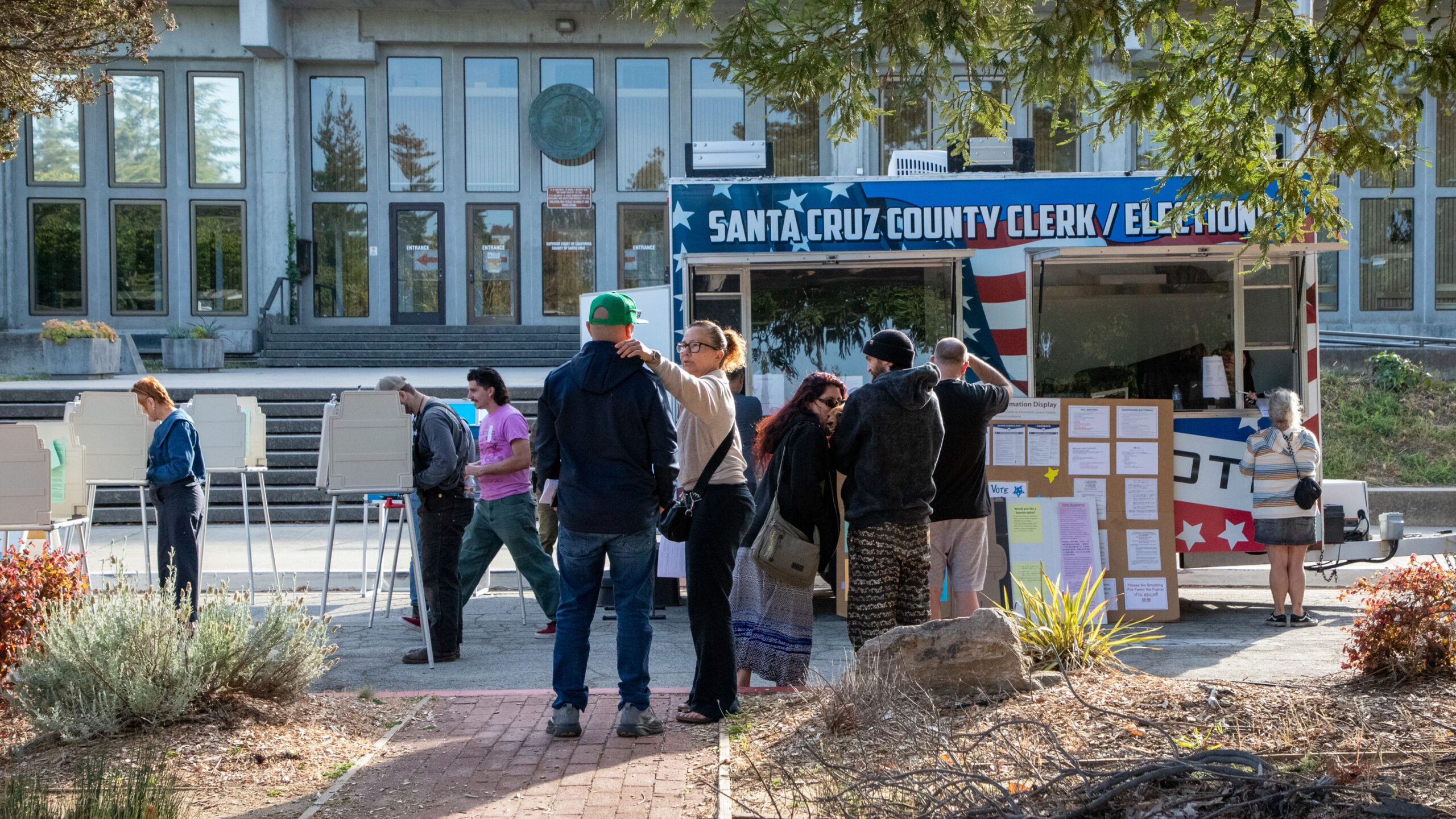
Primary Election Day in Santa Cruz on June 2. (Amaya Edwards— Santa Cruz Local/CatchLight Local)
Election Information meetings- Learn about candidate paperwork, election deadlines and the election process.
- 3:30 – 5 p.m. June 29, in the basement community room of 701 Ocean St., Santa Cruz.
- 2 – 3: 30 p.m. June 30, in the community room 500 Westridge Drive, Watsonville.
SANTA CRUZ >> More than 100 elected positions to represent Santa Cruz residents are up for grabs in the Nov. 3 general election.
Prospective candidates can file to run starting July 13. Filing ends Aug. 7, or Aug. 12 if the incumbent does not seek re-election.
What’s on the ballotThe November ballot will vary significantly across the county, in keeping with the overlapping patchworks of school districts, cities and special districts. To see which races you’ll vote in, or where you may be eligible to run, look up the address of your voter registration on the county’s interactive map, then check the tabs on the bottom for which jurisdictions it falls in.
- The positions have four-year terms. Some seats up for election would serve a partial term if a prior representative left prematurely.
- Most positions do not have term limits.
- Candidates must be registered to vote in California, and most must live in the area they will represent. Some positions have other requirements.
Forms needed for nomination are available on the county elections website. A candidate manual has more details about the candidacy and election process.
For questions, contact:
- Scotts Valley City Clerk Cathie Simonovich at csimonovich@scottsvalley.gov or (831) 440-5600.
- Capitola City Clerk Julia Gautho at jgautho@ci.capitola.ca.us or (831) 475-7300 ext. 228
- Watsonville City Clerk Irwin I. Ortiz at irwin.ortiz@watsonville.gov or (831)768-3040.
- Santa Cruz County Clerk Tricia Webber at tricia.webber@santacruzcountyca.gov or (831) 454-2060.
- Candidate Services Manager Stanley Avila at stanley.avila@santacruzcountyca.gov or (831) 454-2423.
Questions or comments? Email info@santacruzlocal.org. Santa Cruz Local is supported by members, major donors, sponsors and grants for the general support of our newsroom. Our news judgments are made independently and not on the basis of donor support. Learn more about Santa Cruz Local and how we are funded.
Learn about membership Santa Cruz Local’s news is free. We believe that high-quality local news is crucial to democracy. We depend on locals like you to make a meaningful contribution so everyone can access our news. Learn about membershipThe post Over 100 seats across Santa Cruz County are up for election. Here’s why they matter. appeared first on Santa Cruz Local.
‘Abandoned by Dignity’: Medical foundation changes contract structure with Dominican Hospital physicians, leading to more than a dozen departures
Dignity Health Medical Foundation’s decision to change its physician contracting structure has prompted more than a dozen doctors and advanced practice providers to work for other health systems. Patients say they’re concerned about healthcare access, while hospital officials say they’re recruiting new clinicians.
Carmageddon: Metro board to hold public hearing for own sales tax measure for November ballot, separate from citizens’ initiative
To pursue as many potential paths to a local funding source as possible, the Santa Cruz Metro board discussed moving to put a half-cent sales tax on the November ballot on its own accord, while Friends of Santa Cruz Metro continues its push to gather enough signatures for a citizens’ initiative ballot measure. If the board does decide to put a sales tax on the November ballot, it will require a two-thirds majority.
Cabrillo College dental hygiene faculty, students allege toxic work and learning environment

An anonymous source finishes up paperwork after a day of working at their dental office on June 23. (Amaya Edwards — Santa Cruz Local/CatchLight Local)
APTOS >> A toxic work environment. Excluded from official department meetings. Discouraged from reporting misconduct.
Heather Lawler served as director of Cabrillo College’s dental hygiene program from 2021 to 2025 and described a culture of toxic management from the top-down that worsened over time. She alleged college administrators regularly yelled at her, excluded her from faculty meetings, stalled necessary equipment repairs and asked students to falsify misconduct reports against her.
Her experiences were not isolated. Santa Cruz Local spoke with nine current and former faculty, staff and students, all of whom alleged problematic behavior by college administrators who retaliated against those who raised concerns, discouraged reporting misconduct and disregarded rules required by state law.
Earlier this year, a state investigation into the program found eight violations, resulting in a three-year probation that risks Cabrillo’s ability to prepare future students for licensure.
Four Cabrillo College administrators denied the allegations of misconduct in a 90-minute interview with Santa Cruz Local on Wednesday.
The former Dean of the School of Health and Public Service, Heidi Weber, resigned on Sunday. She declined to comment on this story. College administrators said she resigned voluntarily and declined to comment further.
Administrators also noted they could not speak to private personnel or student matters, including closed or ongoing investigations.
“We as the college take all employee complaints very seriously,” said college spokesperson Kristin Fabos. “All complaints received from dental hygiene faculty and staff from 2023 to the present were reviewed and investigated, or are in progress in accordance with applicable college policies and procedures.”
(function() { window.mc4wp = window.mc4wp || { listeners: [], forms: { on: function(evt, cb) { window.mc4wp.listeners.push( { event : evt, callback: cb } ); } } } })(); Stay informed on Santa Cruz County’s biggest issues. Santa Cruz Local’s newsletter breaks down complex local topics and shows residents how to get involved. Email address:mc4wp.forms.on('subscribed', function(form) { // gtag.js if(form.id == '6954') { gtag('event', 'subscribe', {'event_category': 'newsletter_prompt', 'event_label':'top_of_story'}); } }); Leave this field empty if you're human: ‘A very toxic atmosphere’
After an increasingly tumultuous final year leading Cabrillo’s dental hygiene program, Lawler resigned on Jan. 19, 2025. Others in the program watched Lawler be targeted by administrators. Michelle Rico, a former instructor and technician in the program, said some administrators spread rumors about Lawler, questioning her credibility and leadership.
Lawler said the final straw was when administrators allegedly directed staff and students to disregard parts of the dental hygiene student handbook, which laid out program-specific student conduct and educational requirements. Some of the dental hygiene student handbook’s policies are required by state law — ignoring them could have risked Lawler’s license to practice in California.
“I cannot manage a program where we’ve said we’re not going to follow the laws that govern us,” Lawler said.
Multiple people confirmed they were told to disregard certain procedures in the student handbook, prompting confusion and concerns from students, faculty and staff over what qualified as misconduct.
Vice President of Instruction Travaris Harris denied that the handbook was suspended and said some parts of it were superseded by the college’s broader Student Rights and Responsibilities Handbook. He and other administrators did not acknowledge the lack of clarity voiced by students, staff and faculty.
Cabrillo’s dental hygiene program has one full-time director, three classified staff and 13 part-time faculty. One of the state law violations found during the Feb. 12 site visit was that the program’s clinic was consistently understaffed.
Rico resigned from the program on Dec. 12, 2024, after administrators allegedly asked her to take on IT responsibilities for the program that were not part of her job description, without additional compensation.
She also alleged administrators would mislead her and other staff about how to officially report misconduct and was not notified whether reports were being investigated.
“It just got to be too much and anything you said could be turned on you,” Rico said. “It was a very toxic atmosphere.”
Vice President of Human Relations Angela Hoyt said the position is responsible for providing day to day technical support for dental hygiene hardware, software and equipment, and denied that the role changed during Rico’s tenure.
Other faculty shared similar stories of miscommunication and a lack of transparency by administration beyond the student handbook confusion, and requested anonymity out of fear of retaliation. They said multiple faculty in the program had been reprimanded by administrators for speaking up about the program not adhering to state dental hygiene laws.
Another instructor referenced meeting notes that describe current program director Faye Khoury and Weber, the former dean, discussing strategies to remove faculty they don’t like, including asking students to file complaints. Other current and former instructors said they have overheard similar conversations, and that complaints of any kind can be harmful to faculty’s records at Cabrillo and for future jobs.
“It can’t go on the way it’s been going,” one instructor said. “The administration is just setting people — faculty as well as students — up for failure.”
Khoury denied seeking or encouraging complaints from students against specific faculty or staff, and said her conversations with students have focused on their education. She said she has listened to student’s concerns when raised and encourages students to use official college processes.
Fabos said the allegations of retaliation are false.
“Our faculty and staff both have union representation, so if that were to happen, they’ve got union representatives to advocate for them and address those issues,” Fabos said.
Kendall Sooter, spokesperson for the Cabrillo College Federation of Teachers, declined to comment on any grievances filed from the department.
Former and current faculty members said they reported administrative misconduct to the college’s human resources department and the union, but said reports went nowhere and they were not notified of any updates.

Santa Cruz Local spoke with nine current and former faculty, staff and students, all of whom alleged problematic behavior by college administrators. (Amaya Edwards — Santa Cruz Local/CatchLight Local)
Impacts to student educationMultiple students from the class of 2025 alleged that conflict between administrators and faculty affected their learning environment, with managerial strife leading to students being neglected.
The former students requested anonymity for fear of retaliation. They said there was a lot of tension between fellow students in their cohort, with classmates filing misconduct reports against each other. These reports were made either directly to administrators or through the college’s official Just Report It system.
Students filed multiple reports against classmates in the cohort’s two years at Cabrillo, alleging sexual harassment, bullying, vandalism and intimidation.
Despite the reports, the students said administration failed to follow up with them, downplayed their worries and suggested they were reporting false accusations.
One student alleged there was a meeting in which Weber encouraged the cohort to “just drop” the misconduct reports. At a state board meeting on March 27, Harris referenced the students charged with intimidation and said they “didn’t do what they were accused of doing.”
Harris and the other administrators declined to comment on the student investigations.
Santa Cruz Local reviewed an audio recording of a meeting about the dental hygiene program on May 10, 2025, involving students, some faculty and staff, and at least three administrators. In the recording, an administrator says they have been inundated with false reports and suggested the school could cancel the program’s unofficial graduation celebration, or “pinning ceremony.”
“The pinning ceremony can get taken away if there continues to be any type of false accusations made because that is also a violation of our code of conduct,” the administrator says in the recording.
Another administrator is heard in the recording suggesting the school could “pull somebody’s diploma” as punishment for students who disrupt the ceremony.
During the Wednesday interview with Santa Cruz Local, college administrators declined to comment on this specific meeting but said they host multiple meetings about available support resources and proper reporting procedures for students, faculty and staff across campus.
“On a regular basis, people from my team, including Samantha and others, might be asked by a dean or a faculty director, chair, etc., to come and support a program because there might be challenges,” Hoyt said.
Former students said they felt the meeting was a threat from administrators, dissuading them from reporting further misconduct.
“I honestly felt very hopeless,” one student said. “I actually felt like the school was failing me and my other classmates, to actually protect us.”
Moving the program forwardCabrillo is working to address the eight violations identified by the state board earlier this year. Inspectors have visited Cabrillo six times since the board was created in 2019 — once in 2019, three times in 2024 and twice this year.
Harris said all conversations over the past weeks between the college and the state board have been positive, and that the board complimented them for the work they’ve done so far to address the violations. He said the college is working on hiring a second full-time faculty for the program to address the staffing gap.
“I fully expect that some of the violations will be resolved as a result of the work we’ve done to give them the information that they requested and also our great conversations,” Harris said.
Anthony Lum, executive officer for the state board, agreed that Cabrillo appears to be “diligently” addressing the violations. The state’s dental hygiene clinical exam was eliminated in 2024, so Lum stressed the importance of holding educational programs to a high standard.
“We rely on the individual schools to uphold their professionalism, ethical boundaries, and procedures to graduate high quality students,” Lum said.
The program’s 20 students graduated on Monday, and Lum said the board confirmed that all students completed requirements and are eligible to apply for a California dental hygiene license.
Questions or comments? Email info@santacruzlocal.org. Santa Cruz Local is supported by members, major donors, sponsors and grants for the general support of our newsroom. Our news judgments are made independently and not on the basis of donor support. Learn more about Santa Cruz Local and how we are funded.
Learn about membership Santa Cruz Local’s news is free. We believe that high-quality local news is crucial to democracy. We depend on locals like you to make a meaningful contribution so everyone can access our news. Learn about membershipThe post Cabrillo College dental hygiene faculty, students allege toxic work and learning environment appeared first on Santa Cruz Local.
Santa Cruz’s 418 Project aims to reinvent itself with a bold new step toward mysticism, esoterica and the avant-garde
Under the leadership of new executive director Dennis Bartok, Santa Cruz’s long-standing arts nonprofit The 418 Project is undergoing a “rebirth” by expanding its traditional dance focus into adventurous, self-produced programming.
Santa Cruz County shares 911 and libraries. Why not housing?
Santa Cruz County is losing its young families with children — and local activist Kevin Norton says our fractured, agency-by-agency approach to housing is why. Here, he offers up a new, collaborative approach to housing that he thinks will help families, teachers, first responders and others stay in our community. He believes we need to follow Orange County and the San Gabriel Valley and create a “joint powers housing trust” that allows cities, agencies and the county to work together – and reduces the bureaucracy of applying for low-income housing. We coordinate for book lending and emergency services, he argues. Why not housing?
Nuñez wins Santa Cruz County supervisor race

Tony Nuñez will be the next Santa Cruz County Supervisor representing the 4th District after final election results certified Friday showed he secured an outright victory in the June primary.
Final results released by Santa Cruz County Clerk Tricia Webber show Nuñez received 50.07% of the vote, enough to avoid a November runoff under California election law.
Incumbent Felipe Hernandez received 30.84% of the vote.
Nuñez will represent the district that includes Watsonville, Pajaro and surrounding South County communities.
A Watsonville High School graduate, Nuñez began his career as a reporter and later editor at The Pajaronian and Good Times before joining Community Bridges, where he now serves in a leadership role. He also helped lead the effort to preserve Watsonville Community Hospital as one of the inaugural members of the Pajaro Valley Health Care District Board of Directors, and currently serves as board chair.
He will give up that seat when he takes on the role of Supervisor.
Throughout his campaign, Nuñez said his priorities are improving access to essential services, creating more economic opportunity for working families and ensuring greater accountability in county government.
He said protecting and strengthening services such as health care, mental health care, transportation, child care, parks and community spaces would be among his top priorities.
Nuñez has also said the county must do more to help families remain in the community by addressing rising housing and child care costs, protecting anti-poverty programs and supporting workforce development and small businesses.
On government accountability, he pledged transparent leadership that clearly explains decisions, measures results and responds when public systems fail to meet community needs.
Nuñez immigrated from Cuerámaro, Guanajuato, Mexico, with his family when he was 8. The grandson of a farmworker and the son of blue-collar workers, he has often cited his family’s experience as shaping his approach to public service.
He has described his career—from journalism to nonprofit leadership and public service—as centered on strengthening the institutions residents rely on every day.
Nuñez lives in Watsonville with his wife and young son.
Pajaro Valley Unified chief business officer resigns

Pajaro Valley Unified School District’s chief business officer announced his resignation this week after about eight months on the job.
Gerardo Castillo was hired last September and started on the job Oct. 1. His resignation comes a year after the previous CBO, Jenny Im, resigned.
“My short tenure at PVUSD since October of last year is not a reflection of my colleagues, and especially not of Dr. [Heather] Contreras, but rather due to a recent change in health for one of my family members,” he said in a statement. “This has significantly shifted our circumstances, making it essential that I accept a professional opportunity closer to home to prioritize my family.”
In a message to staff Friday morning, the district said Castillo made the decision to resign and take a new role with Sacramento City Unified School District.
“While we are saddened to see Gerardo leave PVUSD, we are deeply grateful for his service, leadership, and dedication to our district,” district officials wrote. “During his time with PVUSD, Gerardo helped guide important financial and operational work in support of our schools, students, and staff.”
The district said it will begin searching for a new CBO soon and is committed to a “smooth transition.”
According to his statement, Castillo said the district is facing significant challenges, from declining enrollment to rising healthcare costs.
“Addressing these issues requires difficult but necessary actions, and the ongoing work regarding school consolidation and school closures must continue if the district is to achieve fiscal stability,” he wrote. “While we recognize that there are strong opinions surrounding these issues, the ongoing public discussion and differing interpretations of our fiscal realities have made it more difficult.”
During school board meetings, teachers union representatives have argued against recently approved layoffs and the district’s budget projections, saying that PVUSD is manipulating the budget in order to make more cuts than necessary. However, many school districts are facing similar budget challenges across the state.
The Pajaro Valley Federation of Teachers said in a statement that despite Castillo’s departure, its priority continues to be to put students first.
“We look forward to engaging the district in this mediation process and reaching an agreement that prioritizes our students and staff,” the union wrote.
Have something to say? Lookout welcomes letters to the editor, within our policies, from readers. Guidelines here.
The post Pajaro Valley Unified chief business officer resigns appeared first on Lookout Santa Cruz.
Tony Nuñez unseats incumbent Felipe Hernandez in District 4 county supervisor race

Longtime community leader and former journalist Tony Nuñez has defeated incumbent Felipe Hernandez in the race for the District 4 seat on the Santa Cruz County Board of Supervisors.
Nuñez has maintained a nearly 20 percentage-point lead over Hernandez over the past three weeks as vote tallies were posted since the June 2 primary election. Nuñez earned 50.07 % of the vote ( 3,944 of 8,510 votes cast) while Hernandez had 30.84% and third-place Elias Gonzales received 18.41%.
Nuñez won the race outright because he received at least a simple majority plus one (50% of votes cast + 1). If no candidate had reached that threshold, the top two vote-getters would head to a run-off election in November.
“[I’m] just really humbled by the trust voters have placed in me,” Nuñez told Lookout Friday afternoon. “Listening to voters was an incredible experience, and they have put their trust in me. And, it was not a small amount of people who put their trust in me.”
More than anything, Nuñez said he’s excited about the opportunity to continue serving the community in this role.
Now that Nuñez has won the District 4 seat, he will be required to vacate his role as board chair of the Pajaro Health Care District, which operates Watsonville Community Hospital, at a time when the health care facility is undergoing a leadership change with the impending departure of CEO Stephen Gray.
The focus for his last six months on the hospital board will be supporting it’s new interim CEO, Tim Moran, staff and leadership as best he can. “It’s a huge time of transition for the healthcare district and the hospital,” he said.
Throughout his campaign, Nuñez has said that he wants to increase economic development in South County — which he believes could be the key to meeting community needs.
He told Lookout in April that he’d like to work with Watsonville city officials to figure out ways to develop tourism in the city that’s been primarily driven by agriculture and nonprofits. The county — which currently faces a $23.2 million deficit for the 2026-27 fiscal year — is struggling to bring in additional revenue to fund programs that benefit community members, Nuñez said.
As supervisor, Nuñez said he’d like to address the impact a high cost of living has on families in Santa Cruz County — especially in South County. He previously told Lookout one of his ideas would be to create a pilot program that would ensure residents in the Pajaro Valley have access to low-cost childcare up to transitional kindergarten.
Another initiative Nuñez would like to create is a robust down-payment assistance program for local residents, specifically in South County, to help increase homeownership. But acknowledged that those things take money and time to achieve.
 The candidates for District 4 Santa Cruz County supervisor at an April forum hosted by Lookout in Watsonville, from left, challengers Tony Nuñez and Elias Gonzales and incumbent Felipe Hernandez. Credit: Kevin Painchaud / Lookout Santa Cruz
Nuñez’s victory marks a surprising upset: the first incumbent supervisor in recent history to outright lose a reelection bid in the primary election. Hernandez’s predecessor on the board of supervisors, Greg Caput, served three terms before retiring from public office. Before that, Caput unseated Tony Campos, who was seeking a fourth term, in the November 2010 election.
Hernandez has faced criticism from his South County constituents throughout his reelection bid over not taking a stance on a contentious proposal to build a battery storage facility outside of Watsonville, along with the county’s handling of a local ordinance meant to regulate these facilities. He also faced allegations that he removed one of his opponent’s campaign signs a week before the June 2 primary.
Hernandez did not respond to Lookout’s request for comment.
Have something to say? Lookout welcomes letters to the editor, within our policies, from readers. Guidelines here.
The post Tony Nuñez unseats incumbent Felipe Hernandez in District 4 county supervisor race appeared first on Lookout Santa Cruz.
Santa Cruz County 2026 primary election results in charts: Final tallies for all county races

Welcome to Lookout’s 2026 primary election results page. The Santa Cruz County Clerk certified the results of the June 2 primary election Friday, releasing the final vote counts in all county races just after 2 p.m. See the charts below for the final margins.
Santa Cruz County supervisor resultsIn District 3, encompassing Santa Cruz, Davenport and Bonny Doon, Justin Cummings secured a second term after running unopposed. In District 4, covering much of the city of Watsonville and the Pajaro Valley, challenger Tony Nuñez has unseated incumbent Felipe Hernandez, avoiding a November run-off after securing 50.07% of the vote.
Santa Cruz County Superior Court judgeImmigration attorney Alisa Thomas defeated criminal defense attorney Bryan Hackett in the race for an open seat on the Santa Cruz County Superior Court.
Santa Cruz mayorRyan Coonerty and Ami Chen-Mills are headed to a November run-off after securing the top two spots in the five-person field vying to succeed Mayor Fred Keeley.
Santa Cruz City CouncilIn District 4, covering downtown and part of the Westside bounded by High Street to the north and Bay Street to the west, incumbent Scott Newsome won a second term, defeating challenger Hector Marin. In District 6, which covers the lower Westside, the westernmost part of the upper Westside and part of the UC Santa Cruz campus, Renee Golder also secured reelection, beating Gabriella Noack.
Have something to say? Lookout welcomes letters to the editor, within our policies, from readers. Guidelines here.
The post Santa Cruz County 2026 primary election results in charts: Final tallies for all county races appeared first on Lookout Santa Cruz.
Letters to the Editor June 22-July 2
Data center installations need tight standards
There are issues coming up with many of the data center installations: they need power and cooling with water. Some of these data systems are planned where there is little water and should be required to move to regions that have plentiful water such as Minnesota, Wisconsin, Michigan and Washington. There should be restraints placed to prohibit installations in dry states. Power demands for these installations are causing local utility rates to rise. If the installations were allowed to provide their own power then there would be no effect on local rates. In many states this is impossible because the public utilities have lobbied to prevent private power plants. This has to be reversed. Private installations need to meet the same standards as public ones and have the ability to sell their excess power to the public network.
Bill Beecher
Aptos
•••
Preserve Capitola Boat & Bait
Capitola Boat & Bait has been an important part of the Capitola Wharf for generations and deserves to remain there. For decades, it has served recreational anglers, commercial fishermen, boat owners, and visitors who come to enjoy one of Capitola’s most treasured landmarks.
The business provides essential services that support boating and fishing activities in Monterey Bay, including bait, tackle, supplies, and assistance for those using the harbor’s moorings. Without these services, maintaining a vibrant boating and fishing community becomes much more difficult.
Fishing is not only a cherished recreational pastime for local families and tourists, but it also supports commercial fishermen who contribute to our local economy and coastal heritage. Capitola Boat & Bait helps sustain both.
The business also generates revenue for the City of Capitola through lease payments, visitor traffic, and the economic activity it brings to nearby restaurants and shops. Losing it would diminish the character and utility of the wharf.
Capitola should preserve this long-standing local institution and the valuable services it provides to residents, fishermen, and visitors alike.
Mike Lelieur
Pleasure Point
Supervisors delay vote on arts funding cuts

Santa Cruz County supervisors on Tuesday postponed until June 30 a decision on proposed cuts to local arts funding after hearing from dozens of residents who urged them to preserve grants for arts organizations.
Under the proposal, funding for the Santa Cruz Museum of Art & History would be cut by 50 percent to help restore parks and recreation services. County staff also proposed redirecting $77,297 from the museum’s contract and eliminating a $170,046 contract with the Arts Council as part of a package to restore seven-day operations at Simpkins Family Swim Center, portable restroom service and park maintenance.
Supervisors directed county parks staff to identify other budget reductions that could preserve arts funding.
The proposed package would redirect $590,000 to the county’s Parks, Open Space and Cultural Services Department. Along with reductions to arts funding, it includes Measure K and Measure Q funding, risk management dollars, reductions to recreation grants and the cancellation of a software contract. The funding would restore daily operations at Simpkins Family Swim Center, restroom and maintenance contracts, and replace revenue expected from a paid parking pilot program that the county later scrapped.
Parks Director Jeff Gaffney acknowledged the proposal was difficult.
“It was a very difficult budget to propose,” he said.
The proposal drew strong opposition from dozens of speakers, many of whom argued the arts community is central to Santa Cruz County’s identity.
Arts Council Santa Cruz County Executive Director Jim Brown said the organization has already adopted a budget with a $130,000 deficit.
“We, like the county, are tapping our reserves to sustain programming, and we will not be able to sustain the proposed cut,” he said.
Tandy Beal, founder of Tandy Beal & Company, which brings dance and performance programs to schools, said the cuts would be a mistake.
“The arts beautify Santa Cruz,” she said. “They beautify the material world and people’s hearts. It would be a terrible mistake to cut the arts budget.”
MAH Executive Director Ginger Porcella said declining federal funding has already strained the museum’s finances.
“A world without art is not a world that I think any of us want to live in,” she said.
Ruby Vasquez, who leads the Watsonville-based folklórico groups Esperanza del Valle and Estrellas de Esperanza, said the cuts could damage a valuable cultural resource.
“The arts are an essential part of our community,” she said. “They are just as important as any other part of our community.”
Supervisor Justin Cummings said music had a profound impact on his life.
“Punk rock saved my life as a teenager,” he said. “We see how much the arts change people’s lives every day.”
Cummings said the arts are a vital part of the county’s culture and economy, pointing to First Fridays, art walks and art-and-wine festivals.
“Not only is it a part of our culture, but it’s a huge part of our economy,” he said.
Cummings suggested using the county’s 10.4 percent reserves to preserve arts funding, but County Executive Officer Nicole Coburn said that was not an option.
“We can definitely not take any more out of reserves,” she said, adding that many counties maintain reserves closer to 30 percent.
Supervisor Manu Koenig instead suggested using discretionary Measure K funding — generated by the county’s half-cent sales tax — and Measure Q revenue, which comes from an $87 parcel tax for land and water management and conservation programs.
“I really don’t think that we should draw down our reserves further to solve this problem, especially because it’s a one-time solution and really doesn’t solve the problem going forward,” he said. “If we all put in $100,000 from Measure K to make the parks budget whole, however that’s done, we have more than enough to do so.”
A visibly frustrated Gaffney said staff had already spent months trying to balance the budget.
“There’s not a lot left to cut,” he said. “So you’re going to be looking at dry grass at Felton Covered Bridge. You’re going to be looking at dry grass at Willowbrook Park. You’re going to be looking at no bathrooms in places. These are the tough choices we have to make. I get that, and we’ll figure it out. We went forward in good faith back in March to try to make this happen, and it’s not going to look good in nine months or 10 months where the county parks department will be.”
PVUSD trustees table $192M bond measure
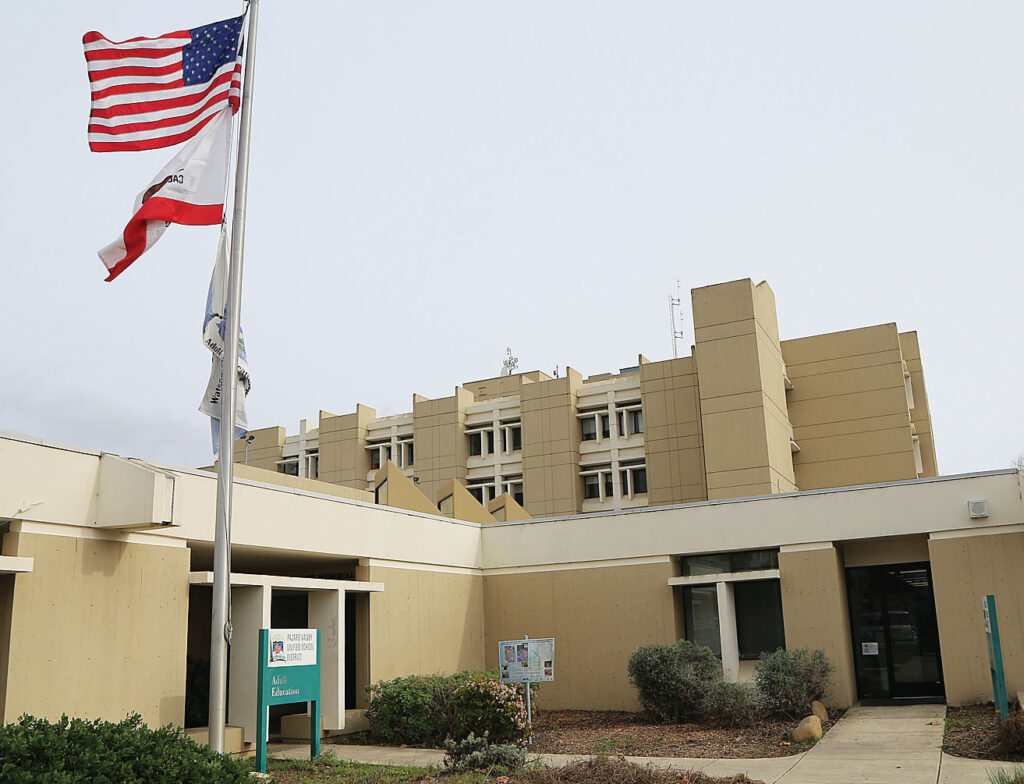
The Pajaro Valley Unified School District Board of Trustees on Wednesday declined to place a $192 million school facilities bond measure on the November ballot, instead signaling they would revisit the proposal in a future election, possibly in 2026 or 2028.
The measure would not increase taxes for property owners within district boundaries. Instead, it would replace Measure J, which voters approved in 2002 and which expires in 2030, maintaining the current tax rate of $120 per $100,000 of assessed value.
Superintendent Heather Contreras said the district needs additional bond funding to address roughly $1 billion in deferred maintenance and other facility needs, adding that the district’s existing $350 million Measure M bond is insufficient to meet those demands.
“That’s how schools are funded,” she said. “When you need to make facility improvements, you have to go out for a bond.”
Dale Scott of Dale Scott & Co., which conducted a $15,000 survey of 410 voters from May 26 to June 1, said the poll found about 58 percent support for the measure.
Trustee Gabe Medina questioned whether the survey accurately reflected districtwide opinion. He noted that Monterey County accounts for about 8 percent of the district’s electorate — 4,666 voters — but only 20 survey respondents came from that area.
“How can we justify basing this districtwide $192 million bond decision on a sample size of just 20 people from my trustee area?” he asked.
“I will be opposing this, and this is going to fail, and I will be siding with the teachers union.”
Medina’s concerns were echoed by several of his colleagues, none of whom expressed support for placing the measure on the November ballot.
Trustee Misty Navarro suggested waiting until the 2028 presidential election, when more voters are likely to participate.
She noted that Measure M passed with 55.39 percent of the vote in 2024, narrowly exceeding the required 55 percent threshold.
Navarro also said voters have not yet seen the benefits of that bond.
“I think the timing on this is incredibly wrong,” she said.
Board President Carol Turley said she also had reservations, particularly because the district’s Sustainable Schools Advisory Committee has not yet completed its recommendations on possible school closures.
“I hear from a lot of community members that they feel overtaxed, and I am a little surprised by how the survey came out,” Turley said.
Watsonville May Soon Implement “no encampment zones”

Watsonville may soon draw out designated “no encampment zones” which would bar unhoused individuals from setting up tents, parking RVs or using cooking supplies in certain areas.
Signs would be posted showing a map of the zones.
These areas would be subject to immediate cleanup, and the city would not require a 72-hour notice to remove personal items in these sections of town. Major waterways and parks would be prioritized as no encampment zones if the ordinance were to be enacted.
The updated ordinance is largely driven by current enforcement problems. When cleanup crews arrive at existing encampments along the city’s levees and sloughs, campers often simply move their belongings outside the work zone to a different location on the waterway, city officials say. This creates a new site that requires its own 72-hour notice to clear.
The new “no encampment zones” would allow cleanup crews to immediately clear the area without that requirement.
Police Capt. Mish Radich says the ordinance is modeled around an existing ordinance from San Jose.
“This camping order supports public health, safety, the environment, access to parks and open spaces and public right-of-way,” he said.
The first reading of the ordinance was approved at the Tuesday night City Council meeting, with all in attendance voting yes except Mayor Vanessa Quiroz-Carter, who vehemently opposed it, citing a lack of services for the unhoused community in Watsonville.
“This is ridiculous. I will not be supportive of this,” Quiroz-Carter said of the ordinance. “We need to have adequate services for people. We need to have adequate shelter for people. That’s a basic human right.”
The item will return to the council for a second read and approval later this year.