Building connections through community journalism

As this school year and my internship at Lookout Santa Cruz comes to a close, I’ve been reflecting on the incredible journey it has been. Working as a Community Engagement Intern, I have been able to expand my sense of community within Santa Cruz, gain real-life experience in an office setting and more. I am so grateful for all of my time, connections and opportunities that I have been given at Lookout and will take what I have learned with me into future jobs and work experiences.
When I first began at Lookout Santa Cruz, I hadn’t had much work experience in an office setting, having spent past internships doing remote work or in other sorts of spaces. Because of this, I entered Lookout a bit anxious about communicating with co-workers and advocating for help when I was confused on assignments. As I progressed in my internship and collaborated more with my co-workers, I grew more confident in my own abilities and learned how to ask for clarification when I needed it.
At Lookout, I had the chance to participate in projects and to help organize events it facilitated throughout the year. I joined Lookout in its fifth year as a Santa Cruz County news site, and therefore many of my projects centered around highlighting the work that Lookout has done for the community over the years. In the fall quarter, at the start of my internship, I created a five-year timeline of Lookout’s history. As a history major, I enjoyed getting to comb through the different projects and stories that Lookout has published. This project allowed me to learn about Santa Cruz County and situate myself in a place that I was still growing familiar with as a sophomore in college. I compiled the timeline into posters and was given the opportunity to write an article about my experience creating the timeline: Telling Lookout Santa Cruz’s story — and finding my own place in it. At the end of the project, I displayed my timeline posters in Lookout’s newsroom, leaving my mark on the office space.

In the winter quarter, I worked on the HERStory project, collaborating with the Santa Cruz Museum of Art and History to create visuals for its annual event honoring the women changemakers of Santa Cruz. For each woman who was nominated, representing the past, present and future of Santa Cruz, I made a poster including descriptions of each awardee and their achievements. I was inspired by the work that these women were doing across the county and feel extremely proud and grateful to have been a part of this celebration and honoring of these women. Attending the event at the MAH, which was full of community pride and happiness, and seeing my work displayed was an amazing experience.


Wrapping up my internship in the spring quarter, I focused on creating election materials, infographics and images for candidate forums hosted by Lookout. I especially enjoyed getting information translated into Spanish, using my bilingual skills to create material for the first Watsonville election event hosted by Lookout. Throughout this process, I was able to better get to know Santa Cruz County’s political climate. I also crafted an impact report to showcase Lookout’s work and hopes for its future. Getting to conclude my internship with this work was very rewarding and motivating.
My time at Lookout Santa Cruz was special and allowed me to work on multiple projects. I gained many skills that I will take with me into future employment as well as a strong sense of pride in my new home and community connection.

Galicia Stack Lozano is a student at UC Santa Cruz and an intern at Lookout Santa Cruz through the Humanities EXCEL program led by the UC Santa Cruz Humanities Division with strategic support from The Humanities Institute
The post Building connections through community journalism appeared first on Lookout Santa Cruz.
Covering Santa Cruz: An intern’s introduction to local journalism

“What do we want? Democracy! When do we want it? Now!”
This was one of the first slogans I heard approaching the No Kings protest, the first event that my editor at Lookout Santa Cruz tasked me with covering. I could feel my heart pounding its way out of my chest. I had been interning here for a month and half; I thought, they must really trust me to let me cover something this big. I’ll never forget this moment – it was the first time I got to practice interviewing local residents, and I even got to speak to the event coordinator.
 No Kings 3
A month later, I got the opportunity to write a piece about the delay of CalFresh benefits for the month of November, and how that has affected UC Santa Cruz students who rely on them. Through this experience, I had the opportunity to practice the art of interviewing people, which provided me with insight into what matters most to Santa Cruzans. Some of the most notable people I got the chance to interview were Mayor Fred Keeley and Rep. Jimmy Panetta.
On top of doing editorial work, I also got the opportunity to help out with our community outreach. I helped out at one of Lookout’s 2026 election forums, where candidates running for mayor and city council spoke about some of Santa Cruz’s most pressing issues.
I really leveraged my communication skills in this role. Studying the humanities has helped me learn to share information clearly and thoughtfully, in an understandable, unbiased way. That skill became especially important when interviewing sources, writing stories and making complex local issues accessible to readers.
This summer, I will be attending the UC Center Sacramento program, where I will intern for a local organization such as Capitol Weekly or the governor’s office.
If you want to support work like this, one simple but meaningful action is to subscribe to local news outlets and stay engaged by reading local journalism. And if you’re a student at UCSC, you can get a subscription to Lookout Santa Cruz for free, so I encourage you to take advantage of this resource.
 Ashley Palma-Jimenez Intern
Ashley Palma-Jimenez is a student at UC Santa Cruz and an intern at Lookout Santa Cruz through the Humanities EXCEL program led by the UC Santa Cruz Humanities Division with strategic support from The Humanities Institute.
The post Covering Santa Cruz: An intern’s introduction to local journalism appeared first on Lookout Santa Cruz.
WPD officer hurt in foot pursuit

A Watsonville Police officer was hurt on the job Monday morning during a foot pursuit of a woman suspected of shoplifting.
The incident began when WPD got a call regarding a woman that had stolen items from the Dollar Tree at 1010 Main St. around 9:50am. As police infiltrated the area officers were updated that the suspect, described as a female in a gray hoodie top and black pants, was walking past the Grocery Outlet toward downtown Watsonville.
Then an officer spotted her trying to flee officers around Rodriguez and Main streets, where she reportedly ditched the stolen items. As one officer gave foot pursuit, he appaently at the intersection of Freedom Boulevard at Main Street and suffered a serious injury to his leg.
As police called for emergency medical and firefighter response, other officers managed to take the 34-year-old suspect into custody.
Police then shut down Main Street in the area and several surrounding lanes in the heavily travelled intersection to allow for the rescue effort.
The incident is still under investigation. No names have been released.
Fieldworker turned business owner: Dulce Organic Farms

Farm workers harvest berries off West Beach Street near Watsonville on July 3, 2025. (Amaya Edwards — Santa Cruz Local/CatchLight Local)
WATSONVILLE >> Noticias Watsonville contributor Pedro González Rentería tells the story of Antonia Vega González, owner of Dulce Organic Farms in Watsonville, through a short documentary film. Antonia’s story is especially powerful because her journey to owning her own farm started with being a fieldworker for more than two decades.
She was born in San Martin Peras, Oaxaca before making her way to Watsonville. As an Indigenous Mixtec woman, Antonia shares about the deep pride she has in her path from fieldworker to business owner.
“The documentary is a tribute to the resilience and pride of all farmers,” Rentería said of his reasons for pursuing the story.
Watch the video on InstagramWatch the video on Instagram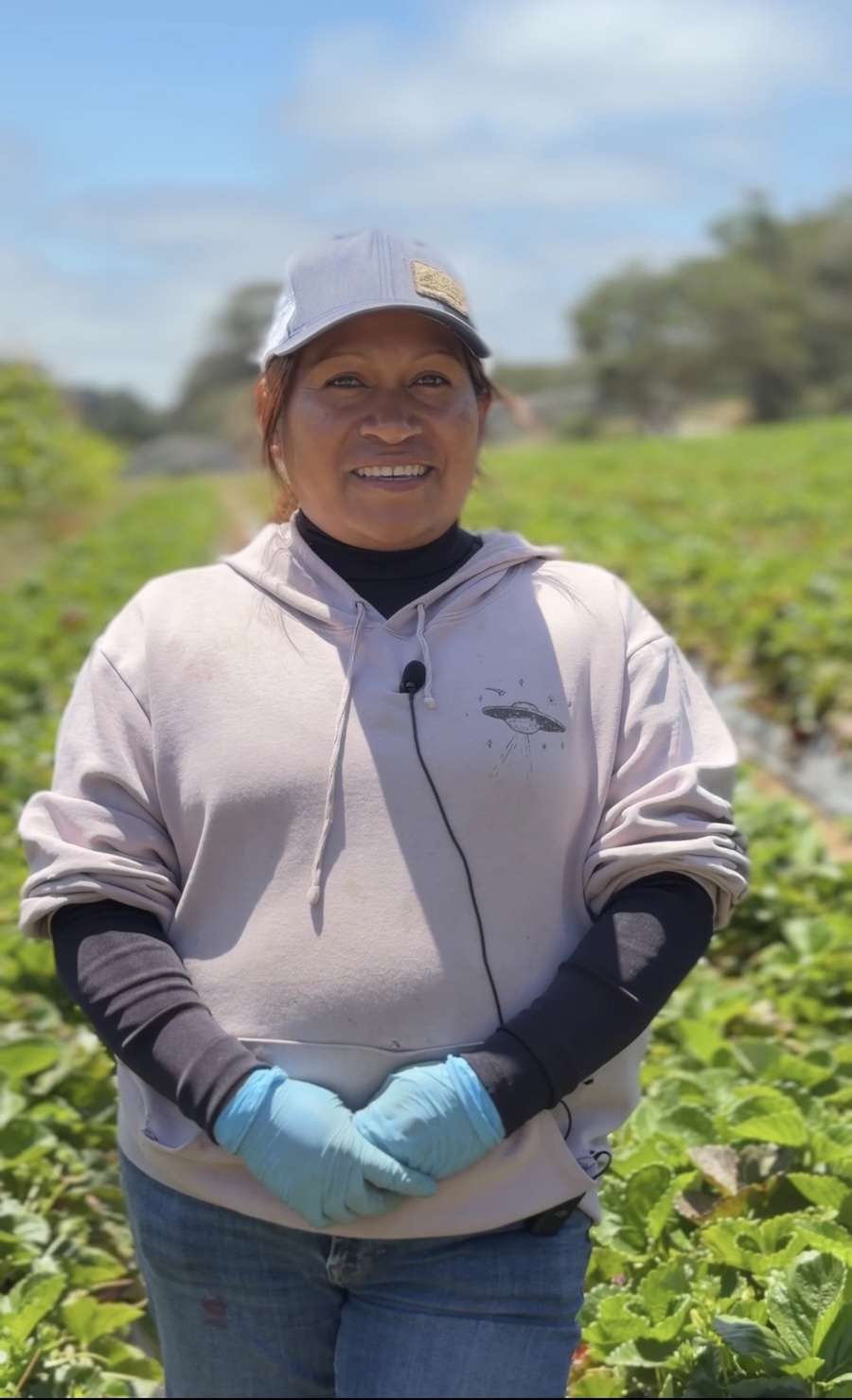
Questions or comments? Email info@santacruzlocal.org. Santa Cruz Local is supported by members, major donors, sponsors and grants for the general support of our newsroom. Our news judgments are made independently and not on the basis of donor support. Learn more about Santa Cruz Local and how we are funded.
Learn about membership Santa Cruz Local’s news is free. We believe that high-quality local news is crucial to democracy. We depend on locals like you to make a meaningful contribution so everyone can access our news. Learn about membershipThe post Fieldworker turned business owner: Dulce Organic Farms appeared first on Santa Cruz Local.
Monday morning traffic: Highway 9 one-way traffic, SR-152 & Hwy 17 lane closures
This post is updated throughout the day to reflect the latest incidents. It was last updated at 6:31 a.m..
Here’s what’s happening on the roads this morning…

▼︎ new incidents ▼︎ long-term incidents
Road incidents as of 6:30 a.m. on June 22- Highway 9 at Cascade Avenue in San Lorenzo Valley has one-way traffic due to ongoing work. This closure will last until August 31.
- There will be alternating lane closures on Highway 9 at Pool Drive in San Lorenzo Valley because of bridge work. This will continue until April 30 at 6:59 a.m.
- A lane on westbound SR-152 at Clifford Drive/Ohlone Parkway in Watsonville/Pajaro is closed for asphalt paving. The closure will last until 5:59 a.m. on July 3.
- North Highway 17 at Pasatiempo in Eastside / Live Oak is facing closures for asphalt paving. The closure is expected to end at 6:01 a.m. today.
- CHP helped with construction at 10395 Soquel Dr in Aptos. At 9:13 p.m., a traffic break happened northbound at Morrissey, and lanes 2 and 3 were closed at Pasa. The incident was reported on June 21.
- A traffic hazard was reported at the intersection of San Juan Rd and Porter Dr in Watsonville / Pajaro at 5:56 a.m. today.
These have been going on for a while, but are still worth keeping in mind.
- Mill St. between Main St. and Highway 9 in Ben Lomond will be closed to vehicles from 8:00 a.m. to 3:00 p.m. on 6/6, 7/4, 8/1, 9/5, and 10/3 for the Ben Lomond Village Market event. Traffic control and detour signs will be posted.
Disclosure: Traffic incidents are partially generated by artificial intelligence. We are constantly working to improve the accuracy and quality of our AI-generated content. However, there may still be errors or inaccuracies. If you have any questions or concerns, please contact us.
The post Monday morning traffic: Highway 9 one-way traffic, SR-152 & Hwy 17 lane closures appeared first on Lookout Santa Cruz.
Carmageddon: Dispute between RTC, Aptos Village property owners heading to court
A dispute between the Santa Cruz County Regional Transportation Commission and property owners in Aptos Village about who owns a portion of land along the rail line is moving forward, with a trial expected to begin no earlier than the week of July 13.
Leif Ames murder trial set for November
A Santa Cruz County Superior Court judge scheduled a November trial date for Leif Ames, who faces murder charges in the killing of his friend Hubert Cross in Live Oak in 2020. The trial has been delayed on at least eight occasions.
Here are the recommendations for renaming Watsonville’s Cesar Chavez Middle School
A Pajaro Valley Unified School District committee has recommended renaming Cesar E. Chavez Middle School either Central Coast Middle School or Tagami Hashimoto Middle School following allegations of sexual abuse against the late civil rights and farmworker advocate that surfaced earlier this year. The school board reviewed the options last week and is expected to vote on a new name at a future meeting.
California is getting ready to increase a health insurance tax. Will it affect your premium?

This story was originally published by CalMatters. Sign up for its newsletters.
Legislators last week approved a health tax bill meant to continue critical federal funding for the state’s Medicaid program, also known as Medi-Cal. Their approval comes despite warnings from health industry leaders that the tax, as designed, will raise premiums for privately insured Californians.
New federal rules are forcing the state to restructure its managed care organization tax, or MCO tax, which the state collects from health insurance plans that coordinate care for their members. California has been charging Medi-Cal insurance plans at a higher rate than private plans. The state’s newly designed solution, Senate Bill 125, will lower the tax on Medi-Cal plans and raise the tax on private plans to the same level. If finalized by the governor, and accepted by the federal government, the new plan would shift more of the cost burden onto people who buy private insurance but bring in less revenue overall.
Senate President Pro Tem Monique Limón, a Santa Barbara Democrat, told reporters last week that there was no perfect plan for redesigning the tax and that the Senate still has concerns, but the proposal senators voted through is one that would bring in money quickly.
“We have as a Senate been very clear that we needed revenue … it was a matter of making a decision which we could troubleshoot given what is happening at the federal level,” Limón said.
As part of the tax and spending law Congress passed last summer, the federal government imposed new restrictions on provider taxes, including the one imposed on health plans. Under existing rules, California received almost $8 billion annually from this tax; the new limits mean the state will receive billions less. The Legislature’s plan tries to fill at least some of that gap.
The plan does not directly raise health insurance premiums. Instead it imposes a higher tax on private plans, which have said they’d pass the cost down to consumers.
The proposal would require all health plans, both public and private, to pay a monthly rate of $8.85 per enrollee – a total cost of about $1.5 billion a year for private plans. If health plans pass the entire tax to their members, Californians could see about a 1.5% increase in their monthly premiums, according to the independent Legislative Analyst’s Office. That’s on top of the yearly premium rate increases that people see year to year.
The California Association of Health Plans, the health insurance lobby, estimates this would translate to consumers paying about $100 more in premiums each year. That means a family of four could be looking at $400 more a year in health premiums.
Charles Bacchi, president of the association, said health plans roll taxes and fees into the administrative portion of premiums. “That is just actuarial science,” he said. “So when you increase taxes on health plans and insurers, that is built into premium rates and the customer pays it.”
Affordability is key concernThe Legislature’s plan largely mirrors what Gov. Gavin Newsom and his Department of Finance proposed last month. Bacchi argues the state could have imposed a smaller tax to lessen the impact on plans and consumers.
The Department of Finance said it tried to balance affordability for privately insured patients with generating enough revenue to keep the safety net afloat amid federal funding cuts. The department settled on the $8.85 a month assessment because that rate would generate $2.3 billion a year – roughly the amount that the state generated before 2023 to support Medi-Cal, said H.D. Palmer, a spokesperson for the Department of Finance.
 A medical worker pushing a bed through the corridors of Hazel Hawkins Memorial Hospital in Hollister. Credit: Larry Valenzuela / CalMatters/CatchLight Local
Of that total, $2 billion would support existing Medi-Cal services, while roughly $300 million would fund previously established rate increases for providers delivering primary, maternal, and mental health care to enrollees, Palmer said.
Some legislators continued to raise concerns late into the week. Sen. Akilah Weber Pierson, a San Diego Democrat, said she found the tax plan “extremely problematic” as she questioned the administration during a hearing Wednesday. “I am very uncomfortable with this proposal and the economic burden it will have on the families I serve as a Senator but also a physician.” She voted for the measure on Thursday.
Bacchi’s organization, along with physician groups and the California Hospital Association, urged legislators to reject the tax proposal as is.
“What makes this vote especially disappointing is that California leaders continue to talk about affordability as a top priority,” health plans said in a statement after the Assembly approved the measure. “It is difficult to reconcile those statements with a vote that will increase health insurance premiums on the very people policymakers say they are trying to help.”
Industry leaders also argued that the tax measure conflicts with Proposition 35, which voters passed in 2024 and which limits the taxes charged to private health plans. Prop 35 also requires that much of the revenue be used to expand Medi-Cal services and increase provider rates, rather than offset general fund spending on the program.
“Raising health insurance premiums to help balance the state budget is simply robbing Peter to pay Paul,” said Dr. René Bravo, president of the California Medical Association, which represents doctors around the state. “It will only make it harder for families to keep coverage and get the care they need.”
New federal rules prompt tax redesignCalifornia is redesigning its MCO tax to comply with new federal rules implemented through H.R. 1, the spending plan Congress approved last year. California currently charges Medicaid plans, which are reimbursed jointly by the state and federal government, a significantly higher tax than private plans. The state then uses revenue from this tax to draw down matching federal funds.
The Trump administration argues that states “exploit” this funding mechanism by effectively pushing their share of Medicaid costs onto the federal government. Critics of the tax describe its “net effect” this way: Insurers remain financially whole, federal Medicaid spending increases, and states reduce their own costs.
To close what federal officials call a “loophole,” the Centers for Medicare and Medicaid Services issued a final rule earlier this year prohibiting states from taxing Medicaid plans more than commercial plans. Now that the legislature has approved California’s revised MCO tax plan, Newsom must sign the measure in order for the state to seek approval for it from the federal government.
Consumer advocates say that maintaining strong revenues from the MCO tax is key to keeping the Medi-Cal program running. But if the state knows that insurers will pass the cost onto private customers through higher premiums, California legislators should ensure the money remains within the health system and improves care.
“What we don’t find acceptable is to have individual healthcare consumers pay increased premiums to support the MCO tax, and then just have that money backfill the general fund,” said Kiran Savage-Sangwan, executive director of the California Pan-Ethnic Health Network.
Because the Legislature’s plan resembles the governor’s proposal, budget experts expect Newsom to sign it as part of the larger budget package. One major hurdle remains, however: federal approval. The Trump administration must approve the state’s revised tax plan for California to continue drawing down federal matching funds.
The job of lawmakers is to put together a proposal that is compliant with new federal rules, said Adriana Ramos-Yamamoto, a senior policy fellow at the California Budget and Policy Center.
But, she added, “it’s not a guarantee that the federal government will approve our new MCO tax proposal.”
Supported by the California Health Care Foundation (CHCF), which works to ensure that people have access to the care they need, when they need it, at a price they can afford. Visit www.chcf.org to learn more.
Have something to say? Lookout welcomes letters to the editor, within our policies, from readers. Guidelines here.
The post California is getting ready to increase a health insurance tax. Will it affect your premium? appeared first on Lookout Santa Cruz.
Civic impact: our continued reporting on Flock Safety
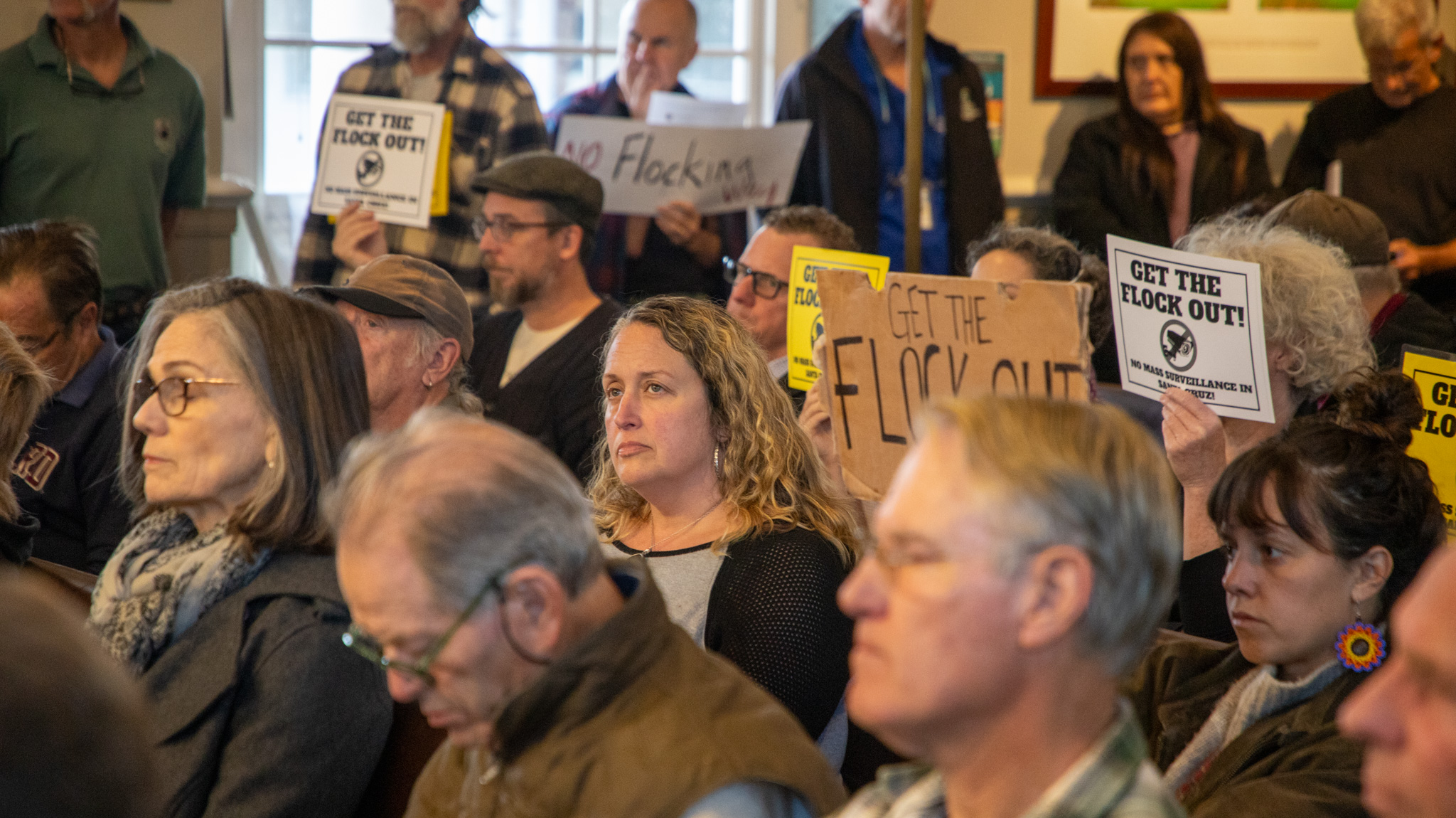
Julia Monahan, of Get The Flock Out, listens during public comment at a city council meeting at Santa Cruz City Hall on Nov. 18, 2025. (Amaya Edwards — Santa Cruz Local/CatchLight Local)
Alexandria Bordas is the Managing Editor at Santa Cruz Local.
SANTA CRUZ COUNTY >> We’ve heard from hundreds of residents via Instagram, email, surveys and in-person listening events that government transparency is top of your list when it comes to our recent news coverage. Our reporters responded, and in one of our most important reporting feats to date we examined the use of automated license plate readers operated by Flock Safety: an Atlanta-based company contracted with hundreds of agencies across the country.
Our ongoing investigation into Flock Safety started in August, 2025, when we first started hearing pushback from the community to contracts with Flock being approved by Watsonville Police Department. The main concerns first brought up by anti-surveillance advocates were mostly centered on local law enforcement agents potentially handing over information to federal agencies like U.S. Immigration and Customs Enforcement, or ICE. State law has legally prevented law enforcement agencies within California from sharing data collected by Flock cameras with out-of-state agencies since 2016, but critics said there might still be ways around the law.
Then in November, senior reporter Jesse Kathan uncovered a damning truth: throughout 2024 and early 2025, federal and out-of-state law enforcement agencies searched Capitola Police Department’s database of automatic license plate readers more than three million times, violating multiple laws. At least 190 were done by sheriffs offices and police departments running searches on behalf of ICE. Similar data breaches occurred in the City of Santa Cruz, which Jesse revealed less than two weeks after the Capitola story broke. In the immediate aftermath, thousands of people took to social media to demand local leaders weigh in on the issue and take action. As a result, residents and activists collaborated to engage on the issue of data privacy and the role of local government.
The impact of our reporting is clear and growing:
- On Jan. 13, the Santa Cruz City Council voted to end its contract with Flock Safety.
- In Capitola, the police chief announced new audits and processes to comply with the law.
- Local advocates are trying to start discussions over Flock with elected officials in Watsonville, which contracts 37 cameras – the most out of any city in the county.
- Candidates running for office in this year’s election cycle are consistently including talking points about Flock and data surveillance in their campaigns.
- Hundreds of people reached out to us on Instagram asking about how we reported the story, and Jesse teamed up with in-house visual reporter Amaya Edwards to tell the tale.
We’re not the true heroes of this story – we’re only a catalyst. It’s because of residents and advocates like Get the Flock Out, who pressured elected leaders on Santa Cruz City Council to cancel its contract with Flock Safety on Jan. 13, that we’re seeing real policy change.
Flock cameras are in thousands of communities across California and the country and we’ve gotten requests from other journalists, activists, researchers and curious residents across the state about how to replicate the data process we used to look into our local agencies. We want local governments to be transparent about how the data is used, and empower residents and other journalists to demand these public records. In response, we’ve created this guide on how to investigate Flock in your community.
Our guide for requesting, tracking and analyzing Flock Safety data in your own communities. Also, check out our civic engagement tracker to see what other critical topics we’ve been following in Santa Cruz County.
Do you have suggestions on what we should cover next? Reach out to senior reporter Jesse Kathan: jesse@santacruzlocal.org.
Questions or comments? Email info@santacruzlocal.org. Santa Cruz Local is supported by members, major donors, sponsors and grants for the general support of our newsroom. Our news judgments are made independently and not on the basis of donor support. Learn more about Santa Cruz Local and how we are funded.
Learn about membership Santa Cruz Local’s news is free. We believe that high-quality local news is crucial to democracy. We depend on locals like you to make a meaningful contribution so everyone can access our news. Learn about membershipThe post Civic impact: our continued reporting on Flock Safety appeared first on Santa Cruz Local.
Dungeons & Dragons group thrives in an unlikely place – local libraries – thanks to a volunteer at the helm
A Dungeons & Dragons program offered by Santa Cruz Public Libraries offers a welcoming and fun environment for people interested in the game thanks to an enthusiastic volunteer, who’ll be leaving the program to embark on a new chapter living in Europe.
To honor the women of the water, Santa Cruz needs a female surf statue
Santa Cruz’s iconic surfer statue has long celebrated the city’s surf culture – but it tells only half the story, write two veteran Santa Cruz surfers, Kaila Pearson and Sarah Gerhardt, the first woman to surf Mavericks in 1999. From Antoinette Swan and the Hawaiian princes to generations of pioneering women who challenged barriers in the lineup, women have helped shape Santa Cruz surfing from the beginning, they argue. A companion statue honoring the women of the water would, they write, recognize women’s often-overlooked contributions and reflect the full history of our surf town. If Santa Cruz values its surfing heritage, they believe, it should make that legacy visible for future generations.
Why a female surfer statue matters: Two Santa Cruz surfers share their stories
Local female surfers Kaila Pearson and Sarah Gerhardt explain why the statue project matters to the Santa Cruz County community and to them personally.
Aptos’ Nick Bjorn recognized as SCCAL’s top boys golfer

Aptos High junior Nick Bjorn was named the Santa Cruz Coast Athletic League’s Most Valuable Player for his superb play on the golf course during the 2026 spring season.
Bjorn was runner-up in the SCCAL individual championship at Pasatiempo Golf Club in Santa Cruz on April 28. He earned medalist honors in seven of the 10 league matches played this season, helping lead Aptos to an SCCAL regular season team championship.
Aptos coach Paul Zech was named the SCCAL’s Coach of the Year, while freshman Brayden Wilson earned all-league first team honors.
Below is a complete list of All-SCCAL honorees for boys golf, boys tennis, boys volleyball and girls beach volleyball.
Santa Cruz Coast Athletic League 2026 all-league teams Boys golf Individual AwardsMost Valuable Player: Nick Bjorn (Jr.), Aptos
Sportsmanship Award: Cash Moran (Sr.), Soquel
Coach of the Year: Paul Zech, Aptos
First TeamTanner Brewer (Sr.), SLV
Brayden Wilson (Fr.), Aptos
Kyler Samples (Sr.), Harbor
Seamus Drees (Sr.), Scotts Valley
Riley Shank (So.), Soquel
Garret Dahlen (Jr.), SLV
Second TeamAndrew Roberts (Fr.), Harbor
Peter Roboloth (Jr.), Soquel
Gunther Krueger (So.), Harbor
Gavin Easton (Sr.), Santa Cruz
Brogan Beasley (Sr.), Scotts Valley
Gavin Doherty (Jr.), Scotts Valley
Honorable MentionSantiago Toledo (Sr.), Santa Cruz
Fischer Howard (So.), Santa Cruz
Lochlin Bishoffberger (Jr.), SLV
Carson Chubb (So.), SLV
Cade Mosely (Fr.), Harbor
Nico Marinovic (Sr.), Harbor
Cole Christensen (Jr.), Soquel
Kyle Lambrecht (So.), Soquel
Jack Garvey (Jr.), Aptos
Adrian Creamer (Jr.), Scotts Valley
Hudson Spielvogel (So.), Scotts Valley
Zane Siechen (Sr.), Scotts Valley
Boys tennis Individual AwardsMost Valuable Player: Hudson Ward (Sr.), Soquel
Coach of the Year: Kumaran Arulanantham, Santa Cruz
First Team SinglesBen Zaretsky (Sr.), Aptos
Jeremy Arulanantham (Jr.), Santa Cruz
Tenzin Fathman (Fr.), Santa Cruz
Hudson Ward (Sr.), Soquel
Second Team SinglesStellan Wu (Fr.), Santa Cruz
Torin Miller (Sr.), Soquel
Raphael Bouchet (Jr.), Scotts Valley
Aditya Hannon (Sr.), Scotts Valley
First Team DoublesKai Vargas (Jr.), Santa Cruz
Oscar Sapunor (So.), Santa Cruz
Ian Burchell (Sr.), Santa Cruz
Sam Galli (So.), Scotts Valley
Second Team DoublesNate Wexler (So.), Scotts Valley
Zabel Oatey (Jr.), Harbor
Sawyer Amos (Jr.), San Lorenzo Valley
Nico Salinas (Jr.), Aptos
All-Sportsmanship TeamGeorge Jertberg (So.), Aptos
Lukas Novotny (Fr.), Santa Cruz
Everett Callendar (Jr.), SLV
Freddy Padilla (So.), Scotts Valley
Abraham Bachar (Jr.), Harbor
Elias Garcia (Sr.), Soquel
Boys volleyball Individual AwardsMost Valuable Player: Cooper Lastition (Sr.), Harbor
Mark Brewer Award: Nikowa D’Costa-Hemp (Sr.), Mt. Madonna
Coach of the Year: PK McDonald, Mt. Madonna
First TeamSolomon Coleman (Jr.), Mt. Madonna
Lucas Kamalani (Sr.), Santa Cruz
Guillermo Mazier (Jr.), Santa Cruz
Grady McKee (Sr.), Harbor
Nikowa D’Costa Hemp (Sr.), Mt. Madonna
Matty Rayray (Jr.), Santa Cruz
Josh Rejfir (Sr.), Harbor
Second TeamDavid Monclus (Jr.), Mt. Madonna
Rocklin Paco (Jr.), Harbor
Charlie Hess (Sr.), Santa Cruz
Keoni Raatior (So.), Soquel
Zach Livingston Shults (So.), SLV
Xavier Knight (Sr.), SLV
Ryan Wait (Sr.), Harbor
Honorable MentionHans Hagge (Sr.), Mt. Madonna
James Lagerwey (Sr.), Aptos
Sean Mullen (Sr.), Aptos
Thomas Obrero (Sr.), Soquel
Johnny Abbott (Jr.), Soquel
Guillermo Mazier Bittar, Santa Cruz
Nathan Monroe, Santa Cruz
Troy Thompson (Sr.), Scotts Valley
Will Shanks (Sr.), Scotts Valley
Zack King (Sr.), SLV
Hunter Lallemand (Sr.), SLV
JJ Laughlin (Jr.), Harbor
Freddie Morgali (Sr.), Harbor
Girls beach volleyball First Team [A-Division]Emma Benedetti (So.) and Lana Walding (So.), Soquel
Leela Whiting (Fr.) and Haisley Flanagan (So.), Santa Cruz
Cecile Novembre (Jr.) and Dylan Schutz (Jr.), Harbor
Cia Johnson (So.) and Caitlin Lavelle (So.), Aptos
Hayden Smith (Sr.) and Rylee Giesen (Sr.), Scotts Valley
Kenzie Smith (Sr.) and Emily Mumford (Fr.), Aptos
Second Team [A-Division]Lyla Vyvyan (Jr.) and Ruby Hyatt (So.), Soquel
Chloe Schantz (So.) and Maggie Redwine (Jr.), Santa Cruz
Kaia Harrah (So.) and Lena Jordan (So.), Aptos
Eliana Russell (Sr.) and Chloe Goodman (So.), Santa Cruz
Liberty Niesen (Jr.) and Lise Corstorphine (So.), Harbor
Coco Castro (Sr.) and Marina Tucker (Sr.), Harbor
First Team [B-Division]Mayla Spahn (Jr.) and Jessie Ingram (So.), Monte Vista Christian
Hollyn Hearne (Sr.) and Xienna Novoa (Sr.), King City
Stephanie Velasquez (Sr.) and Ella Rubbo (Fr.), King City
Monze Camacho (Fr.) and Fernanda Cid (Fr.), King City
Gretel Martin (Fr.) and Hope Tyler (Fr.), St. Abraham’s
Farrin O’Hara (Sr.) and Amelie Pan (Jr.), Pacific Collegiate School
Second Team [B-Division]Norah Rondia (So.) and Audrey Nelson (So.), MVC
Jocelyn Jacquez (Fr.) and Melody Sanchez (Fr.), King City
Kamila Lindsay (Fr.) and Mia Sudek (So.), PCS
Sariah Braddock (Fr.) and Ruby Brownlee (Fr.), St. Abraham’s
Cecilia Tannaci (Jr.) and Lily Graney (Fr.), PCS
Sam Bertoldi (Sr.) and Claire Marshall (So.), MVC
Aptos’ Cole McGillicuddy earns first team honors | All-SCCAL baseball

Aptos High junior Cole McGillicuddy earned All-Santa Cruz Coast Athletic League First Team honors for the 2026 baseball season.
The Cal-Berkeley commit batted a .500 average (33-for-66), including six home runs, 11 doubles, 30 RBIs, 28 runs scored and 14 stolen bases, according to the Max Preps website.
On the mound, McGillicuddy owned a 4-2 record with a 3.40 ERA while tallying 40 strikeouts in 10 appearances for the Mariners, who were runners-up in the SCCAL standings with a 9-6 record in league play.
Teammate junior Finn Cormier earned All-SCCAL Second Team honors. He batted a .321 average (17-for-53), including three home runs, a pair of doubles, 18 RBIs, 14 runs scored and seven steals.
Below is a complete list of the 2026 All-SCCAL baseball teams.
Santa Cruz Coast Athletic League 2026 all-league baseball teams Individual AwardsPlayer of the Year: Jake Escalante (Sr.), Soquel
Pitchers of the Year: Joey Raffo (Sr.), Harbor; Luke Shoemaker (Jr.), Soquel
Coach of the Year: TJ Moran, Soquel
First TeamConnor Corlett (Sr.), Soquel
Dylan Hull (Sr.), Soquel
Noah Solano (Sr.), Harbor
Cole McGillicuddy (Jr.), Aptos
Hudson Summerrill (Sr.), Soquel
Rex Thompson (Jr.), Scotts Valley
Pierre Bell (So.), Harbor
Brady Downs (Sr.), Soquel
Cam Fusari (Sr.), Santa Cruz
Cash Moran (Sr.), Soquel
Trey Sousa (Sr.), Soquel
Second TeamElliott Smith (So.), Scotts Valley
Adam Fowler (So.), Santa Cruz
Luke Santee (Jr.), Soquel
Finn Cormier (Jr.), Aptos
Bryce McDonnell (Jr.), Scotts Valley
Brody Egner (Sr.), San Lorenzo Valley
Caleb Cmaylo (Sr.), Santa Cruz
Sam Whelan (Sr.), Soquel
Larrabee Mitchell (Jr.), SLV
Matteo Caltabiano (Sr.), Santa Cruz
Honorable MentionDamien Espinoza (So.), Aptos
Alec Mendoza (Jr.), Aptos
Logan Felich (Jr.), Harbor
Evan Lampel (Fr.), Harbor
Liam Fields-Rapley (So.), SLV
Spencer Bruce (Jr.), SLV
Merrick Smith (Fr.), Santa Cruz
Merrick DaCosta (Fr.), Santa Cruz
Monte Jordan (Jr.), Scotts Valley
Dash Baker (Jr.), Scotts Valley
Anthony Skinner (So.), Soquel
Scotty Miller (Jr.), Soquel
PVUSD threat suspect arrested
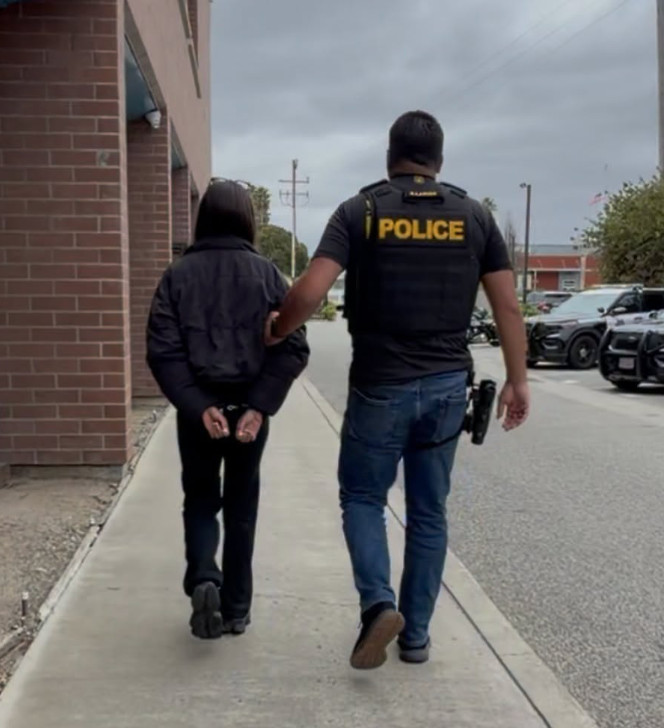
A 22-year-old woman accused of threatening the Pajaro Valley Unified School District Board of Trustees last month has been arrested.
Tanya Diaz was charged with making a criminal threat, a felony. She was booked into Santa Cruz County Jail on $25,000 bail, according to jail records. She was no longer in custody as of Friday afternoon.
Police do not believe there is an active threat to the community or PVUSD staff.
Board President Carol Turley did not respond to a request for comment.
Watsonville Police did not specify the nature of the threat.
Trustee Misty Navarro said during the board meeting Wednesday that it came after the May 20 meeting, when the board voted 5-2 to approve more than 100 teacher layoffs.
Navarro then read a comment she said was posted on the Lookout Santa Cruz website.
“Who do we need to shoot for this? I think we should start taking these people out, they’re not going to stop just saying.”
A handful of people had “liked” the comment, Navarro said, adding that it remained on the Lookout website for six hours before it was removed despite her requests.
The Pajaronian has reached out to Lookout for comment.
Navarro said the threat reflects the often vitriolic culture that has come to define board meetings.
Navarro pointed to comments made during Wednesday’s board meeting, including Trustee Gabe Medina calling her a “racist” and a “white supremacist” without offering evidence.
“I have a balance of logic and emotion, and I will vote in the way that I believe is the best for my community,” Navarro said. “But I will not do so at my own peril. And I do not believe that my volunteer service warrants a death threat, which is why I said 100 percent, please prosecute this person to the full extent of the law.”
After the district reported the threat, investigators served a search warrant at Diaz’s residence in the 200 block of Mesa Verde Drive.
No firearms were found during the search, and no guns are registered to Diaz, police said. During the investigation, she admitted that she wrote the threatening social media comment.
“The Watsonville Police Department takes all threats seriously, whether made in person or online,” WPD stated in a Facebook post. “Every threat is thoroughly investigated to ensure the safety of our community.”
“I raise this tonight because it does not exist in isolation,” Navarro said, pointing to a recent San Jose Mercury News story detailing a significant rise in threats against public officials, particularly women.
“This district is not exempt from that trend,” she said. “We owe one another and the public we serve a basic standard of conduct when it does not include language inviting violence against elected trustees. I ask that Lookout and this community hold the same standard.”
Tickets to Sister Act – Preview Night