


Santa Cruz County robotics team captures world championship

Nine months of late nights, countless repairs and more than 100 hours spent testing an underwater robot in a swimming pool paid off in a big way for a team of Santa Cruz County high school students.
Hephaestus Robotics, a 21-member team representing eight county high schools, captured first place in the Ranger Class at the 2026 MATE ROV World Championship on June 27 in St. John’s, Newfoundland and Labrador, Canada, earning the program’s first world title after finishing third in each of the past two years.
The victory came against 47 high school teams from 13 countries competing in the Ranger division, one of several classes at the international competition, which featured 86 teams from 16 countries.
Among the team members was Pajaro Valley High School student Raul Lopez, who said the experience changed the way he thinks about engineering and teamwork.
“This experience taught me how to work within a big team made of smaller teams, an experience I hope to contribute to building a MATE ROV college team at CSUMB,” said Lopez, who will attend Cal State Monterey Bay this fall to study mechatronics.
The team qualified for the world championship by winning the MATE Monterey Bay Regional ROV Competition in April.
At the three-day world championship, students operated a remotely operated underwater vehicle in facilities designed to simulate real ocean conditions, including a 1.7 million-liter flume tank and a wave basin.
Their robot completed a series of tasks modeled after real marine science and offshore engineering work, including replacing a simulated environmental DNA sensor, recovering an anchor buoy and deploying an autonomous float capable of maintaining depth while collecting data.
Students also used professional sonar equipment to locate simulated marine debris.
“Rather than simply simulating operations within a controlled pool, our team rose to the challenge of performing real-world ocean protection,” said Santa Cruz High School student Elle Williams, who piloted the robot during the bonus mission. “We deployed a professional sonar tool on our ROV to scan for and identify ghost gear and debris in the Atlantic Ocean. That was amazing.”
The competition extends well beyond building a robot.
Teams operate as mock engineering companies, preparing technical reports, budgets, marketing materials and formal presentations that are judged by professionals from the marine technology industry.
Mission Director Sam Imahara of Kirby School said the championship reflected months of persistence.
“Competing on the world stage against so many talented teams was an unforgettable experience,” he said. “As the electronics lead, seeing our countless hours of late-night troubleshooting, complex wiring, and system integration culminate in a world title is wildly rewarding.”
Float Team Vice President Amber Williams of Pacific Collegiate School said the team’s success was especially satisfying after setbacks earlier in the season.
“These many months of continuously fixing issues and dedication led us to finally achieving the full 85 points, something only three out of 47 teams managed to do,” she said. “After watching the float fail at regionals, having everything come together at worlds felt incredible.”
The team includes students from Pacific Collegiate, Sequoia, Soquel, Santa Cruz, Scotts Valley, Pajaro Valley, Sapphire and Kirby schools.
Tim Sylvester, founder of nonprofit X Academy and the team’s lead mentor, said the championship reflects the diversity of the students involved and the commitment they showed throughout the school year.
“Our team brought together students from across Santa Cruz County, including the children of Silicon Valley tech workers, doctors, carpenters, electricians, and farmworkers,” he said. “After nine months of hard work and more than 100 hours of practice in the pool, they truly earned this win.”
Hephaestus Robotics is part of the Santa Cruz County Office of Education’s X Academy Robotics Clubs, a partnership that gives students free, hands-on experience in engineering, computer science, entrepreneurship and project management.
Since the partnership began in 2023, X Academy mentors have worked with more than 200 students from 15 high schools through weekly robotics sessions in Santa Cruz and Watsonville.
Santa Cruz County Superintendent of Schools Faris Sabbah said the world championship highlights what students can accomplish when they have access to hands-on learning opportunities.
“This championship is the result of years of student leadership, mentorship, problem-solving, and persistence,” Sabbah said. “The Hephaestus Robotics Team has shown what is possible when students have access to rigorous, hands-on learning and a community of mentors who believe in them.”
For graduating Sequoia High School student Carlos Ortiz-Lopez, the lessons learned extend beyond robotics.
“Being a part of the Hephaestus Team taught me to be relentless and to not give up no matter what gets thrown your way,” he said. “I will use this to help me become an apprentice electrician with the IBEW.”
Photo story: Sudden U-turn causes crash

Watsonville Police shove a Mazda pickup off of Freedom Boulevard Monday morning following a two-vehicle crash. Just before 11am a green Ford Ranger and a white Mazda pickup were traveling north on Freedom Boulevard. On the 1600 block, the male driver of the Mazda reportedly attempted a sudden U-turn causing the Ford, with a male driver, to smash into its driver’s side, Watsonville Police said. The Mazda driver was temporarily trapped in his truck with minor injuries. (Tarmo Hannula/The Pajaronian)
Grand jury takes aim at pedestrian safety

Santa Cruz County’s cities and the county government should move more quickly to improve pedestrian safety by adopting formal Vision Zero action plans and taking a more proactive approach to maintaining sidewalks, crosswalks and traffic infrastructure, according to a new Santa Cruz County Civil Grand Jury report.
The report, titled ‘Walking in the County of Santa Cruz is Not for the Faint of Heart,’ concludes that while local governments have embraced the principles of Vision Zero—a strategy aimed at eliminating traffic deaths and serious injuries—they have yet to implement formal action plans with measurable goals and timelines.
The grand jury found that Santa Cruz County consistently ranks among California’s worst counties for pedestrian fatalities and serious injuries despite recent investments in transportation improvements.
“Pedestrian fatalities and serious injuries are a persistent public safety issue in the County of Santa Cruz,” the report states. “While the County and its cities have adopted modern transportation policies and safety frameworks, pedestrian safety outcomes remain poor relative to other California counties.”
The report cites Office of Traffic Safety data showing Santa Cruz County ranked among the top 20% of California counties for pedestrians killed or seriously injured in five of the seven years between 2017 and 2023. Watsonville fared even worse, ranking among the 10 worst California cities of comparable size in six of those seven years, including Number 1 in 2019.
The report says the county, Watsonville and Santa Cruz have all committed to pursuing Vision Zero through the Community Traffic Safety Coalition but have not adopted formal action plans.
According to the grand jury, doing so would establish measurable benchmarks, improve accountability and make local jurisdictions eligible for additional federal transportation grants.
The report also points to gaps in pedestrian infrastructure, including deteriorating sidewalks, faded crosswalk markings and incomplete sidewalk networks.
It cites the Highway 1 Whale Bridge as an example of successful infrastructure that still leaves pedestrians vulnerable because sidewalks disappear at one end, forcing people to navigate busy commercial driveways.
The grand jury also found that local governments rely largely on residents to report sidewalk hazards and faded pavement markings, and that many people are unaware of how to report those problems.
In addition, it says the cost of sidewalk repairs—which are typically the responsibility of adjacent property owners under California law—can discourage people from reporting hazards.
Watsonville was singled out for offering a loan program to help homeowners pay for sidewalk repairs, which the report suggests other jurisdictions consider.
The report also examines traffic enforcement, noting that Watsonville has one officer dedicated to traffic enforcement, while Santa Cruz has none. Both agencies focus much of their traffic enforcement on driving under the influence because of limited staffing.
The grand jury recommends that local officials periodically review crash data to ensure enforcement efforts strike an appropriate balance between DUI enforcement and speeding violations, another leading contributor to pedestrian deaths and serious injuries.
Among its recommendations for Watsonville, the grand jury urges the City Council to direct its Public Works and Police departments to work with the County Health Services Agency to develop and publish a Vision Zero action plan by June 1, 2027.
It also recommends expanding public outreach about reporting sidewalk hazards, adopting an annual review of sidewalks and faded pavement markings, and requiring the police chief to annually review pedestrian injury data to ensure enforcement priorities align with Vision Zero goals.
The report makes similar recommendations to the Santa Cruz County Board of Supervisors and the Santa Cruz City Council, including developing Vision Zero action plans, increasing public education, proactively identifying sidewalk hazards and considering financial assistance programs for sidewalk repairs.
The Santa Cruz County Board of Supervisors, the Watsonville City Council and the Santa Cruz City Council are required to respond to the grand jury’s findings and recommendations within 90 days.
Supervisors restore most arts funding in budget

The Santa Cruz County Board of Supervisors on Tuesday unanimously approved a revised $20.9 million budget for the Parks, Open Space and Cultural Services Department, restoring several services that had been slated for cuts while preserving most county funding for local arts organizations.
The spending plan comes one week after supervisors rejected an earlier proposal that would have eliminated the county’s contract with Arts Council Santa Cruz County and cut funding to the Santa Cruz Museum of Art & History in half to help close a $590,000 budget shortfall.
Instead, the board directed staff to find other ways to balance the budget.
The adopted budget reduces county funding for both the Arts Council and the MAH by 15%—a cut of $25,500 and $23,100, respectively—instead of the deeper reductions previously proposed. The Parks Recreation Grant Program also was reduced by 25%, or $12,000.
The revised budget restores seven-day operations at the Simpkins Family Swim Center, maintains portable restroom service at county parks and funds extra-help park maintenance staff to address vegetation management and deferred maintenance.
To close the budget gap, county staff assembled a package of one-time funding and targeted spending reductions totaling $590,000.
The largest contributions include $100,000 each from the Measure K environment and parks allocations in Supervisorial Districts 1 and 2, $68,400 from the Department of Community Development and Infrastructure, and three separate $50,000 contributions from General Services, Risk Management and Measure Q funds. Additional savings came from reduced information technology costs and a deferred $15,000 equipment purchase by the Sheriff’s Office.
Deputy Parks Director Rebecca Hurley credited county departments for working together to avoid reductions in park operations and staffing.
“This has really been a spirit of collaboration amongst other county departments,” Hurley said, calling the effort to close the budget gap without cutting services “a really big collaborative effort.”
The revised budget also rejects a proposed pay-to-park pilot program that had been included in earlier budget discussions.
Last week’s proposal drew strong opposition from dozens of residents, artists and community leaders who urged supervisors to preserve funding for the Arts Council and MAH, arguing the organizations provide essential cultural and educational services throughout the county.
Jim Brown, executive director of Arts Council Santa Cruz County, thanked supervisors and county staff for finding an alternative but cautioned that the solution is temporary.
“We all know that today’s situation is a stop-gap,” Brown said. “With future budgets projected to be even tighter, I urge the county to look for dedicated solutions for the arts.”
Overall, the budget funds four divisions—Parks Operations, Cultural Services, Art in Public Places and County Service Area 11—with 57 full-time equivalent positions.
County staff warned that the budget relies heavily on one-time funding sources that will not be available in future years. Without long-term solutions, the department could face additional reductions to programs, operations and staffing during development of the 2027-28 budget.
The board also approved an updated fee schedule, effective July 1, increasing many park rental, pool and recreation fees to reflect inflation and rising operating costs.
PVUSD approves $2.86 million water project at Renaissance High
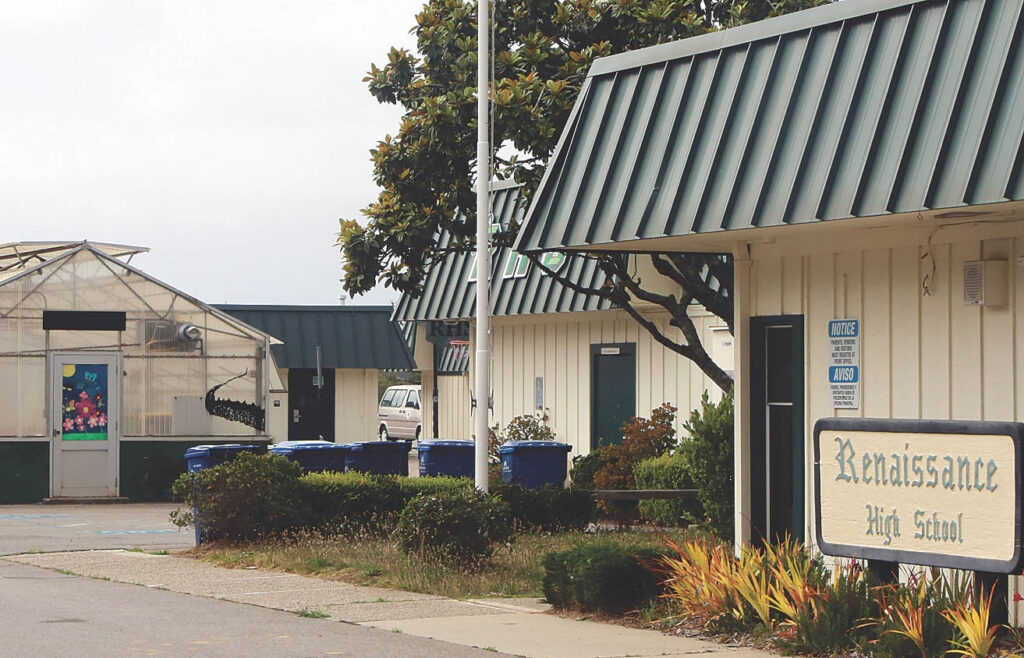
The Pajaro Valley Unified School District Board of Trustees on Saturday approved a $2.857 million state funding agreement that will connect Renaissance High School to the Soquel Creek Water District, replacing the campus’s groundwater system that has been plagued by elevated levels of hexavalent chromium.
The board held a special meeting to ratify a financial assistance agreement with the State Water Resources Control Board, allowing the district to move forward with the long-planned project.
The agreement provides $2.857 million in funding through the state’s Expedited Drinking Water Grant program. While structured as a loan agreement, the entire amount is designated as principal forgiveness, meaning the district will not have to repay the money if it completes the project and complies with the state’s reporting and funding requirements.
In a social media post, Trustee Gabe Medina praised the decision.
“This was an important vote because Renaissance High School students, staff, and families deserve access to safe and reliable drinking water,” he wrote on his Substack account. “Many students and staff have been asking the district to address this issue, and this project is one step toward meeting that responsibility.”
According to the agreement, the project’s purpose is to consolidate Renaissance High School’s water system with the Soquel Creek Water District “to address the hexavalent chromium maximum contaminant level violations” and provide “safe and reliable drinking water to the students and staff of the school.”
The project calls for extending a water main along San Andreas Road, installing a pipeline beneath the railroad tracks, constructing a booster pump station on campus and tying the new line into the school’s domestic water system. The project also includes installing a master meter and backflow prevention device and permanently abandoning the school’s two groundwater wells.
Construction is scheduled to be completed by Sept. 30, 2028, with the overall project wrapping up by Dec. 31, 2028. The district must submit its final reimbursement request by Feb. 28, 2029, and retain project records through Dec. 31, 2064.
State documents show the Water Resources Control Board determined the project will not create significant adverse water quality impacts. The agency relied on an Initial Study and Mitigated Negative Declaration prepared by PVUSD, which approved the project in 2025 and adopted a mitigation monitoring program addressing biological resources, cultural resources and noise.
Under the agreement, the district must comply with numerous grant requirements, including completing the project on schedule, documenting expenditures, submitting quarterly progress reports and obtaining state approval before advertising the project for construction bids or beginning construction. Failure to comply could jeopardize reimbursement or require repayment of funds.
The agreement also prohibits reimbursement for costs incurred before the eligible work start date and limits funding to approved project expenses. If project costs exceed the $2.857 million budget, the district must notify the state and seek additional funding or modify the project’s scope, although additional state funding is not guaranteed.
The project budget includes $1.1 million for construction, $364,000 for contingency costs, $739,000 for engineering and administrative costs, a $28,000 Soquel Creek Water District connection fee and $626,000 in conditional costs.
Letters to the Editor July 3-9
Regarding Cesar Chavez Middle School name change
Writing a letter to the editor to try to change or unchange something is a loser business. I’ve written a lot of letters and they’ve all ended up losers. Chalk up another loss with Cesar Chavez Middle School. Chavez has now been certified an evil rapist, forcer of abortions, and child molester. The worst of the worst, despite never being charged or convicted of said crimes. That said, The Pajaro Valley Unified School District trustees are going to allow Cesar Chavez images to remain on the school mural. So you are going to exterminate his name, but keep his image on the school. What’s with that? One trustee said the proposed name changes are “a no brainer.”
“No brainer.” indeed.
I propose this. Fusing both new school name recommendations. Jeff Tagami, is a poet who should be mentioned alongside those of Byron, Shelley, Keats, and Whitman, is a perfect addition. Mas Hashimoto, an excellent educator, who was also one of my history teachers. I did a report and speech on the Kaaba in Mecca and he liked it. Hashimoto is a great choice. Next name (Especially since you are keeping his image on the school) is none other than Cesar Chavez, with an asterisk * (for the aforementioned reasons) and finally Central Coast Middle School. So the name I propose is The Jeff Tagami, Mas Hashimoto, Cesar Chavez *(with an asterisk) Central Coast MIddle School. Or abbreviated The Tagami, Hashimoto, Chavez * Central Coast Middle School. Chalk up another loser.
Charles Birimisa
Watsonville
•••
LED street lighting needs changes
In the 1990s at Hewlett-Packard, we foresaw that white lighting for street lights could save money in two ways: overall energy reduction of 90%, and the ability to dim the lights during no traffic conditions. Our local LED street lighting does save on the overall energy, but misses out on the dimming.
During the night traffic is greatly reduced, especially during the late hours. The LED lights with motion sensing could be dimmed until there is traffic, making a huge savings. Why aren’t we doing that now? My wife and I visited Uzbekistan last fall and they are using dimming. It works great. Why not here?
Bill Beecher
Aptos
•••
Writer doesn’t want his tax money to fund ICE
Putin, Trump, Netanyahu, Hegseth, UFC fighter as head of DHS – “We’re good at bombing…”; “We like sinking ships”… How about “Killing people” to finish the sentence…? And we remember “Thou Shalt not Kill…”
I came from the 60s, Summer of Love, and this is not what we expected from the 21st century. I pay income taxes. I don’t really want my money part of the $70 Billion for ICE and its inhumane detention centers, or the $70 Billion to bomb other countries in “self-defense.”
But my few dollars are probably in there. All I can say is we must resist this takeover of what many of us are not supporting, and do what we can to bring Peace and Love to the World!
I don’t support a convicted felon, rapist and TV star to be having tantrums and ruling the world, like it was his little toy. The spineless Republicans, down on their knees, enabling him in lockstep.
Does anyone remember, “The Emperor has no clothes?”
Will it take some little child to speak out?
Sam Earnshaw
Watsonville
From Our Archives: New in Town

The city of Watsonville received this new Plymouth A-1 Ambulance in 1961. (photo by Sam Vestal, Pajaronian file)
The Pajaronian’s Male Athlete of the Year: Jacob Jimenez

One of the most difficult situations for a young athlete is having to sit on the sidelines following a major injury.
Mostly because they are so used to being active.
Thus was the case for St. Francis High graduate Jacob Jimenez, who went on the “injured reserve” list for three weeks during the football season while he nursed his ailing ribs.
“It was definitely hard, but I just try to be out there, try to coach [my teammates] up, and be there for them as much as possible,” he said.
During that same time, one of his teammates was also out with an injury. But instead of moping around, they pushed each other until both players were ready to get back on the field.
St. Francis athletic director and head football coach John Ausman paid close attention to how Jimenez handled what could’ve been a potential crisis.
“You really get to see the character of someone when things go rough, how they respond, and what’s their demeanor,” Ausman said.
Ausman believes it’s what separates superb athletes such as Jimenez apart from others, and allows them to have success.
“I knew [he’d return] because of his mentality, because of his character,” Ausman said.
Jimenez overcame the adversity, and earned All-Pacific Coast Athletic League First Team honors in the Mission Division–North. He went on to earn all-league second team honors in boys basketball in the winter, and won a pair of division championships for the track and field team in the spring.
“What he’s done on the court, on the field and on the track speaks for itself, but what I admire the most is what he does outside of that,” Ausman said. “How he treats all those around him, his family, his little sister whenever she shows up every time. Not only is he a great athlete, great student, but he’s just a better young man, and I couldn’t be more fortunate to have coached him for the last four years.”
Academics was also important to Jimenez, who graduated with a 3.9 grade point average. He was a member of the Varsity Council, and part of the Sports Med Club where he learned the basics of what athletic trainers do.
“It’s always student before athlete,” he said. “I just take pride in getting good grades and just putting all my effort into the classroom, as well as the field. I owe it to my parents because they sacrificed a lot for me, so the least I could do is try hard in school and just get into good colleges. And hopefully make something out of my life.”
Jimenez is what most coaches and teachers would consider the ideal student-athlete, which is why he was named The Pajaronian’s Male Athlete of the Year for the 2025-26 school year.
“It’s an honor,” he said. “I just like to thank my coaches, my friends, my teammates, my family for just pushing me through everything and helping me get to this point. It just feels good to see all the hard work get noticed.”
The rib injury occurred just two weeks into the young football season in a non-league game against Pajaro Valley on Sept. 6.
Jimenez waited patiently for his time to return as he continued to put in the work by himself, even when nobody was watching.
“They get these accolades, which are well deserving, but it’s knowing they truly deserve them,” Ausman said. “Not just because of what God has given them, but taking those gifts and putting in the work to make them the best version of themselves.”
Jimenez hauled in 23 receptions for 435 receiving yards and a pair of touchdowns in seven games played, according to the Monterey Bay Preps website.
Yet, it was his ability to block defenders and sometimes act as a decoy that separated him from other wide receivers.
“I always try my hardest,” he said. “It’s not all about catching it. What you do off the ball is how you show your love to your teammates. So, if you block for someone, then that’s how you can tell that you care for him.”
For Jimenez, there’s no other sport like football. He talked about working every day just to play one game a week, and the brotherhood that’s created during those grueling summer workouts.
“You’ll never make that type of bond anywhere else because you go through the same stuff,” he said. “You win together, you lose together, you go through everything together, so it’s definitely a brotherhood.”
In the winter, Jimenez reunited with his teammates on the basketball team – another clique he’s been a part of since his freshman year. He finished with an average of 16.2 points per game, according to Monterey Bay Preps.
Jimenez said once all the hard work came together, there was nothing better than being on a team with a bunch of guys working towards the same goal.
St. Francis was in a tight race for the Mission Division crown during most of the season. In the end, they fell short to league co-champions Hollister and Marina.
“I knew it was my last season, so I was just trying to make the most out of every game,” he said. “Just put the pedal to the metal, and then just not let up.”
After the Sharks were eliminated from the Central Coast Section playoffs, Jimenez transitioned to the track team.
It wasn’t always that way, though. He was once a member of the baseball team during his freshman and sophomore years.
Jimenez said it was fun at first because all his friends were on the squad, yet he began to feel he wasn’t progressing. He was then convinced by track and field coach Britney Hill to join their program, which boosted his confidence to perform at a high level.
“Sometimes I do miss baseball,” he said. “But track’s good because it’s a team sport, but it’s also just you versus you within your events.”
Jimenez was the PCAL Cypress Division champion in both the high jump and triple jump events, and runner-up in the long jump. He was the top qualifier in the high jump at the PCAL Masters Meet, which earned him a spot to the CCS Championships.
Jimenez has had plenty of role models throughout his athletic career, starting with his parents, Holly and Jaime. He said they sacrificed a lot for him and doesn’t know where he’d be without them.
However, it wasn’t until he met Ausman, who Jimenez said became another father figure by showing players how to be good young men.
“Trying to teach us how to grow up and just be respectable,” Jimenez said.
One of Jimenez’s favorite questions Ausman would ask often was “Rent is due, what are you gonna do?”
Jimenez said when it comes down to the line, and the family’s banking on the paycheck, just put the head down and grind. Always just trying to improve.
“I feel like that’s always been my goal, just to be the best person I can,” Jimenez said. “But the thing that motivates me is probably my family, just wanting to be good for them and being around for them.”
Jimenez will continue his football career at San Jose City College this upcoming fall.
#tdi_1 .td-doubleSlider-2 .td-item1 { background: url(https://pajaronian.com/wp-content/uploads/2026/07/PAJ2627-Jacob-Jimenez-2025-26-Male-AOY-football-WEB-1-80x60.jpg) 0 0 no-repeat; } #tdi_1 .td-doubleSlider-2 .td-item2 { background: url(https://pajaronian.com/wp-content/uploads/2026/07/PAJ2627-Jacob-Jimenez-2025-26-Male-AOY-basketball-WEB-1-80x60.jpg) 0 0 no-repeat; } #tdi_1 .td-doubleSlider-2 .td-item3 { background: url(https://pajaronian.com/wp-content/uploads/2026/07/PAJ2627-Jacob-Jimenez-2025-26-Male-AOY-WEB-1-80x60.jpg) 0 0 no-repeat; } 1 of 3 Team White's Jacob Jimenez is tackled by Team Black's Gabriel Prieto of Gonzales during the 40th Annual Central Coast High School All-Star Football Game at Rabobank on Saturday, Jan 31. (Raul Ebio/The Pajaronian)
 St. Francis High graduate Jacob Jimenez finished with an average of 16 points per game for the boys basketball team during the 2025-26 winter season. (Juan Reyes/The Pajaronian)
St. Francis High graduate Jacob Jimenez was named The Pajaronian's Male Athlete of the Year for the 2025-26 school year. Jimenez competed for the football, boys basketball and track and field teams during his senior year. (Juan Reyes/The Pajaronian)
St. Francis High graduate Jacob Jimenez finished with an average of 16 points per game for the boys basketball team during the 2025-26 winter season. (Juan Reyes/The Pajaronian)
St. Francis High graduate Jacob Jimenez was named The Pajaronian's Male Athlete of the Year for the 2025-26 school year. Jimenez competed for the football, boys basketball and track and field teams during his senior year. (Juan Reyes/The Pajaronian)
Stuff the Bus campaign returns to help students facing homelessness

United Way Santa Cruz County and the Santa Cruz County Office of Education have launched the 17th annual Stuff the Bus campaign, with a goal of providing 2,500 backpacks filled with school supplies to students experiencing homelessness, housing insecurity and other hardships.
The campaign, which began July 1, is seeking donations and corporate sponsors to help provide backpacks to students before the start of the school year. A $30 donation covers the cost of one backpack stocked with school supplies.
This year also marks the first time the campaign will include smaller backpacks designed specifically for Transitional Kindergarten and early childhood students.
According to the Santa Cruz County Office of Education, 2,866 TK-12 students were identified as experiencing homelessness during the 2024-25 school year under the federal McKinney-Vento Act.
That includes 2,322 students who were living doubled up with other families, 308 who were unsheltered, 171 living in shelters and 65 staying in hotels or motels.
“The first day of school should be a moment of excitement and belonging for every student,” Santa Cruz County Superintendent of Schools Faris Sabbah said. “For families facing homelessness, housing instability or other hardships, basic school supplies are one more financial burden. Stuff the Bus is one way our community helps students start the year with confidence, knowing they are seen, supported, and have what they need to succeed.”
United Way Santa Cruz County CEO Yvette Lopez Brooks said the annual campaign helps remove one barrier for students and families already facing significant challenges.
“A backpack filled with school supplies can help a student walk into class feeling prepared, confident and supported,” she said. “Stuff the Bus reflects what is possible when our community comes together around children and families, and we are grateful for the donors, volunteers, sponsors and partners who make this campaign possible each year.”
The campaign will culminate with the Stuff-A-Thon on Aug. 1 from 10am-1pm at Kaiser Permanente Arena in Santa Cruz, where volunteers will fill backpacks for distribution to students throughout the county.
The event is held in partnership with the Santa Cruz Warriors and supported by UPS.
People interested in donating, volunteering or becoming a sponsor can find more information at unitedwaysc.org/stb.
Fairgrounds to demolish sheep and pig livestock barns

The upcoming Santa Cruz County Fair will look different this year, as the sheep and pig livestock barns are slated for demolition in July, nearly four years after the initial board vote on the plans, and only a few months before the county fair returns on Sept. 16 – 20.
The barns will be replaced with tents during the fair, said Dori Rose Inda, the Santa Cruz County Fairgrounds CEO and fair manager. The tents will be similar to the ones elsewhere on the fairgrounds.
California Construction Authority—the governing body overseeing the demolition— says that the reason for the demolition is that “the existing Livestock Barn has outlived its usefulness and has become a danger for the fairgrounds, anyone inside or near the structure. The State Fire Marshall wants the full structure demolished before the next (2026) or fully secured with no admittance.”
The two barns were built in the 1950s and sit on the east side of the fairgrounds, parallel to livestock road, in the livestock area of the fair.
They now pose a safety concern, said Ron Haedicke, the marketing director for the fairgrounds, citing the structures’ age and ability to withstand earthquakes and strong winds.
“This year, we had to move forward either with rebuilding or demolition,” said Inda, “we couldn’t plan and rebuild quickly enough, so we are moving forward with demolition.”
According to Inda, the current estimate for the demolition cost is around $430,000, adding that the total could change as the demolition is still in the planning stage.
The demolition is planned to begin in late July, said Haedicke, who added that this will follow approval of the contractor’s bids, which are due July 20. The demolition is planned to begin immediately after, clearing the area before the fair begins in September.
The fairgrounds are also used as an evacuation center during county emergencies. While the fairgrounds are without replacements for the sheep and swine barns, according to Haedicke, anything that normally has been housed in those barns would be moved to the beef barn.
The barns “have served the fair quite well all these years,” said Haedicke, “and it’s this time that they are going to have to be replaced.”
To honor the old barns, the sign that hangs above the swine barn has been preserved, “and it will be used in whatever new construction is done,” said Haedicke.
In 2022, the Pajaronian reported on the demolition plans when the board originally approved them in a 6-2 vote.
The final decision following the vote regarding the barns went to the California Construction Authority, because the fairgrounds are state property, said Haedicke.
The goal is to hopefully preserve some part of the old barns, such as the cement horse racks in both the swine and sheep barns, said Haedicke, “and then the tents will somehow work around that.”
The tents are planned to go in approximately the same place as the old barns, but it depends on the fair’s planning, Haedicke added. “It’ll all come together when the fair opens.”
Nonetheless, the demolition will leave the fairground without a permanent structure to replace the barn until they can afford to build new barns. This process, Haedicke believes, will take two to three years, adding that they are considering reimagining the livestock area and building a larger, multi-use building for year-round events and livestock.
“It’s a very exciting to have the prospect of what will be the future buildings there,” said Inda, “we’ll do a very thorough process of engaging with community, and making sure that we are thinking through what we are replacing at the barns to be the best use for the community that we serve.”
Japanese cultural school Kokoro no Gakko marks 37th year

Kokoro no Gakko, an annual one-week program dedicated to the culture and arts of Japan, wrapped up its 37th year Friday during an open house at the Watsonville Buddhist Temple.
Formed in 1989, the school, which translates to School with a Heart, welcomed 53 students, grades kinder through six.
Five days of lessons covered traditional Japanese activities, including bonsai, ikebana, origami, calligraphy, cooking, language arts and music.
 CULTURE TODAY Kindergarten students perform a Japanese dance at the close of the week-long Kokoro no Gakko classes Friday. (Tarmo Hannula/The Pajaronian)
One highlight of the course was a visit from 97-year-old Janice Tao, who—along with her family—was rounded up with Pajaro Valley people of Japanese descent and sent to a detention camp during World War II.
Around 120,000 people were relocated and incarcerated in 10 concentration prisons, with at least two-thirds of them being American citizens.
 SPEAKING HISTORY Janice Tao, 97, answers questions from students about her years in a detention camp in Poston, Arizona during World War II. (Tarmo Hannula/The Pajaronian)
Tao told a group of fifth graders that she was a grade school student at Pajaro School when her family rented and ran a strawberry farm where Aladdin Nursery now stands on Freedom Boulevard.
Tao said the news of the Pearl Harbor attack was blaring over a radio on the streets of Pajaro the day after the event.
“When I went to school the kids were calling me Jap; it was one of the worst days of my life. And I know there’s some of this still going on today. One thing I’ve learned is that you have to fight for your life.”
When her family and others were rounded up and shipped off to the detention centers, she said, “We could only take what we could carry.”
In the camps she said, “There was nothing to do. My enjoyment was reading books; I love to read. There were arts and crafts; there was a lot of talent there. But overall, there was not much to do.”
 YOUNG ART A student named Mika created this traditional sumi-e, or black ink painting. (Tarmo Hannula/The Pajaronian)
After internees were released four years later, Tao’s family first moved to Los Angeles, then Watsonville.
Friday’s event treated a crowd of more than 250 people to choral works and dances punctuated with theatrics and more. The gathering, headed up by principal Melissa Eguchi-Song, included a raffle and potluck meal.
Gakko is a parent-cooperative that is largely fueled by the students’ families and facility support of the Buddhist Temple.
Performance directors Denise and Bob Gómez have taught at Gakko for years and have traveled to Watsonville’s sister city in Japan, Kawakami, seven times. The couple helped orchestrate and choreograph, through guitar playing, poetry and singing, and six stage works that represented each grade.
Meeting explores BESS facility objection process

Around 150 people gathered June 28 at Pinto Lake City Park to learn of the next steps on a proposed Battery Energy Storage System (BESS) in Watsonville from Executive Director of the California Energy Commission, Drew Bohan.
The public meeting, hosted by Stop Lithium BESS in Santa Cruz, featured several guest speakers and members of the public who addressed concerns about what organizers described as “the proposed hazardous, flammable, explosive BESS right next to homes at 90 Minto Road.”
The project on Minto Road, a short distance from Pinto Lake, was proposed in January 2025 by Massachusetts-based New Leaf Energy. The CEC is the lead agency reviewing New Leaf’s application and will be the deciding factor in whether a BESS can be built at 90 Minto Road.
Back in May New Leaf Energy said it will bypass Santa Cruz County’s permitting process and instead seek state approval for its storage system.
In a May 1 letter to the county, the company said it would withdraw its application for the Seahawk project at 90 Minto Road and pursue the California Energy Commission’s “opt-in” permitting process under Assembly Bill 205.
“Your voice matters; don’t ever let anyone tell you it doesn’t matter,” local activist Becky Steinbruner told the crowd. “The ordinance that was written was severely flawed. We need to demand that the ordinance prohibit any BESS facility on agricultural land.”
Protesters are calling for a buffer zone of 1,000 meters between the facility and residents, schools, daycare centers and care facilities.
“This project was filed on June 8th,” Bohan said. “My staff and I have 30 days to determine whether the project is complete.” Bohan went on to explain that his team welcomes all input.
“Every comment that gets filed gets published in what we call the docket,” he said. He added that the file is typically not complete and involves a “back-and-forth process” that can take 10 or 11 months.
Once the project is complete, Bohan said he and his bosses will come to Watsonville and interview the community formally after presenting their findings about the application.
In a statement provided to The Pajaronian, New Leaf Project Lead Max Christian said that the project will meet or exceed the safety regulations included in Santa Cruz County’s draft BESS ordinance, which he described is “the strongest ordinance in the U.S., if not the world.”
Christian said that the project will include approximately 200 double-walled steel, sealed containerized batteries that will use lithium-iron phosphate (LFP) chemistry, as opposed to the more volatile, heavy-metal lithium-ion nickel-manganese-cobalt (NMC) chemistry that was used in first-generation systems like Moss Landing.
Much of the concern stems from the Jan. 16, 2025 fire at the Moss Landing Vistra Power Plant that led to hazardous toxic fallout and a thermal runaway at the edge of the Monterey Bay Sanctuary and ignited concern in Monterey and Santa Cruz counties about battery storage systems.
Santa Cruz County Supervisor elect Tony Nuñez offered words as well about assuring safety for the community.
“Public safety is what I ran on,” he said.
Organizers said the incumbent supervisor, Felipe Hernandez, was invited but was not present.
Scores of people expressed concern about why a BESS plant was being considered in a tightly packed residential area on the narrow Minto Road with one way in and out, and about lack of appropriate training for firefighters should a fire erupt inside the facility. Appropriate evacuation routes and centers were also discussed.
To file a comment, go to efiling.energy.ca.gov/Ecomment
Local author shines light on notable California woman

For years, Rose Ann Woolpert heard stories from her mother-in-law about a remarkable woman in the family’s history.
The woman was Mary Catherine “Molly” McIntyre Pacheco, a playwright and novelist who married Romualdo Pacheco, the only Latino to serve as governor of California.
But while Romualdo Pacheco’s place in history was well documented, his wife’s story had largely faded from view.
That changed this year with the release of Mrs. R. Pacheco, Woolpert’s first novel, a work of historical fiction that blends extensive research with imagination to recreate the life of a woman whose accomplishments were largely forgotten.
“I’ve always loved history,” Woolpert said. “One of the things that I’m finding at this point in my life is I’m really interested in learning about not only California history, but the people whose stories really haven’t been properly told—especially women.”
The novel follows McIntyre Pacheco as she arrives in California in 1859, marries the rising California politician and discovers her own creative voice amid the state’s rapidly changing social and political landscape.
Woolpert describes the book as family-friendly historical fiction based on real people and real events.
“It’s written for families,” she said. “It’s not written specifically as a children’s book, but it’s suitable for young people.”
The story began decades ago, when Woolpert married into her husband’s family and became intrigued by stories about his ancestors.
“My mother-in-law would talk about her great-grandmother, who came to California after she was widowed in 1859,” Woolpert said. “She had three teenage daughters, and the eldest, Mary McIntyre, married Romualdo Pacheco, who at the time was a very romantic California politician and eventually became governor of California. I just wanted to know, ‘How did this all come about?’”
That curiosity launched years of research.
Woolpert dug through books, historical articles and museum archives, including resources in San Luis Obispo and Santa Barbara, where the Pacheco family lived for a time. While there was ample material about Romualdo Pacheco, information about his wife was much harder to find.
“There was a fair amount of information about him,” she said. “But Mrs. R. Pacheco was a playwright. Her story was never really told, but there were articles written about her back in the 1800s because she was very well known at the time.”
McIntyre Pacheco wrote plays and books, and one of her works was adapted into the popular musical Three Twins.
Still, much of her life remained undocumented.
“When people’s stories aren’t fully told, you need to fill in the blanks,” Woolpert said. “That’s where fiction comes in.”
The research also uncovered lesser-known pieces of California history.
One detail that surprised Woolpert was the journey McIntyre’s family took west. Rather than crossing the continent by wagon train, they traveled by ship to Panama, crossed the isthmus by train and then boarded another ship for California—a route many travelers and the U.S. mail used before the transcontinental railroad.
“It wasn’t without danger,” she said. “But it was the way a lot of people traveled, and it was fun to learn about the adventures that could have happened that I was able to add to my story.”
The project also answered questions Woolpert had carried since childhood.
“I grew up in Southern California, and I never heard about those years between the Gold Rush and Hollywood,” she said. “I was always wondering what went on in those times. I was able to answer my own questions through this research.”
Mrs. R. Pacheco is Woolpert’s first novel, but not her first book. She has also written three children’s books: Engine Number 10, Big Bill and His Little Mixer Truck and Cauliflower Boulevard.
She said the historical novel is the first of several planned books centered on overlooked women in California’s past.
“I’ve got three more books—one getting close to finished, another in the works and a third that I’m still figuring out,” she said. “They’re all untold stories about fascinating California women.”
For Woolpert, those forgotten lives are where history becomes most compelling.
“Women were doing fascinating things, too,” she said. “They just weren’t getting their stories told. That’s what I’m really interested in right now.”
Mrs. R. Pacheco is available through major book retailers.
Booksellers, libraries, and event coordinators may order directly at bit.ly/4vHNsA5
PVUSD, teachers union enter fact-finding after mediation stalls

Contract negotiations between the Pajaro Valley Unified School District and the Pajaro Valley Federation of Teachers have reached another impasse, with both sides now entering the formal fact-finding process after mediation failed to produce an agreement.
Fact-finding is a dispute resolution process used after a union and employer reach an impasse in contract negotiations. A neutral panel reviews evidence and arguments from both sides before issuing non-binding recommendations aimed at resolving the dispute.
The process is the final formal step in California’s impasse procedures before additional legal options become available to both parties.
In a message to union members following mediation, PVFT President Brandon Diniz said the district remained unwilling to move away from its proposal to cap district contributions toward employee health benefits.
“A few hours into the second day of mediation, we were informed that Kit Bragg had spoken with our superintendent,” Diniz said. “The superintendent, via the district’s negotiation team, made it clear that despite the concessions we were willing to make on salary in order to preserve our benefits, the district is unwilling to show any movement without an agreement to place a cap on benefits.”
The union has consistently opposed the proposed cap, saying it would shift rising health care costs onto employees.
“Our membership has made it clear from the beginning of this process that health and welfare benefits must be protected,” negotiations team member Emily Halbig said. “We presented proposals that would have protected our benefits while mitigating the rising cost of health care, keeping the district fiscally solvent. We worked as hard as we could, but in negotiations, it takes both parties.”
Member Minc Brooker said the district’s latest proposal reduced its health benefit contribution even further.
“The district came to mediation with proposals that contribute even less to our benefits than what they proposed months ago when they first put the cap on the table,” Brooker said.
In an email sent to media, district officials said the fact-finding panel will include a neutral chairperson, one representative appointed by the district and one appointed by the union. The panel will review information from both sides and issue recommendations intended to move negotiations toward a resolution, the district said.
“Although we are entering this next phase, our commitment to reaching a fair and sustainable agreement remains unchanged,” the district said. “We value our certificated employees and deeply appreciate the dedication they bring to our students and families every day. The district remains committed to providing competitive compensation and benefits while maintaining the fiscal responsibility necessary to serve more than 14,000 students now and into the future.”
While the fact-finder’s recommendations are not binding, they mark the final step before the district could impose its last, best and final offer. Under California labor law, the union could then choose whether to strike, although negotiations may continue throughout the process.
The district and union have been at odds for months over wages and health benefits. The district has proposed a three-year salary increase totaling 7.77% while seeking to cap its contribution toward employee health insurance. The union has argued the cap would leave teachers responsible for increasingly expensive premiums and has made preserving current health benefits a central issue in negotiations.
PVFT leaders said they will hold a bargaining information session for members next week to discuss the fact-finding process and possible next steps.
Nuñez wins Santa Cruz County supervisor race

Tony Nuñez will be the next Santa Cruz County Supervisor representing the 4th District after final election results certified Friday showed he secured an outright victory in the June primary.
Final results released by Santa Cruz County Clerk Tricia Webber show Nuñez received 50.07% of the vote, enough to avoid a November runoff under California election law.
Incumbent Felipe Hernandez received 30.84% of the vote.
Nuñez will represent the district that includes Watsonville, Pajaro and surrounding South County communities.
A Watsonville High School graduate, Nuñez began his career as a reporter and later editor at The Pajaronian and Good Times before joining Community Bridges, where he now serves in a leadership role. He also helped lead the effort to preserve Watsonville Community Hospital as one of the inaugural members of the Pajaro Valley Health Care District Board of Directors, and currently serves as board chair.
He will give up that seat when he takes on the role of Supervisor.
Throughout his campaign, Nuñez said his priorities are improving access to essential services, creating more economic opportunity for working families and ensuring greater accountability in county government.
He said protecting and strengthening services such as health care, mental health care, transportation, child care, parks and community spaces would be among his top priorities.
Nuñez has also said the county must do more to help families remain in the community by addressing rising housing and child care costs, protecting anti-poverty programs and supporting workforce development and small businesses.
On government accountability, he pledged transparent leadership that clearly explains decisions, measures results and responds when public systems fail to meet community needs.
Nuñez immigrated from Cuerámaro, Guanajuato, Mexico, with his family when he was 8. The grandson of a farmworker and the son of blue-collar workers, he has often cited his family’s experience as shaping his approach to public service.
He has described his career—from journalism to nonprofit leadership and public service—as centered on strengthening the institutions residents rely on every day.
Nuñez lives in Watsonville with his wife and young son.
Letters to the Editor June 22-July 2
Data center installations need tight standards
There are issues coming up with many of the data center installations: they need power and cooling with water. Some of these data systems are planned where there is little water and should be required to move to regions that have plentiful water such as Minnesota, Wisconsin, Michigan and Washington. There should be restraints placed to prohibit installations in dry states. Power demands for these installations are causing local utility rates to rise. If the installations were allowed to provide their own power then there would be no effect on local rates. In many states this is impossible because the public utilities have lobbied to prevent private power plants. This has to be reversed. Private installations need to meet the same standards as public ones and have the ability to sell their excess power to the public network.
Bill Beecher
Aptos
•••
Preserve Capitola Boat & Bait
Capitola Boat & Bait has been an important part of the Capitola Wharf for generations and deserves to remain there. For decades, it has served recreational anglers, commercial fishermen, boat owners, and visitors who come to enjoy one of Capitola’s most treasured landmarks.
The business provides essential services that support boating and fishing activities in Monterey Bay, including bait, tackle, supplies, and assistance for those using the harbor’s moorings. Without these services, maintaining a vibrant boating and fishing community becomes much more difficult.
Fishing is not only a cherished recreational pastime for local families and tourists, but it also supports commercial fishermen who contribute to our local economy and coastal heritage. Capitola Boat & Bait helps sustain both.
The business also generates revenue for the City of Capitola through lease payments, visitor traffic, and the economic activity it brings to nearby restaurants and shops. Losing it would diminish the character and utility of the wharf.
Capitola should preserve this long-standing local institution and the valuable services it provides to residents, fishermen, and visitors alike.
Mike Lelieur
Pleasure Point
Supervisors delay vote on arts funding cuts

Santa Cruz County supervisors on Tuesday postponed until June 30 a decision on proposed cuts to local arts funding after hearing from dozens of residents who urged them to preserve grants for arts organizations.
Under the proposal, funding for the Santa Cruz Museum of Art & History would be cut by 50 percent to help restore parks and recreation services. County staff also proposed redirecting $77,297 from the museum’s contract and eliminating a $170,046 contract with the Arts Council as part of a package to restore seven-day operations at Simpkins Family Swim Center, portable restroom service and park maintenance.
Supervisors directed county parks staff to identify other budget reductions that could preserve arts funding.
The proposed package would redirect $590,000 to the county’s Parks, Open Space and Cultural Services Department. Along with reductions to arts funding, it includes Measure K and Measure Q funding, risk management dollars, reductions to recreation grants and the cancellation of a software contract. The funding would restore daily operations at Simpkins Family Swim Center, restroom and maintenance contracts, and replace revenue expected from a paid parking pilot program that the county later scrapped.
Parks Director Jeff Gaffney acknowledged the proposal was difficult.
“It was a very difficult budget to propose,” he said.
The proposal drew strong opposition from dozens of speakers, many of whom argued the arts community is central to Santa Cruz County’s identity.
Arts Council Santa Cruz County Executive Director Jim Brown said the organization has already adopted a budget with a $130,000 deficit.
“We, like the county, are tapping our reserves to sustain programming, and we will not be able to sustain the proposed cut,” he said.
Tandy Beal, founder of Tandy Beal & Company, which brings dance and performance programs to schools, said the cuts would be a mistake.
“The arts beautify Santa Cruz,” she said. “They beautify the material world and people’s hearts. It would be a terrible mistake to cut the arts budget.”
MAH Executive Director Ginger Porcella said declining federal funding has already strained the museum’s finances.
“A world without art is not a world that I think any of us want to live in,” she said.
Ruby Vasquez, who leads the Watsonville-based folklórico groups Esperanza del Valle and Estrellas de Esperanza, said the cuts could damage a valuable cultural resource.
“The arts are an essential part of our community,” she said. “They are just as important as any other part of our community.”
Supervisor Justin Cummings said music had a profound impact on his life.
“Punk rock saved my life as a teenager,” he said. “We see how much the arts change people’s lives every day.”
Cummings said the arts are a vital part of the county’s culture and economy, pointing to First Fridays, art walks and art-and-wine festivals.
“Not only is it a part of our culture, but it’s a huge part of our economy,” he said.
Cummings suggested using the county’s 10.4 percent reserves to preserve arts funding, but County Executive Officer Nicole Coburn said that was not an option.
“We can definitely not take any more out of reserves,” she said, adding that many counties maintain reserves closer to 30 percent.
Supervisor Manu Koenig instead suggested using discretionary Measure K funding — generated by the county’s half-cent sales tax — and Measure Q revenue, which comes from an $87 parcel tax for land and water management and conservation programs.
“I really don’t think that we should draw down our reserves further to solve this problem, especially because it’s a one-time solution and really doesn’t solve the problem going forward,” he said. “If we all put in $100,000 from Measure K to make the parks budget whole, however that’s done, we have more than enough to do so.”
A visibly frustrated Gaffney said staff had already spent months trying to balance the budget.
“There’s not a lot left to cut,” he said. “So you’re going to be looking at dry grass at Felton Covered Bridge. You’re going to be looking at dry grass at Willowbrook Park. You’re going to be looking at no bathrooms in places. These are the tough choices we have to make. I get that, and we’ll figure it out. We went forward in good faith back in March to try to make this happen, and it’s not going to look good in nine months or 10 months where the county parks department will be.”
PVUSD trustees table $192M bond measure

The Pajaro Valley Unified School District Board of Trustees on Wednesday declined to place a $192 million school facilities bond measure on the November ballot, instead signaling they would revisit the proposal in a future election, possibly in 2026 or 2028.
The measure would not increase taxes for property owners within district boundaries. Instead, it would replace Measure J, which voters approved in 2002 and which expires in 2030, maintaining the current tax rate of $120 per $100,000 of assessed value.
Superintendent Heather Contreras said the district needs additional bond funding to address roughly $1 billion in deferred maintenance and other facility needs, adding that the district’s existing $350 million Measure M bond is insufficient to meet those demands.
“That’s how schools are funded,” she said. “When you need to make facility improvements, you have to go out for a bond.”
Dale Scott of Dale Scott & Co., which conducted a $15,000 survey of 410 voters from May 26 to June 1, said the poll found about 58 percent support for the measure.
Trustee Gabe Medina questioned whether the survey accurately reflected districtwide opinion. He noted that Monterey County accounts for about 8 percent of the district’s electorate — 4,666 voters — but only 20 survey respondents came from that area.
“How can we justify basing this districtwide $192 million bond decision on a sample size of just 20 people from my trustee area?” he asked.
“I will be opposing this, and this is going to fail, and I will be siding with the teachers union.”
Medina’s concerns were echoed by several of his colleagues, none of whom expressed support for placing the measure on the November ballot.
Trustee Misty Navarro suggested waiting until the 2028 presidential election, when more voters are likely to participate.
She noted that Measure M passed with 55.39 percent of the vote in 2024, narrowly exceeding the required 55 percent threshold.
Navarro also said voters have not yet seen the benefits of that bond.
“I think the timing on this is incredibly wrong,” she said.
Board President Carol Turley said she also had reservations, particularly because the district’s Sustainable Schools Advisory Committee has not yet completed its recommendations on possible school closures.
“I hear from a lot of community members that they feel overtaxed, and I am a little surprised by how the survey came out,” Turley said.
Watsonville May Soon Implement “no encampment zones”
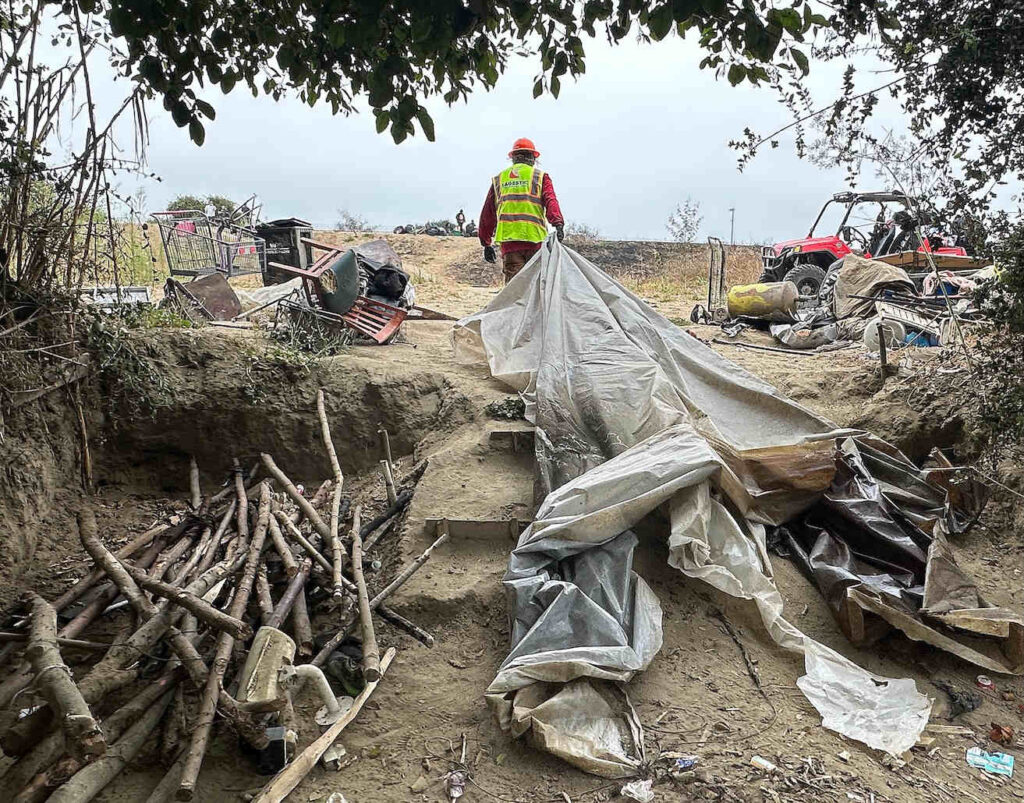
Watsonville may soon draw out designated “no encampment zones” which would bar unhoused individuals from setting up tents, parking RVs or using cooking supplies in certain areas.
Signs would be posted showing a map of the zones.
These areas would be subject to immediate cleanup, and the city would not require a 72-hour notice to remove personal items in these sections of town. Major waterways and parks would be prioritized as no encampment zones if the ordinance were to be enacted.
The updated ordinance is largely driven by current enforcement problems. When cleanup crews arrive at existing encampments along the city’s levees and sloughs, campers often simply move their belongings outside the work zone to a different location on the waterway, city officials say. This creates a new site that requires its own 72-hour notice to clear.
The new “no encampment zones” would allow cleanup crews to immediately clear the area without that requirement.
Police Capt. Mish Radich says the ordinance is modeled around an existing ordinance from San Jose.
“This camping order supports public health, safety, the environment, access to parks and open spaces and public right-of-way,” he said.
The first reading of the ordinance was approved at the Tuesday night City Council meeting, with all in attendance voting yes except Mayor Vanessa Quiroz-Carter, who vehemently opposed it, citing a lack of services for the unhoused community in Watsonville.
“This is ridiculous. I will not be supportive of this,” Quiroz-Carter said of the ordinance. “We need to have adequate services for people. We need to have adequate shelter for people. That’s a basic human right.”
The item will return to the council for a second read and approval later this year.
Have a blast: Fireworks sales begin July 1

Every year, nonprofits set up firework stands throughout the city of Watsonville, with the proceeds going to fund their activities. Sales rubn July 1-4. Their use is only permitted within the cities of Watsonville and Capitola. People using them outside of those places face steep fines.
Sales locations
Fairytale Farms
1051 South Green Valley Road
Pajaro Valley Girls Softball
444 Airport Boulevard
Pajaro Valley Youth Soccer
1125 South Green Valley Road
Victory Outreach of Watsonville
1702 Freedom Boulevard
Watsonville Buddhist Temple
423 Bridge Street
Watsonville Charter School
2010 Freedom Boulevard
Watsonville Victory Outreach #1
1000 Main Street
Watsonville Youth Training Center
1424 Freedom Boulevard
Freedom Rotary Club
1966 Main Street
Moreland Notre Dame
634 Main Street
Pajaro Lodge
1465 Main Street
Watsonville HS Football & Cheer
1116 Main Street
Watsonville HS Soccer
600 Main Street
Watsonville HS Track & Field
20 Ohlone Parkway
Watsonville HS Wrestling
377 Hushbeck Way
Watsonville JR Wildcatz
375 Hushbeck Avenue
Watsonville PAL
355 Green Valley Road