The Most Important People of Color in American History
1. Frederick Douglass
Abolitionist, gifted orator, and adviser to President Lincoln. Fun fact: He was born Frederick Bailey. “Douglass,” which he adopted after he escaped from bondage and settled in Massachusetts, is taken from a character in Sir Walter Scott’s poem “The Lady of the Lake.”
2. Martin Luther King Jr.
Not-so-fun fact: As a child, he was recruited to appear onstage, dressed in a slave costume, for the gala premiere in Atlanta of Gone With the Wind.
3. Barack Obama
You know that if you became the first African American president in U.S. history but still finished only third on this list, those other two guys must really be giants.
4. W.E.B. Du Bois
Sociologist, writer, and champion of civil rights—a public intellectual par excellence. Check out these chillingly relevant words, which Du Bois issued in 1905: “Either the United States will destroy ignorance or ignorance will destroy the United States.”
5. Thurgood Marshall
The first Black justice to serve on the Supreme Court. An absolute hero of American jurisprudence. If only he’d stayed on the court until he died—one week into Bill Clinton’s presidency—most Americans would still have no idea who this Clarence Thomas guy was.
“A dedicated labor activist … also worked to promote women’s rights, LGBTQ rights, and immigrant rights.... In her mid-nineties, she broke her silence about her experience of sexual assault by Cesar Chavez as other victims came forward.”—Vanderbilt University’s Nicole Hemmer on Dolores Huerta
6. Harriet Tubman
A life of almost impossible to imagine courage. Tubman traveled back and forth between North and South to lead dozens of people out of bondage. And then she was a Union spy!
7. Dolores Huerta
An American labor leader and a co-founder of the National Farm Workers Association. Been through countless struggles—and she’s still at it, at 96.
T-8. A. Philip Randolph
He organized and went on to represent the first African American labor union, the Brotherhood of Sleeping Car Porters. He had the ear of presidents. He was co-organizer of the 1963 March on Washington for Jobs and Freedom. Enough for you?
T-8. Booker T. Washington
For years the more accommodationist Washington was seen as Du Bois’s less radical and threatening antipode, which he certainly was. But the leader of the Tuskegee Institute, now Tuskegee University—who was also a gifted writer and orator—had a massive following in his day.
T-8. Malcolm X
The famed Black nationalist leader. Malcolm Little had plenty of reasons to hate America, but by 1964, after a pilgrimage to Mecca, he’d begun to turn the other cheek. The next year, members of the Nation of Islam assassinated him.
T-11. Muhammad Ali
The rare athlete who transcended sports to become a cultural icon. As beloved as Ali became, it’s worth remembering that much of mainstream white society hated him into the 1970s for telling certain uncomforting truths, like: “I ain’t got no quarrel with them Vietcong. No Vietcong ever called me a n-----.”
T-11. Louis Armstrong
By the time he was 15, he’d been arrested for a firing a gun into the air and been stabbed by a prostitute. Ten years later, he was the most celebrated jazz trumpeter in the country.
T-11. Jackie Robinson
To understand the cultural impact of his breaking the color barrier in 1947 with the Dodgers, you have to understand that baseball was everything back then. The NFL barely mattered. Although football, too, considered wooing Robinson, a star UCLA running back, to break its color line.
T-11. Sitting Bull
The famed Lakota leader was the spiritual head of the group of tribes who defeated Custer at the Little Bighorn in 1876. Alternately feared and revered, he was killed in 1890 by Indian agency police under orders of the government.
The Most Important Court Cases in American History
1. Brown v. Board of Education, 1954
This school desegregation decision was so important that Chief Justice Earl Warren made sure the judges were unanimous. And even with that, 20 or so years passed before it was actually enforced.
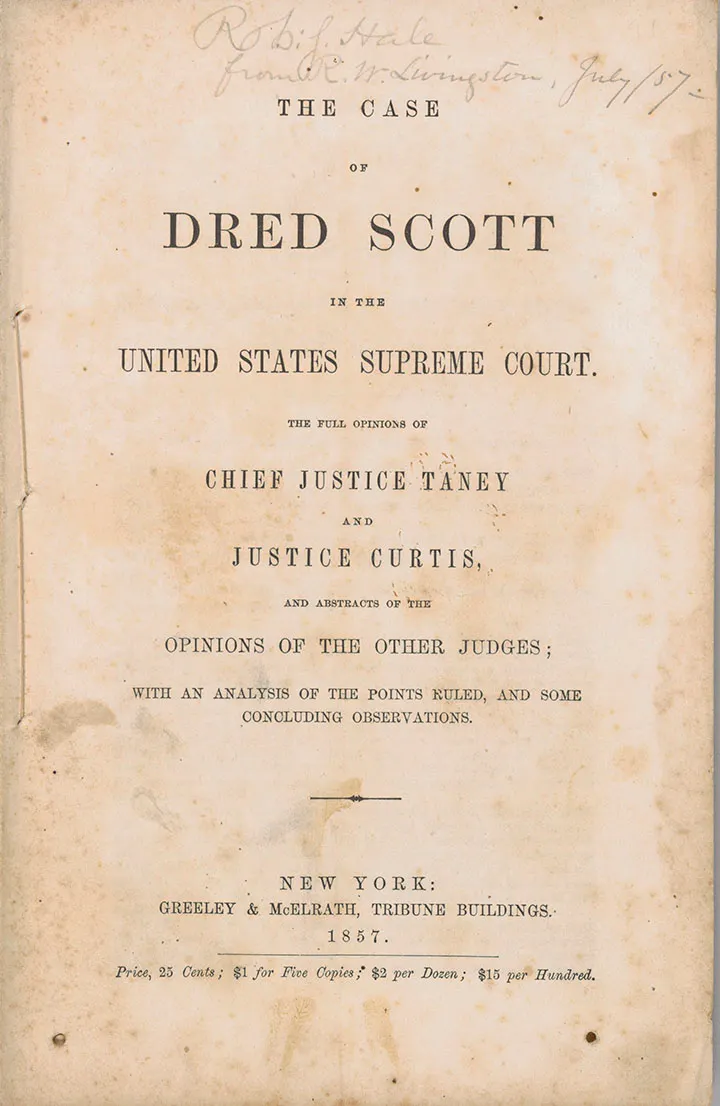
2. Dred Scott v. Sandford, 1857
A shameful decision not to extend citizenship to descendants of slaves by a shameful court that helped precipitate the Civil War. Let us note, however, that the vote was 7–2, so bravo to Benjamin Robbins Curtis and John McLean.
3. Marbury v. Madison, 1803
In which Chief Justice John Marshall established judicial review—giving the court the power to declare a congressional law unconstitutional. Would be lovely if we could undo this today.
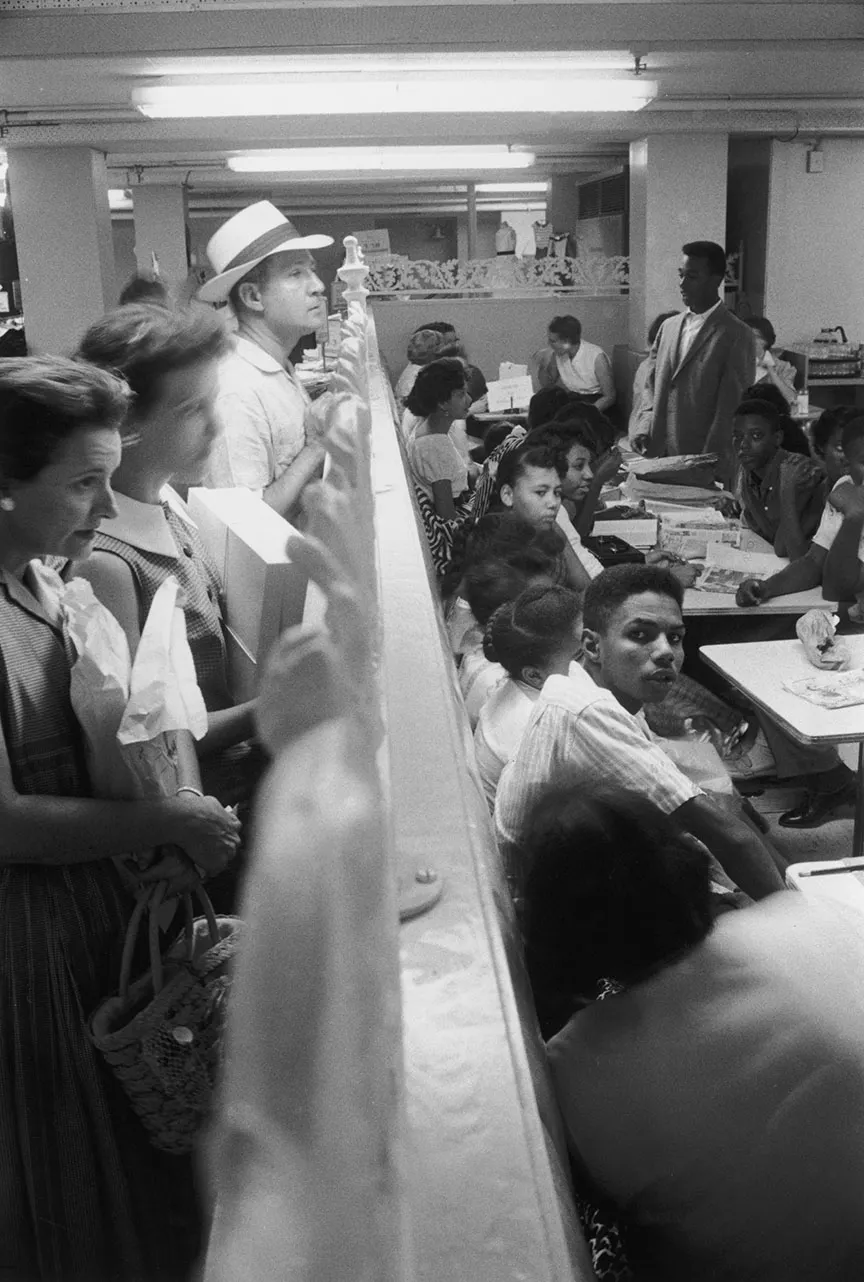
4. Plessy v. Ferguson, 1896
The infamous “separate but equal” ruling. Homer Plessy was seven-eighths Caucasian and tried to sit in a white railway car. Not in Louisiana, bub!
T-5. Citizens United v. Federal Election Commission, 2010
A disgraceful ruling to all but undo campaign finance rules. Its impact on U.S. elections has been corrupting beyond our ability to count—quite literally, since one result of this decision is that we have no way of tracking how much corporations pour into campaigns.
T-5. Roe v. Wade, 1973
The landmark pro-abortion ruling. Interestingly, at first, the Jerry Falwells of this country weren’t up in arms about this one. Homeschooling was their big issue at the time.
“This case … empowers Trump to violate as many laws as he wants without fear of the consequences. Immunity breeds impunity.”—author and columnist Jonathan Alter on Trump v. U.S.
7. Trump v. United States, 2024
The ruling that offered the president immunity from criminal prosecution for official acts. One of the most annoying naïve-liberal guessing games of the Roberts court era: Maybe Gorsuch or Kavanaugh will save us here! No. They didn’t.
8. Bush v. Gore, 2000
The race to the right-wing gutter started here, with a decision so rancidly political—it settled a dispute over vote recounting—that the five majority justices noted it was “limited only to the present circumstances,” i.e., meant to install George W. Bush as president.
T-9. McCulloch v. Maryland, 1819
Unlike Marbury, this John Marshall ruling suits liberals today just fine: It declared the supremacy of federal over state law and would define the potential scope of the administrative state. Some conservatives would like to overturn it. At the rate we’re going, they won’t need to.
T-9. Obergefell v. Hodges, 2015
A rare victory for progress and decency in the modern era, thanks to Anthony Kennedy joining the court’s (then) four liberals to legalize same-sex marriage.
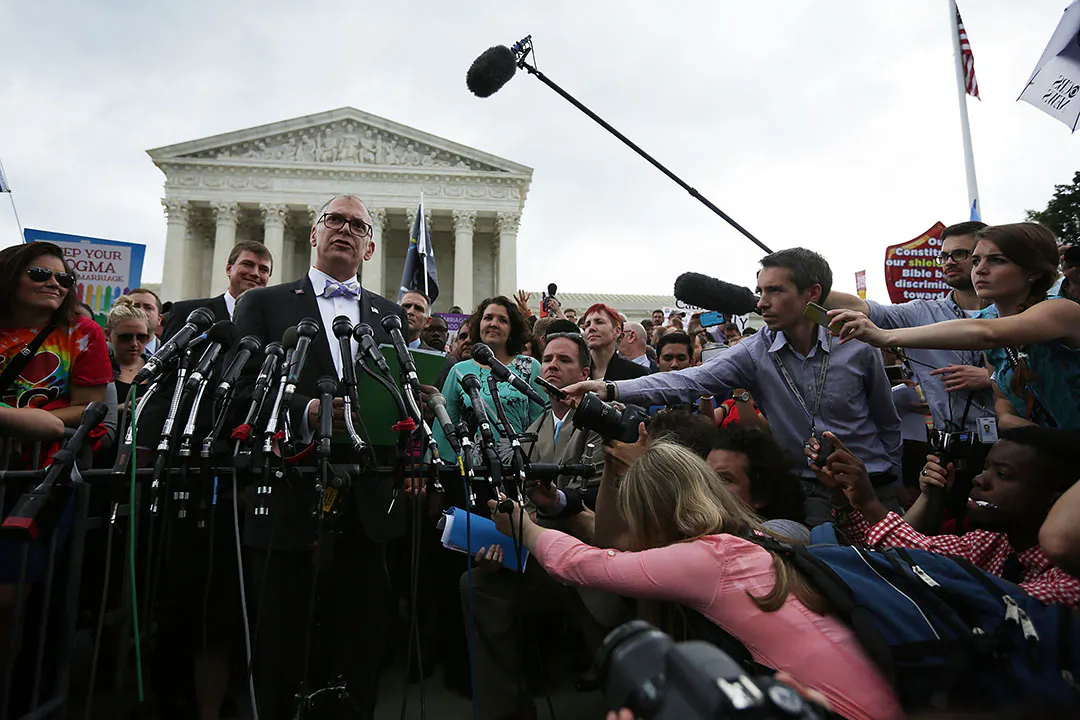
T-11. Dobbs v. Jackson Women’s Health Organization, 2022
Another Deep South case, and wham, nearly a half-century of pro-abortion rights precedent tossed out the window. Every justice who voted for this clearly lied about their beliefs at their confirmation hearings.
T-11. West Coast Hotel Company v. Parrish, 1937
The famous case in which the anti–New Deal Supreme Court, perhaps brushed back by FDR’s court-packing scheme, shifted its right-wing gears and held that a minimum wage was constitutional. Justice Owen Roberts called it “the switch in time that saved nine.”
T-11. Baker v. Carr, 1962
One of three “one person, one vote” cases decided by the Warren court in the early 1960s. Warren, upon retiring, called these cases the most important of his tenure. One justice had a nervous breakdown during deliberations.
T-14. Loving v. Virginia, 1967
The court here held unanimously that the marriage between the appropriately named Richard Loving, a white man, and his Black wife, Mildred Jeter, could stand.
T-14. Miranda v. Arizona, 1966
The bane of cops from the day it was decided, it ensured that people under arrest were made aware of their rights. Kind of amazing it hasn’t been reversed yet.
The Most Important Public Figures Who Never Held Elected Office
1. Martin Luther King Jr.
In 1955, few had heard of him yet. A mere eight years later, he was moving mountains.
2. Frederick Douglass
Born into bondage, he was King’s nineteenth-century precursor and the country’s conscience during the Civil War and after.
“A champion of civil rights before FDR, Eleanor [Roosevelt] wrote her own column for 27 years before and after he was president, and she led the committee that wrote the U.N. [Universal] Declaration of Human Rights.”—Amy Fried, University of Maine (emerita)
3. Eleanor Roosevelt
A first lady of many firsts (first to write a newspaper column, first to speak to a national convention), she also went on to a nearly two-decade career vigorously promoting both human rights abroad and reform politics at home.
4. Susan B. Anthony
She was decades ahead of her time in arguing and agitating for women’s suffrage. But she was equally committed to abolitionism.
T-5. W.E.B. Du Bois
His The Souls of Black Folk (1903), with its argument about “the color line” in American society, had a seismic impact. He helped found the NAACP but became disillusioned over time, finally moving to Kwame Nkrumah’s Ghana.
T-5. J. Edgar Hoover
Not our favorite, but hard to deny his importance over five decades of American life. He intimidated presidents and hounded movements. But contrary to legend, he was apparently not a cross-dresser.
7. Henry Ford
The good: He famously paid his employees enough that they could buy the cars they themselves made. The bad: The Dearborn Independent, his virulently antisemitic newspaper.
T-8. William F. Buckley Jr.
Erudite, supremely self-confident, full of charm, capable of making and keeping liberal friends. But it’s hard to forget his support for segregation and later suggestion that gay men with aids be tattooed.
T-8. Thomas Edison
The light bulb, the phonograph, the motion picture camera. And those three just scratch the surface. His West Orange, New Jersey, laboratory contained “eight thousand kinds of chemicals, every kind of screw made, every size of needle,” and a hell of a lot else.
T-8. Elizabeth Cady Stanton
The lead organizer of the important suffragist Seneca Falls Convention of 1848 and the co-founder (with Anthony) of the National Woman Suffrage Association. She was also, like Anthony, a fierce abolitionist.
T-11. Rachel Carson
She wrote a 1951 bestseller about the ocean that won a National Book Award, but nothing touched the impact of 1962’s Silent Spring, one of the most influential books of the century. She died of breast cancer just 16 months later.
T-11. John Marshall*
He wasn’t the first chief justice; he was the fourth. But for good and for ill, Marshall is the one who made the court the final word on U.S. legislation and law.
T-11. John D. Rockefeller
Rockefeller’s Standard Oil gobbled up smaller and weaker competitors like bats eat mosquitoes, ending up with around 90 percent of refined oil in the United States. On the plus side, he did leave us the University of Chicago.
14. Benjamin Franklin*
Everyone knows about the famous kite experiment. But did you know he invented swim fins? When he was just 11 years old?
* Franklin and Marshall served in elected legislative office but are far better known for their accomplishments outside that realm.
This week in Santa Cruz County business: Capitola Wharf business faces uncertain future; Aptos Village business owners and RTC head to court
A proposed new policy regarding leases of city-owned property has the owner of Capitola Boat & Bait worried her business could be priced off the wharf, Jessica M. Pasko reports in her weekly column.
Transcript: Trump Seethes at Media over Iran as Fox Drops Brutal Poll
The following is a lightly edited transcript of the June 24 episode of the Daily Blast podcast. Listen to it here.
Greg Sargent: This is The Daily Blast from The New Republic, produced and presented by the DSR Network. I’m your host, Greg Sargent.
Donald Trump is claiming that Iran has fully agreed to high-level international inspections of its nuclear program. Iran is flatly denying this. As always, under Trump, it’s more likely that the truth is coming from the other side of the negotiating table and not from our side. This highlights a big problem for Trump. He badly needs to produce results in these talks very quickly. He needs more money for the war, but as an angry exchange he had with a reporter reveals, the public won’t put up with that when they’re so sour on his economy. It’s gotten so bad that even Fox News is telling him the truth about his terrible economic numbers.
So he needs to produce results in Iran fast. But as international relations professor Nicholas Grossman argues in a good new piece, time is not on his side. So we asked Nick to come on and explain it all to us. Nick, always good to have you back on.
Nicholas Grossman: Yep, great to be here, Greg. Thanks.
Sargent: Can you quickly sum up where we are on this fundamental dispute, Nick? Trump says Iran has agreed to high-level international inspections, and he’s even telling reporters that he wouldn’t have agreed to enter the talks at all without Iran agreeing to that beforehand. But all signs are that Iran has not agreed to it. What’s the story here?
Grossman: I think it’s pretty simple, in that Trump is lying, or at minimum heavily exaggerating and bullshitting. It’s possible that they brought this up as something that Iran could maybe agree to in principle, or suggested it. But all the signs show that there really hasn’t been any discussion of Iran’s nuclear program yet.
There probably won’t be, since Iran has more leverage in these talks. And that sort of thing would take a lot of details, a lot of the specific things that require nuclear physicists and engineers and other experts—there’s no way they could have possibly worked it out now. So simply, Trump is lying or trying to play up a minor, maybe discussion point as a big concession.
Sargent: Can I ask quickly before we move on from this, Nick—does Trump saying this undermine JD Vance? Is this a problem for JD Vance in these negotiations?
Grossman: It’s a big problem. I don’t think we’ve seen something like this before, that the president of the United States is actively lying about what is going on in the discussions. And that makes it very hard for Iran to be able to get their sense of what the United States is committing to. Just to make a deal—if I’m going to do something, I expect you to do something. There are usually trust-building measures. We take a few steps along the way.
And so if I say, OK, I’ll do X as long as you do Y, and then as soon as you get up from the table, the president says, no way, we’re never going to do Y, and I never would have agreed to that in the first place—then I can’t know what you’re going to do. I can’t do my trust-building steps, and it makes the negotiations very difficult. So the Americans are in this weird position where they have to say, pay no attention to what our national leader says, he’s just doing that as theater for domestic consumption—even as the Iranians can see the way that Vance and the whole Republican Party and a lot of conservative media kiss up to him so often and just go with whatever he says. So yeah, it greatly undermines America’s negotiating position.
Sargent: So Trump is under immense pressure right now to deliver. Let’s listen to an exchange he had with a reporter who asked him about the news that the Pentagon has asked Congress for another $80 billion for the war. The reporter starts out by saying the Department of War has asked for this money. Listen to what happens.
Reporter (voiceover): The Department of War is asking for 80 billion more dollars for the Iran war. Do you think Americans support this at a time when so many are financially struggling?
Donald Trump (voiceover): “Who are you with?”
Reporter (voiceover): I’m with NewsNation, sir—
Trump (voiceover): Not a very good group. Not doing very well. Not only do they support it—not only do they support it, they demand it, because they won’t allow Iran to have a nuclear weapon. You want to see trouble, let them have a nuclear weapon. We’re doing very well with Iran. They’ve been decimated.
Sargent: Nick, note how angry Trump gets at the notion that the American people are turning on him over both the war and the economy. And of course, the American people have turned on him over both. But he says the American people absolutely support spending $80 billion more dollars on the Iran war. Your thoughts?
Grossman: He says this about everything—that whether there is any public support or not, it’s kind of his way of trying to either bully reporters or bully the public into believing it, to create an aura of power, almost meme his way into more power than he actually has. And it’s really not going to work in this instance.
I mean, Congress will most likely fund the Pentagon’s requests, at least in significant part, because a lot of that is replacing munitions that the United States fired against Iran that is needed for a lot of contingencies, such as the event of a major war with Russia or China, war over Taiwan, anything like that. And so they will likely spend that money.
But selling it to the American people as some sort of positive thing—that’s not going to work at all. People can see the economic effects, and those are likely to get worse rather than better as the effects really reverberate out. And they never supported the war in the first place.
So there isn’t any particular reason why they would be excited to spend even more taxpayer dollars going there when they are more concerned about really many other issues, especially economic ones.
Sargent: So you’re really looking at a triple whammy for Trump. As you say, the public opposed the war at the outset, which is itself unusual. And then the public had a direct glimpse of the economic effects of the war when the Strait of Hormuz closed. With unusual clarity, Trump was directly tied to skyrocketing prices. And then on top of that, Trump is now asking for another $80 billion. That’s a triple whammy of sorts. I don’t think we’ve seen something like that before, have we?
Grossman: No, we haven’t. And you can add on top of that that the American public doesn’t like losing a war, doesn’t like backing a loser in a war, doesn’t want to throw good money after bad. So if there were perhaps some sort of actual threat to the United States, or there were some sort of national interest that he was achieving in the process of the war, then maybe there would be an argument for the American people to sacrifice in some manner. But there isn’t at all.
He’s in the process of surrendering and making concessions to the Iranians and giving them more than they had before the start of the war. So why would people be interested or say even excited or supportive of funding that war?
Sargent: It really is bad for him. And just to underscore how badly the public has turned on him over this, listen to this snippet from a Fox anchor. He cites a new Marist poll showing that only 33 percent of Americans approve of Trump on the economy, his lowest ever in Marist polling, with 60 percent disapproving. Check this out.
Fox anchor (voiceover): We’ve only got a few months now until the midterms. This Marist poll shows that the president’s not exactly firing on all cylinders when it comes to approval of his handling of the economy. Thirty-three percent—disapproving 60 percent rather. His 33 percent approval rating is three points lower than Biden at his worst.
Sargent: Nick, did you catch how the anchor said that Trump is now lower on the economy than Joe Biden was at his worst? That has got to be the thing Trump hates to hear more than anything else. And this is coming from Fox News, making it even more pointed. I think this really illustrates very graphically the kind of pressure he feels to produce a deal.
The last thing he wants to be doing right now is asking for tens of billions more for the war when his approval rating on the economy is one-third of the country, right?
Grossman: Yes, and he needs something really fast, because the economic impact is very unlikely to turn positive in time for the midterms, in time to reduce that pressure. This was one of the things that got Trump to surrender in the first place. A good lesson of what is he actually afraid of, what can discipline him, what does he listen to—the answer has always been markets.
The oil market and others were on the verge of getting into a very serious crisis because of reserves running down and the ships not leaving the strait in time to replenish that.
And we still might see some of that, because as much as Trump tries to sell this idea that the strait is totally open, ships are flowing through, that Iran won’t be charging tolls for it—none of that matches the facts on the ground. And this is the type of big-scale supply-demand, hard physical reality that he can bullshit his way through for some time, kind of delay for a time, but cannot totally manage to hoodwink people when there are ongoing economic problems, when costs are rising, when we saw recently inflation numbers, in large part due to the war, getting back to levels that we haven’t seen in a few years.
All of that is the sort of thing that people notice. And he really seems desperate about it—where usually he’s able to either bully people into saying that it’s going well, or turn it into a domestic political he-said-she-said back and forth, or just somehow bullshit his way through it, change the subject. And this one is just stubbornly not doing it because the reality of it is too big.
Sargent: Well, here’s the kicker on the Marist poll. It finds his overall job approval at 36 percent, which is the lowest of his second term. Those are very bad numbers, Nick.
Grossman: Those are really bad. Those are the sort that lead to a midterm wipeout for a president’s party.
Sargent: And we should note here that this 36 percent approval, which is again dismal, is absolutely not an outlier. The New York Times polling averages, which if anything are conservative and take in a lot of data, have his approval at 38 percent. That means that his actual approval is very plausibly in the mid-30s—35, 36, 37.
Those are terrible numbers. And I don’t see them turning around, Nick. Do you? I mean, part of the problem here is that he’s built himself into a situation with Iran where time isn’t on his side, is it?
Grossman: I think you’re right that it is likely to get worse. And I can’t really see a way that it gets better. I can think of a few different ways. One is that with the strait still restricted, having been blocked for so long, a lot of supplies—not just energy, but things like fertilizer is another good one—we’re going to see over the next year or two the result of that supply crunch and higher prices reverberating through the economy. So the economy is more likely to get worse rather than better, at least in say the midterm.
With the war, it looks like it has driven more wedges into the MAGA coalition, into the GOP coalition, because it effectively broke some of the deal that various voting groups thought that they had with Trump when they were voting for him. So you had some lighter supporters who thought that he was good for the economy, that he was going to bring inflation down, that the economy was going to look more like, say, 2018, 2019 before COVID. And he didn’t do that. He made it worse exactly along those measures in a way that’s easy to link to the war.
And also there were the people who voted for him because they bought into the image of anti-war isolationism—which was always bullshit, which had to willfully ignore a lot of his first-term stuff, but nevertheless some voters bought into it. And here he went and started a new Middle East war that is causing all sorts of problems and is not making anything better for the United States or for its various allies or the world. And so some of them feel betrayed.
And so—I would be extremely wary of ever giving credit to Tucker Carlson, so this is not credit—but he is seeing an opportunity in taking this anti-war isolationist, anti-Israel lane. And that is creating these political problems for Trump that are very unlikely to reverse in time for the midterms, or who knows what after that. But I can’t see what miracle thing would come along that would somehow reverse his approval decline.
Sargent: I just want to underscore your point by saying that Tucker Carlson and Marjorie Taylor Greene just this week said that they’re leaving the Republican Party, or something to that effect.
Again, we shouldn’t trust these people even for a second or hail any sort of nobleness on their part at all. But there really is opportunity that they’re seeing. They would not be doing this unless they sense that there are large constituencies within the Trump-MAGA coalition that will agree with them on it, right?
Grossman: Right, exactly. They’re opportunities, a finger in the wind. It’s almost like they’re positioning themselves for a period of whatever happens after Trump, and that they want to be in the lane that says various MAGA stuff—like a lot of the racism, anti-immigrant stuff, for example, was good, but the Iran war and Middle East interventionism was bad—and try to capture a future of the right by doing that. But that also makes it an argument inside the Republican Party.
Because you also have another group that feels wronged by this—the arch-hawks, the ones who have been wanting an Iran war the entire time, the ones who are very strong supporters of Israel. They’re feeling betrayed by Trump surrendering and making all these big concessions to Iran, giving Iran benefits up front and not getting anything for the United States, leaning towards an absolute best-case scenario of something like a weaker version of the JCPOA, the Obama nuclear deal, which they hated and wanted to oppose in the first place.
So those are the sort of people who maybe didn’t love some other Trump stuff and bit their tongue about it because they liked that he was going to be so violently aggressive in the Middle East and so supportive of Israel and of Benjamin Netanyahu. And now Trump is doing something that goes against those interests. And you have the Tucker part of the coalition going in a different direction. It looks really difficult for anybody to possibly be able to hold that thing together.
Sargent: I mean, he’s losing three different groups if you really bear down on it, right? He’s losing the low-engagement young non-white working-class types who went to Trump because he’s the Apprentice guy or whatever they thought. He’s losing the die-hard MAGA types who actually seem to have real anti-interventionist views—I’m really skeptical of that, and I know you are as well, but still, people like Tucker and Marjorie Taylor Greene are speaking to some sort of constituency out there that thinks that. And he’s losing the Republican hawks, who thought Trump would basically be their tribune to crush whatever enemy rose up in their path.
Grossman: Yeah, I think he’s losing some of the manosphere tough-guy types also, in that he looked so weak. This was supposed to be some triumph of strength and it’s going terribly along those lines. And that’s the sort of thing that so many people, various experts on the issue, could have told them in advance—that you can’t just act like a reality show tough guy, do a bunch of bluster, do some bombs from afar, and expect a country to then capitulate to you. That’s not going to work.
But nevertheless, some people bought into that. And the embarrassment of it now, with being part of a loser—and one who is surrendering and flailing and kind of going back and forth on it a lot and just generally looks weak, and being seen by a lot of people in those areas as weak—just adds another chip against that coalition that he built that got him back into the White House in 2024.
Sargent: Well, let’s wrap this up by listening to something Trump said at a rally in Pennsylvania, which I think shows again how angry he is at the media and everybody over all this. Listen.
Trump (voiceover): Iran will never have a nuclear weapon, and they’ve agreed to that. But remember, this wasn’t easy. We had 47 years’ worth of presidents and other people—other countries too, we’re not the only one that never did anything. They were the bully of the Middle East. And now we’re leaving Iran with no Navy, no Air Force, no anti-aircraft, no missile capability, no nuclear program.
We’re leaving them without any nuclear capacity, and they’ve agreed to that. And we’re getting along quite well, although if you read the fake news, you’d never know! Think of it—the fake news. They have no army, they have no navy, they have no air force, they have no anti-aircraft. We can fly over Tehran just at will. Nobody’s going to do anything to us. And then I read the fake news that they’re doing quite well! They’re not doing quite well!
Sargent: Nick, note how Trump says Iran has agreed to having no nuclear program, when in fact all it has agreed to is what it has agreed to many times in the past, which is this boilerplate language about how it shall not buy or develop nuclear weapons. And note how he rages at the media for telling people the truth, which is that Trump has gotten little to nothing on this front.
What’s the basic dynamic here going forward? Does this change anytime soon? Does it just drag on for many months? How do you see it playing out?
Grossman: I think it’s probably dragging on for a while. Unfortunately, one of the really long-term problems with this is that Trump has given Iran this really powerful card, that they can threaten to close the Strait of Hormuz when they don’t like how things are going—either with negotiations with the United States or Israeli military activity in Lebanon or just about anything else. And they can stir it up as an issue. I bet we’re going to be hearing about this for years.
Iran is also setting up a toll regime—they’re building this out with Oman, they’re charging people special insurance and saying they’re going to have to pay. And Trump is lying about that and he’s trying to sell that lie, but that one looks like it’s moving forward also.
So he’s gotten the Iranian government a big new revenue stream. And they are not going to be giving concessions on their nuclear program, at least not ones that are more than in the MOU. What it specifically says—they even use the language “Iran reiterates”—basically it says its old statement that they won’t get nuclear weapons, which nobody really believed before, which is why there were all these sanctions and pressure on Iran in the first place.
So he’s going to keep on giving Iran these concessions. Just recently lifting sanctions on Iran, allowing a lot of Iranian ships to leave and sell at market, or unfreezing Iranian assets is something that the Iranians said they talked about when they were meeting in Switzerland on that one. I believe them.
We’ll see more economic concessions to Iran just to get Iran to keep the process of letting ships through the Strait of Hormuz, because that’s the real leverage that they have. Once they got a hold of that, they have had us. They have had the stronger hand and they have been playing it better than the United States has.
So while Trump will continue prioritizing trying to lie to the American people about what happened, the facts on the ground and the actual shape of the Middle East, of the international system that is coming out of this, is going to keep on likely getting more and more in the Iranians’ favor, with Trump lying and threatening and blustering along.
Sargent: The beauty of it all is that JD Vance inherits this whole mess next year when Donald Trump is utterly checked out and essentially leaving the scene and JD Vance is starting his presidential run. He deserves every bit of that. Nicholas Grossman, thanks for coming on. Always great to talk to you.
Grossman: Yep. Best of luck to Mr. Vance, I guess. And yeah, great talking to you too. Thanks for having me.
Alpine Linux 3.24 scales new desktop heights with COSMIC
Angry Trump Seethes at Media as Fox Drops Truly Humiliating Poll Data
Donald Trump’s anger at the media over his Iran fiasco is mounting. He snapped at a reporter for noting that Americans might not support spending $80 billion more on the war {as the Pentagon has requested) given widespread economic distress. Trump even dubiously claimed the public would gladly support this. Then, at a rally, Trump seethed at the media for not being worshipful of his handling of the Iran talks. He also nonsensically suggested he’s solved the nuclear issue entirely. Trump also tweeted angrily that the media is belittling his glorious triumph. He’s under immense pressure to show results: In a devastating segment, a Fox News anchor pointed to a new poll showing Trump’s approval on the economy at 33 percent. Then the anchor said: This is lower than Joe Biden was at his absolute worst point ever. In this, Fox hit him with the ultimate humiliation. We talked to international relations expert Nicholas Grossman. We discuss his new piece explaining why time is not on Trump’s side in these talks, how all this is breaking up the Trump coalition in new ways, and what a disaster it could prove for JD Vance’s coming presidential run. Listen to this episode here.
Ordering a trip back to 2009, with a side of nostalgia
Explainer: Why your legacy storage is choking your expensive GPU
How to invest when everything is moving too fast
The Editor’s Desk


Letters

Death and Saxes

Free Will Astrology

Things to do in Santa Cruz

What it Takes

Hola Puerto Rico

Don’t Be Blindsided

Rejoice, Rejoice