
We Are Drinking the Earth—and Eating It
This story was originally published by Canary Media and is reproduced here as part of the Climate Desk collaboration.
Not so long ago, the Central Highlands of Vietnam were blanketed by forests so dense they blotted out the sun. The American soldiers who slogged through the area during the Vietnam War complained about leeches, mosquitoes, and snakes, but those triple-canopy jungles also teemed with tigers, elephants, and monkeys. The unrelenting darkness and tropical monsoons that made the highland woodlands so inhospitable to humans made them excellent habitat for wildlife.
But now they’re blanketed by coffee farms.
Sorry to be a buzzkill, but your morning buzz kills nature. Agriculture is by far the leading driver of deforestation, and coffee is the sixth-leading driver of agricultural deforestation; coffee farms are also parching the aquifers and ravaging the soils they’ll need to sustain future harvests. A new report by the nonprofit Coffee Watch documents that in Vietnam, which grows about one of every five coffee beans on Earth, about half a million acres of Central Highlands forest have been cleared for coffee since 1990, an area the size of Luxembourg. There are no longer any wild tigers in the region, and very few elephants; the saola, an adorable local antelope known as the “Asian unicorn,” is feared to be extinct.
“Most people are good people; they’d never dream of going to Starbucks and ordering a latte plus a dead elephant,”
Again, I apologize for being a Debbie Downer. But while it’s fairly common knowledge that carbon-belching coal plants and gas-guzzling SUVs are environmental menaces, people should know that our diets also degrade our planet, causing most global water shortages, nutrient pollution, and habitat destruction while generating a third of all greenhouse gas emissions. Agriculture has overrun nearly half of our habitable land, and it replaces more forests, wetlands, and other wildlands every day. That’s why I wrote We Are Eating the Earth—and as Coffee Watch founder and director Etelle Higonnet reminded me, we are drinking the Earth, too.
“Most people are good people; they’d never dream of going to Starbucks and ordering a latte plus a dead elephant,” Higonnet said. “But that’s basically what we’re doing. We’re raping and poisoning the planet with every cup we drink.”
Vietnam is now the No. 2 coffee-growing nation, behind Brazil; and it’s the leading producer of the cheaper “robusta” beans used for most instant coffee, serving nearly 40 percent of the global market. And over the last generation, Vietnam has had one of the world’s fastest deforestation rates; the Coffee Watch report used satellite imagery and other records to show that in the Central Highlands, forest cover has shrunk by a third, while coffee’s footprint has expanded fourteenfold. Traditional jungle provinces like Dak Lak and Dak Nong and Gia Lai have seen less destruction in recent years, but only because there’s so little jungle left to cut.
“If this system collapses, shock waves will be felt in every supermarket and every café.”
At the same time, intensive irrigation is lowering the region’s water table, forcing farmers to extend wells as deep as 150 feet, while intensive chemical use is depleting soils, putting farmers on a “nutrient treadmill” in which they have to spray even more fertilizer and pesticide to maintain their yields. And when natural forests are cleared, the ecological services they provide—recharging groundwater, controlling erosion, buffering extreme temperatures—are lost with their trees. “The production system is eroding the ecological foundations on which it depends,” the report concluded. Droughts are already creating bean shortages, which contributed to record-high coffee prices last year, and as the climate warms, scientists believe half the area’s coffee acres might be unviable by midcentury. That could mean even more deforestation, as production expands elsewhere, and even higher prices.
“If this system collapses, shock waves will be felt in every supermarket and every café,” Higonnet said.
Higonnet is a badass do-gooder, a Yale Law School graduate who was a human rights activist for Amnesty International before joining Greenpeace to focus on climate. She got frustrated by Greenpeace’s exclusive focus on the four most prominent deforestation commodities—beef, soy, palm oil, and wood/paper—so she helped found a well-respected organization called Mighty Earth that works on rubber and cocoa as well as the Big Four; she was knighted by the French government for her efforts to stop child labor and slavery along with deforestation. But she always wanted to expose coffee farming, which also has extreme labor and poverty problems as well as environmental problems, so she started Coffee Watch in late 2024. Coffee is responsible for only about 1 percent of deforestation, but as she points out, it receives way less than 1 percent of the attention paid to deforestation.
Drinking a cup of coffee every morning contributes about as much to global warming as driving a gasoline car 100 miles.
The Coffee Watch report does make a compelling case that the world’s coffee addiction has destructive consequences for nature. There’s something depressing about losing a Luxembourg-sized jungle to farmland in a generation. Then again, Luxembourg is just about the size of Rhode Island; around the world, coffee has replaced about a New Jersey–sized swath of forest. That’s certainly not nothing, but cattle replaced an entire California-size area of forest between 2000 and 2015, more than 200 times what’s been lost in Vietnam, and twice as much as what was lost to all other commodities combined. Globally, pastures now cover an area about twice the size of South America. In the United States, we use about half our agricultural land to produce beef, which only provides about 3 percent of our calories.
So yes, we are drinking a bit of the Earth, but nowhere near as much of it as we’re eating; the 1 percent of current deforestation driven by coffee is a drop in the pot compared with the 40 percent by cattle or the 18 percent by soy and oil palm. I did some crude calculations using this emissions data, and it looks like drinking a cup of coffee every morning contributes about as much to global warming as driving a gasoline car 100 miles—maybe twice as much if you add milk, but that’s just another reminder that cattle are the real climate menaces. They’re coal plants with tails.
Of course, coffee’s relatively modest impact is no consolation to the Asian unicorn. It would be better for the planet if people drank less coffee. Since that probably won’t happen, because people love coffee, and since lab-grown coffee isn’t ready for prime time, there ought to be more pressure on major coffee buyers to green their supply chains.
Coffee grows well in the shade of other trees, and while most of the world’s beans come from monocultures, about 20 percent are now grown through more sustainable agroforestry practices that combine reforestation with production, like planting “doughnuts” or “zebra stripes” of trees around or through plantations. Brazil has also reduced deforestation by helping farmers get more efficient; in one generation, they’ve doubled production while reducing their land footprint, and Nestlé is developing new climate-resilient varieties that could boost yields even further. Governments can also encourage farmers to use less irrigation water and fertilizer, or ban imports of coffee grown on recently deforested land.
From a policy perspective, though, it makes more sense to focus on beef, even if nobody wants to hear that just before firing up the grill on July 4. We need to get the rich world to eat less beef, even if that means eating more chicken and pork, and helping ranchers produce more beef on less land. We have to go hunting where the ducks are.
The real lesson of the transformation of the Central Highlands is not that drinking coffee is uniquely damaging to the climate or the environment. It’s that everything we consume does at least some damage—and until we start taking that seriously, our diets and our farms will keep ravaging the natural world.
Public Records Show FBI Secretly Extracted Data From ICE Protesters’ Phones
On the evening of June 11, 2025, Shailynn Bray-Waters joined hundreds of other protesters at a demonstration outside an ICE field office in Spokane, Washington. She’d learned through social media that two of her former ESL students—Cesar Alexander Alvarez Perez and Joswar Slater Rodriguez Torres, both lawful asylum seekers from Venezuela—had been detained during a routine immigration check-in. Former Spokane city council president Ben Stuckart, who was sponsoring Alvarez Perez through a government humanitarian program, put out a call to action on Facebook: “I am going to sit in front of the bus. Feel free to join me.”
Bray-Waters did not sit in front of the ICE transport van. Nevertheless, public records show the Spokane police arrested her that night on a misdemeanor “failure to disperse” charge, confiscated her cell phone, and sent it over to the FBI for investigation.
Bray-Waters was one of 23 people whose phones were seized during a mass arrest that night. She wouldn’t see her device again until mid-August. On June 20, Spokane news outlet RANGE detailed the confusion swirling around the seized devices with the headline: “Where are the protesters’ phones?”
Now, an investigation by Mother Jones confirms that the FBI used software from the Israeli firm Cellebrite to secretly extract data from the phones of Bray-Waters and at least a dozen other protesters. A month later, one of those protesters, Thalia Ramirez, would be indicted as part of the Spokane 9 case, in which the federal government charged nine people with “conspiracy to impede or injure” officers at the June 11 protest. Every other protester whose phone was extracted in June had their misdemeanor charges promptly dismissed in city and county courts.
“This sounds like a case in which the government basically had a blank check to hoover up everyone’s data,” said Tom Bowman, policy counsel at the Security and Surveillance Project of the Center for Democracy and Technology, a nonprofit that advocates for digital privacy. The extractions, Bowman said, underscore the danger of sweeping conspiracy charges: “Your mere proximity to somebody else can be used to justify an invasive search into your entire digital life.”
I reviewed hundreds of pages of Spokane police reports from the June 11 protest, obtained via a public records request and shared with Mother Jones. One document, a “Property and Evidence Case Jacket” from the City of Spokane, lists numerous phones and personal items seized from protesters, as well as an envelope provided by FBI Special Agent Kevin Loader containing a storage drive with digital extractions from 13 devices. I cross-referenced the numbers assigned to those devices with phone triage forms and other documents in the public records dump to confirm the phones’ owners.
“If someone calls about their phone, inform them it is still being held for investigative purposes,” states a June 13 entry at the top of the evidence case jacket. “Do not send them to the FBI or inform them the phone is with the FBI.”
The FBI needed search warrants to extract data from the devices in June, according to Laura Moraff, staff attorney at the ACLU’s Speech, Privacy, and Technology Project. But it’s difficult to determine whether those warrants were obtained and what they said. The government is not required to notify people if their devices have been searched in an investigation—that information is normally only revealed through the discovery process in court. But 12 of the 13 protesters whose phones were extracted were never indicted.
“Warrant procedures are ex parte—it’s the government going in and saying, ‘We need to do this,”’ said Moraff. “The defendant doesn’t have an opportunity to challenge that until they’re made aware of it, which is usually in a criminal case.”
“If someone calls about their phone, inform them it is still being held for investigative purposes. Do not send them to the FBI or inform them the phone is with the FBI.”
When I told one of the protesters, Shauna Lowery, that I had reason to believe the FBI had extracted data from her phone, she was unsurprised. Her SIM card, she said, had been removed and taped to the back of her device. Bray-Waters told me she’d had similar suspicions after getting notifications about an attempt to access her iCloud account from Seattle, the site of the nearest FBI office.
The FBI did not address specific questions about whether the agency obtained search warrants for the phone extractions in June. The US Attorney’s Office for the Eastern District of Washington, which brought the Spokane 9 case, also declined to comment, citing ongoing litigation.
One defense attorney involved in litigation, granted anonymity to speak candidly, said that law enforcement will sometimes take an “extract now, search later” approach, creating copies of phones, but waiting to search the data itself until a warrant is acquired.
But even that aspect of the extraction, said Moraff, the ACLU attorney, should still have been done pursuant to a warrant. “The Supreme Court recognized the vast quantity and sensitive quality of information on cell phones in 2014 when it held that a warrant is required to search a cell phone—even when a phone is seized incident to arrest,” she told me. “At the least, the FBI likely extracted all data that [a] user can access on the device. That’s a highly intrusive seizure, and it shouldn’t be done without a warrant.”
The FBI’s investigation came shortly after an internal directive from the Department of Justice ordering federal prosecutors to aggressively pursue and publicize cases against anti-ICE protesters. “There should be no bottleneck of referrals for complaints,” wrote Associate Deputy Attorney General Aakash Singh. “Push out press releases whenever you file charges in these matters.” That email went out June 12, 2025, the morning after the protest in Spokane, and the same week that mass demonstrations against ICE swept Los Angeles.
My colleague Sophie Hurwitz covered the Spokane case in May:
Videos from the day show brief scuffles—protesters and ICE agents pushing each other—but no evidence of serious injury to anyone. “None of the protesters were hurt. Fortunately, none of the law enforcement officers were hurt either,” Richard Barker, then the acting US Attorney for eastern Washington, told PBS in March. Yet local police arrested more than 30 people on the scene.
During DHS’ high-profile occupations of cities like Minneapolis, Barker and almost 100 other federal prosecutors came under severe Trump administration pressure to prosecute ICE protesters. It was an order Barker resigned rather than carry out. In that March interview, Barker told PBS he “didn’t feel in this case that a conspiracy charge that would carry a six-year term of incarceration was true to who I was or who I wanted to be as a federal prosecutor.”
Public records show that the same day the DOJ memo went out, FBI agent C. Parker called the Spokane police and “requested that any cellular devices [in the department’s] custody would be processed by the FBI.” The next morning, officers met with Parker and Special Agent Loader to transfer custody of the 23 phones.
“That process was unbeknownst to me or my executive leadership team, and when we found out about it, it caused a little bit of consternation,” Spokane Police Chief Kevin Hall told me. “From my standpoint, as a relatively new chief here at that time, this was unusual that line-level staff detectives would make the decision to go ahead and transfer phones or evidence to a federal partner without running that up the chain and making sure it didn’t impact the local investigation.”
Hall added that, after learning some evidence had been transferred to the FBI, the department “hit pause for a couple of days while we figured out exactly why that was occurring, and at whose behest.” But public records show it was too late for the protesters’ phones: “I was also asked if evidence seized as a part of the investigation, namely cell phones, had been already turned over,” an officer named Zachary Storment writes in a police report. “This had in fact already been done.”
Another report by Officer Nick Geren states a lieutenant called him at home on the afternoon of June 13 and ordered him “not to release any further evidence to the FBI.”
“I advised that we only had one item remaining in our lab area, a laptop that had also been seized during the arrests,” Geren wrote.
Hall told me that, after conversations with the FBI and his legal team, he determined that the FBI should provide the Spokane Police Department with a subpoena to take custody of the devices. That subpoena was provided late in the day on June 13, Hall said, after the phones had already been transferred over. Hall said the subpoena authorized only the seizure of the devices and did not include information about a search warrant.
By June 20, nearly all of the protesters’ misdemeanor charges had been dismissed, and the FBI returned the phones and storage device containing extractions to the Spokane PD. At the time, the FBI advised that two of the phones not on the extraction list should continue to have their WiFi and cell signals blocked. Cooper Quintin, senior staff technologist at the Electronic Frontier Foundation, said that such a step is usually associated with ongoing investigations. “Making sure a phone doesn’t have a data connection is a best practice before forensic extraction,” he said.
Nearly one month after the protest, on July 9, a federal grand jury indicted the Spokane 9 on felony conspiracy charges. Thalia Ramirez, Ben Stuckart, and four others took plea deals. The remaining three defendants—the “Spokane 3”— were convicted last month by a jury in a major, largely unexpected victory for President Trump’s war on dissent.
Justice Forral, one of the Spokane 3, also had their phone seized upon arrest in June. Forral’s device was not included in the list of extractions reviewed by Mother Jones, but their device was uniquely flagged in police documents as “out to external agency for investigation.” An extraction from their phone was eventually included as an exhibit in the Spokane 3 trial.
Court documents show that the government listed Loader, the FBI agent who obtained the cell phones from the Spokane PD, as an expert witness in that trial.
“Loader will testify that he took custody of Defendants’ phones, used the forensic tools of Cellebrite and Greykey [sic] to retrieve data off of the phones, and provided that data to case agents,” prosecutors wrote.
Since the protest last year, Hall said the Spokane PD has “made some progress in leveling expectations, so that folks on the investigative side, as well as folks on the tactical side … know where I stand on how we address these types of incidents.” He added that his department has created a “dialogue policing unit, where you inject officers into the crowd just to have conversations, build rapport, and help facilitate First Amendment protected activities.”
It’s not uncommon for the FBI and other federal agencies to take extractions from cell phones in criminal investigations. “What I think is really new and really concerning, from a privacy and civil liberties perspective, is their use in cases that are directly related to free speech and association rights,” Bowman, of the Center for Democracy and Technology, said.
Indeed, some of the phone evidence presented at the Spokane 3 trial included benign political expression.One FBI agent testified that messages on defendant Bajun Mavawalla II’s phone showed he’d discussed the June 11 protest on Reddit—but admitted that the messages didn’t evince any criminal activity. Another agent highlighted that defendant Jac Archer had sent fellow defendant and former city councilor Ben Stuckart’s Facebook post calling for the initial protest in Signal chats. (Stuckart took a plea deal in December.)
“This is one of the first pages in the authoritarian’s playbook,” said Bowman. “Identify the people who disagree with you by surveilling their free speech and association rights, and then conduct further surveillance to intimidate or suppress their speech.”
Bowman and Moraff pointed to the lack of guardrails governing the government’s use and retention of data from phone extractions—and the potential for that data to be resurfaced by police in future investigations.
“We think police departments should be a lot more transparent about these retention policies, and should have restrictions on how long they can retain the data, especially after a case is closed or they decide not to bring charges,” said Moraff. “When an extraction is performed on a device, that’s obviously way more data than there was ever probable cause to seize. So even if we assume that the FBI followed all warrant procedures and sought a warrant within a reasonable amount of time, and then got a warrant that was limited to a search just for the information that there was probable cause to search for—even if they follow all those steps, then we still have this issue of what happens to the extraction.” (The FBI did not answer a question about its data retention policies. Federal law on the matter is not well established.)
The Spokane 3 now face up to six years in prison. As their attorneys appeal the verdict, the Trump administration has continued to pursue aggressive federal conspiracy charges against protesters across the country. Some of the government’s cases have collapsed spectacularly. But the FBI’s Spokane investigation highlights just how easy it is for protesters to become unwittingly swept up in a much larger network of state surveillance and secrecy, regardless of whether they’ve been charged with a crime.
“This creates enormous distrust in government, and can have severe chilling effects on First Amendment–protected activity like protesting,” said Bowman. “People might be less likely to engage in protest activity if they think that there’s a chance that someday the FBI might take their data and spy on them with it.”
In Feburary, Joswar Slater Rodriguez Torres, one of the young men whose detention sparked the initial protest, was released on parole. A judge found his constitutional rights had been violated.
Microsoft rivals line up to tell UK watchdog where the software behemoth hurt them
Aptos surfer recounts great white shark encounter caught on viral drone video
An Aptos surfer whose close encounter with a great white shark went viral is sharing what happened from his perspective, including the moment he realized a drone hovering overhead was trying to warn him of danger.
Database vendors pitch themselves as the cure for runaway AI costs
County finds creative multidepartment fix to close $1.1 million public defender budget gap ahead of final hearing
Ahead of a third budget hearing Wednesday, Santa Cruz County staff have found a potential solution to fill a $1.1 million funding gap for the public defender’s office after a proposal to create an in-house alternate office was rejected.
Trump’s Gilded White House Makeover Is All About Power
The second Trump administration has made tearing down parts of the federal government a priority. And some of those efforts have been literal. In October, President Donald Trump ordered the demolition of the White House’s East Wing to make way for the construction of a massive 90,000-square-foot ballroom. He’s also overseen a now-problematic overhaul of the Lincoln Memorial Reflecting Pool, given the White House a gilded makeover, bulldozed the famed Rose Garden, and even has plans for a so-called “Arc de Trump” that mirrors France’s Arc de Triomphe.
jQuery(document).ready(function(){prx("https:\/\/play.prx.org\/e?ge=prx_149_e465f6a8-c284-4144-b4cd-10672dcd29ae&uf=https%3A%2F%2Ffeeds.revealradio.org%2Frevealpodcast", "prx-1", "embed")});Subscribe to Mother Jones podcasts on Apple Podcasts or your favorite podcast app.
So what’s behind all of this? Art historian Erin Thompson—author of Smashing Statues: The Rise and Fall of America’s Public Monuments—says that whether it’s Romans repurposing idols of leaders who had fallen out of favor or the glorification of Civil War officers in the American South, monuments and public aesthetics aren’t just about the past. They’re about symbolizing power today.
“The aesthetic is a way to make the political physically present,” Thompson says. “It’s a way to make it seem like things are changing and like Trump is keeping his promises when he’s actually not.”
On this week’s More To The Story, Thompson sits down with host Al Letson to discuss why Trump has decked out the White House in gold (so much gold), the rise and recent fall of Confederate monuments, and whether she thinks the Arc de Trump will ever get built.
This is an update of an episode that first aired in December 2025.
Find More To The Story on Apple Podcasts, Spotify, iHeartRadio, Pandora, or your favorite podcast app, and don’t forget to subscribe.
Why Amazon Keeps Losing Regulatory Battles With Unions
Less than one month after President Donald Trump’s second inauguration I ventured the prediction that Trump’s anti-regulation strategy, which was to gum up operations at regulatory agencies in every conceivable way, was self-defeating. (See “Trump’s Incompetence Is Botching His Own Deregulation Spree.”) To deregulate, I explained, a regulatory agency must be functional. Eliminating a Biden-era regulation is a process: It requires an agency to propose a new regulation reversing the prior one; collect public comment on same; and follow various other time-consuming steps required under the 1946 Administrative Procedure Act. The same logic applied to eliminating Biden-era precedents at quasi-judicial independent agencies such as the Securities and Exchange Commission, the Federal Trade Commission, or the National Labor Relations Board. To achieve these goals, you need a quorum at such agencies. Firing board members and refusing to fill vacancies, which is Trump’s preferred method, deprives you of that quorum.
Disciplined deregulation requires the sort of patience and intelligence that, happily, is in short supply within the Trump administration. Even White House budget chief Russell “Project 2025” Vought can’t summon it.
What this means is that, although Trump has reversed a lot of executive orders, fired a lot of people, and cut off a lot of funding (often, in the latter two instances, in violation of the law), he hasn’t killed a lot of major regulations. I count five thus far, according to a regulatory tracker maintained by the Brookings Institution, of which only one—an Environmental Protection Agency rule rescinding an Obama-era regulatory finding that greenhouse-gas emissions pose a danger to the nation’s health and welfare—is cause for serious alarm. And whether even these five regulations were crafted with sufficient care to survive court challenges remains to be seen. During Trump’s first term they usually were not. In a 2021 law review articletitled “Tired of Winning,” Bethany A. Davis Noll, litigation director of New York University’s Institute for Policy Integrity, reported that where previous administrations had won 70 percent of all regulatory court challenges, the Trump administration won a mere 23 percent.
I can’t find a comparable tracker for quasi-judicial rulings at independent agencies, but the business lobby lost a couple of big ones this month at the NLRB. Both cases were about union-busting at Amazon, whose chairman, Jeff Bezos, kisses Trump’s ass so relentlessly that even Trump finds it a bit much. These NLRB rulings might have gone in Amazon’s favor had Trump not fired NLRB Chair Gwynne Wilcox (in violation of a 1935 Supreme Court ruling that the current high court is expected any day now to overturn) and then delayed giving the NLRB a quorum until this past December.
The first NLRB ruling, on June 15, rejected Amazon’s request to overturn an organizing victory by the United Food & Commercial Workers at a Whole Foods market in Philadelphia. Employees at the grocery voted to unionize in January 2025, and the NLRB certified the victory four months later. It was the first successful union drive in the 46-year history of Whole Foods. Amazon is hopping mad, and it filed no fewer than seven complaints to the NLRB about it, starting before the union election even took place. Amazon’s principal argument is that management was not permitted to compel Whole Foods employees to attend gatherings at which the company discouraged unionization because a Biden-era ruling (also involving Amazon) forbade such “captive meetings.” That decision, Amazon said, “imposed a flagrantly unconstitutional set of handcuffs on [Whole Foods management] in violation of the First Amendment.”
The board didn’t elaborate on why it rejected Amazon’s First Amendment argument, but one likely reason was that the board felt it lacked sufficient Republican members to overturn a Biden precedent. The NLRB did finally acquire a quorum in December, along with a Republican majority, with two Republicans and one Democrat. But the board has declined to overturn any precedents with fewer than three votes, and that would require one more Republican member. This is longstanding practice at the NLRB, not required by any law or regulation. It’s the kind of genteel tradition that one would expect a Trump appointee to flush down the toilet. But the current NLRB chair, James Murphy, worked as a staff aide at the NLRB more than 40 years, and the tradition matters to him; he recommitted to honoring it earlier this month at a House hearing.
It was Amazon’s hard luck that its case came before the board before the Senate got around to confirming Trump’s nominee to fill a vacant Republican slot on the board, James Macy. For his part, Trump didn’t get around to nominating Macy until this past April, even though the slot had been open since August 2025. Macy’s nomination is expected to get a Senate vote today.
The second NLRB ruling against Amazon’s union-busting, handed down by a regional administrative law judge rather than by the Washington-based board, occurred earlier this week. The case was about Amazon’s refusal to bargain over a union contract with warehouse workers in San Francisco who voted, way back in October 2024, to affiliate with the Teamsters. This refusal violates a Biden-era ruling by the full board that said after a successful “card check” (in which a majority of workers sign union authorization cards) management must immediately start negotiating a contract or request a more formal NLRB-supervised union election. Amazon did neither. Once again, Amazon asked the NLRB judge to reverse a Biden precedent, arguing in this instance that it was at odds with a Supreme Court precedent. Amazon lawyers had to know that the administrative law judge, or ALJ, lacked any power to overturn NLRB precedent, so it can hardly be surprised that it lost.
Amazon’s intended audience was never the ALJ, but rather the Washington-based board, or, failing that, an appellate judge. It seems likely that the Republican board will be willing to overturn the offending precedent if Macy is confirmed. I doubt the Democrats will try to postpone or kill Macy’s nomination, but that would be one way to prevent Amazon from winning this one. Too bad it isn’t up to the House, which has already demonstrated its willingness to compel management to negotiate union contracts. The pro-union Republican virus, alas, has not crossed over to the Senate side.
The Worst Moments in American History
 1619 (PREDATES 1776)
Establishment of slavery and Dred Scott v. Sandford (1857)
Some respondents focused on the original sin of the slave trade, others on the infamous Supreme Court decision that called enslaved people property, but they were all saying the same thing: Slavery, while not a single “moment,” was our greatest shame.
 1830–1850
Indian removal/Trail of Tears
The forced removal and ethnic cleansing of some 60,000 Native Americans. Wrote one survivor: “Many days pass, and people die very much.” It was led by Andrew Jackson. Whose portrait now hangs in Donald Trump’s Oval Office.
 1861
1861Firing on Fort Sumter/the Civil War
Lincoln had just been elected. South Carolina had just seceded and insisted that the U.S. Army abandon its military installations in the state. It refused. South Carolina’s militia attacked. The Civil War was underway.
 1865
1865Lincoln’s assassination
John Wilkes Booth vowed that a speech he heard Lincoln give on April 11 would be his last. And so it was. An act that felled our greatest president—and gave us one of the worst.
 1877
1877Compromise of 1877 ending Reconstruction
The political deal that ushered in the era of the Ku Klux Klan and Jim Crow laws. Oh, and finagled the presidency away from the guy who got more votes. Sound familiar?
 1921
1921Tulsa Massacre
Two days of mob violence that destroyed 35 square blocks and left 10,000 Black people homeless. And it took seven decades for the state to form a commission to acknowledge and study it.
 1941
1941Pearl Harbor
Japan attacked a naval base in Hawaii and ended America’s neutrality in World War II. The “date which will live in infamy,” in FDR’s famous phrase. His first draft? “A date which will live in world history.” Most important speech edit in history?
 1942
1942Japanese American internment in World War II
Without question, FDR’s low point—120,000 Japanese Americans (80,000 of them citizens) sent to 10 camps. The Supreme Court defended this in 1944’s Korematsu v. United States, which has gone down in history as one of its worst decisions.
Dropping atomic weapons on Japan
Harry Truman said he never lost a night’s sleep over the decision to drop the bombs that ultimately killed nearly 200,000 people. It did shorten the war—but it launched a dark and paranoid era in human history.
 2001
20019/11
Three items on this list are not things the United States did, but things done to the United States. This one was awful: Four planes attacked the country, killing nearly 3,000 people and injuring thousands more. It was made even worse by our government’s overreaction.
 2021
2021January 6
It’s still hard to believe that a sitting president led an insurrection against the United States of America and was at best indifferent to the idea of the mob killing his own vice president.
 2024
2024Reelection of Donald Trump
Future historians will ask how the hell the American people decided to do this. Let’s just hope those historians are still living in a democracy.
The Greatest Moments in American History
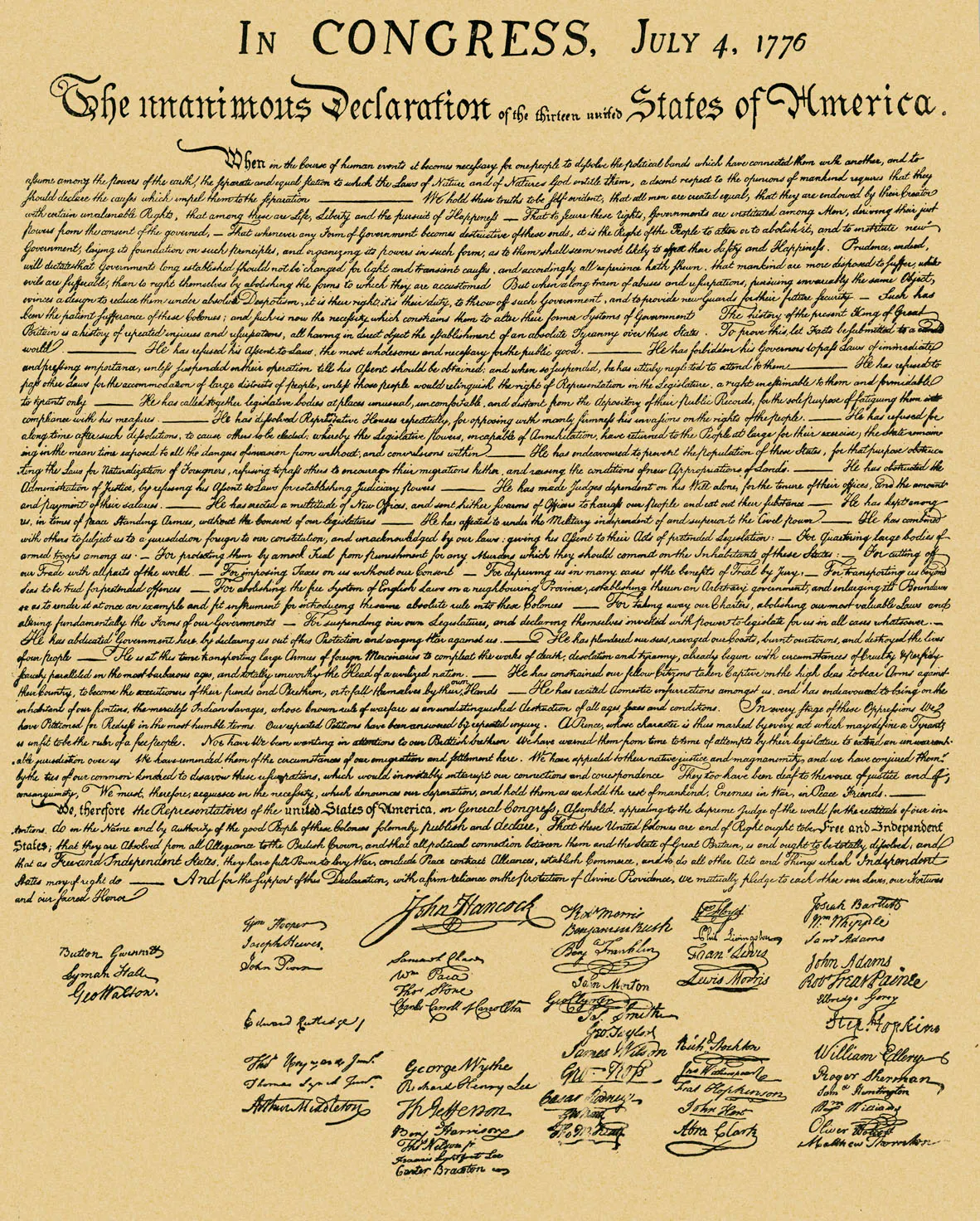
Declaration of Independence
The one that started it all—the reason we’re celebrating a semiquincentennial. The Founders “embrace[d] a world-quaking creed that values individual freedom and the rights of man over heredity, might, or wealth,” writer and historian John A. Farrell noted.
 1787
1787The Constitution
An imperfect document (both because the framers tacked on 10 Amendments soon after and because of its slavery compromises), it was the result of a host of compromises that produced some epic arguments at the Constitutional Convention. Still, it created a flexible and enduring system.
 1863
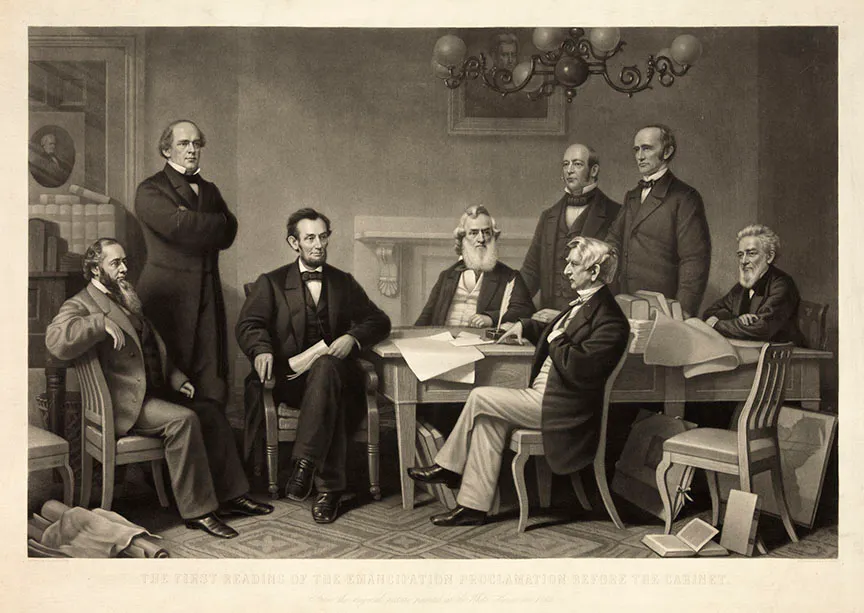
1863Emancipation Proclamation
Lincoln’s declaration didn’t immediately liberate anyone, but it made “the U.S. Army into a force for liberation,” University of California, Davis historian Eric Rauchway pointed out. “Every step a U.S. soldier took into rebel territory afterward created free soil and free people.”
 1865
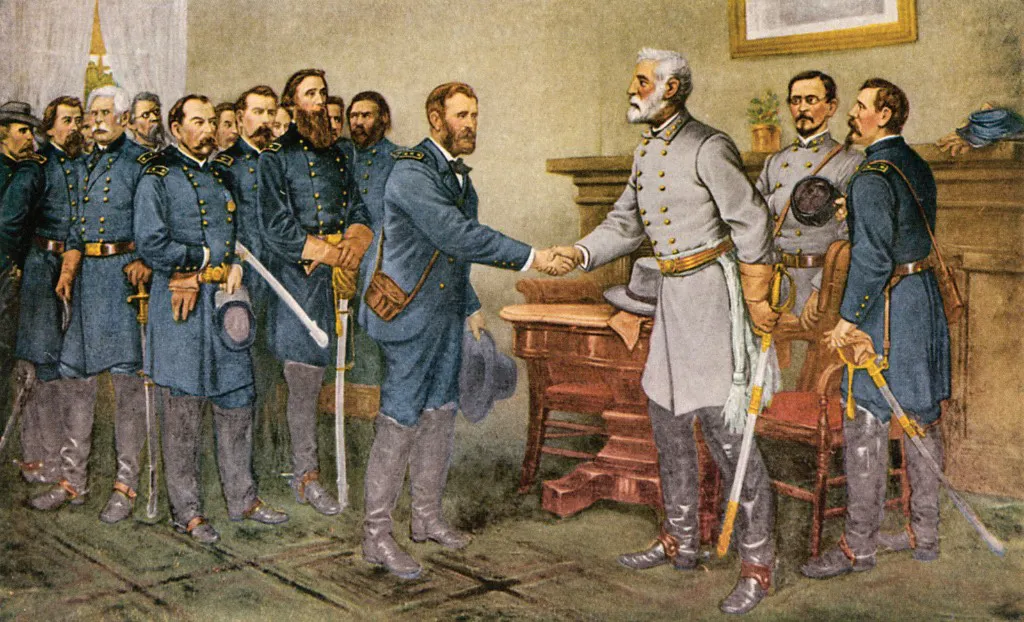
1865Victory in the Civil War
The Union prevailed in what was not only an existential fight but also a contest to define the nature of freedom and start to expiate the nation’s original sin, slavery. It came at the price of more than 600,000 dead, and the assassination of our greatest president.
 1865–1870
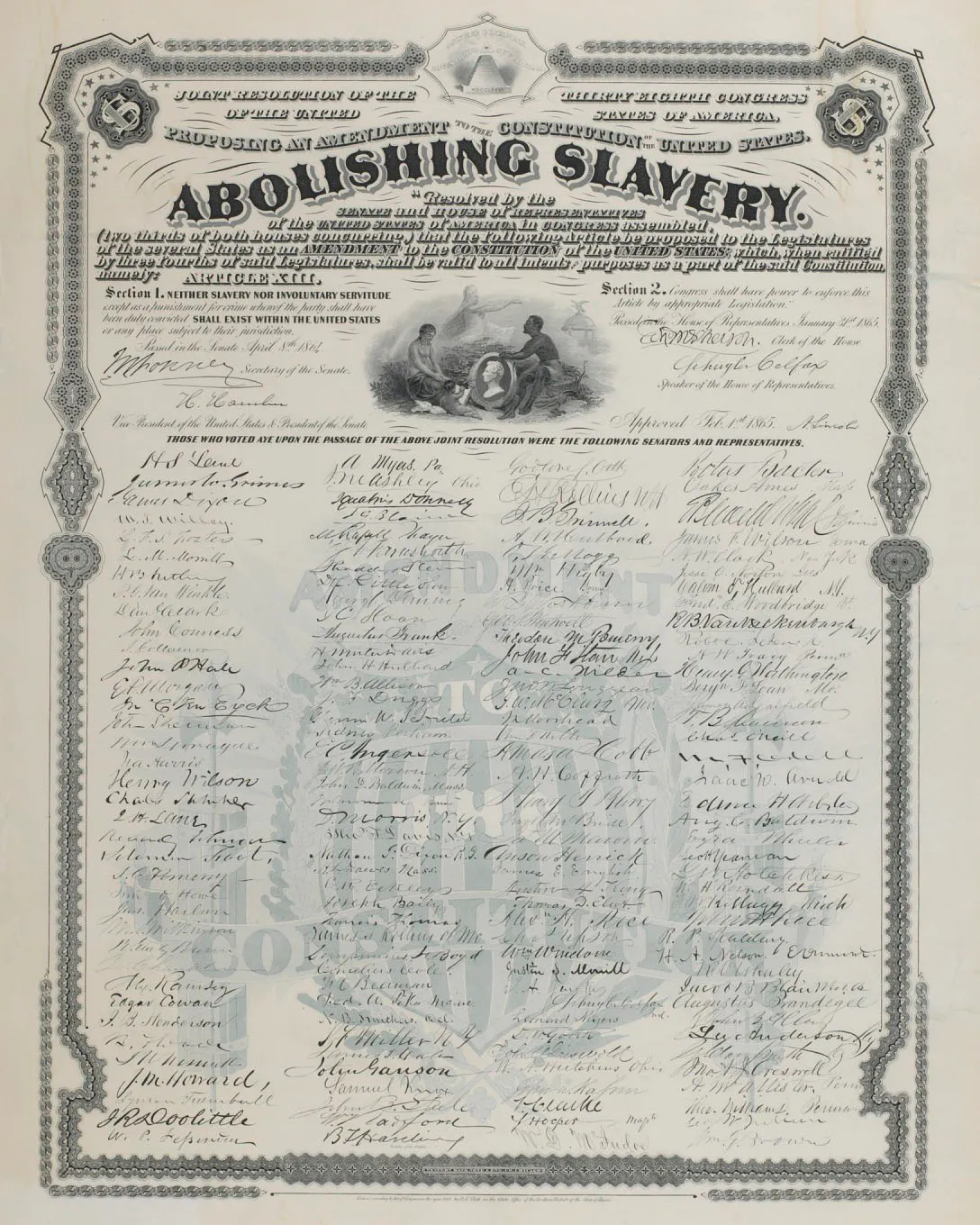
Reconstruction Amendments
Yes, it took a while for the Thirteenth, Fourteenth, and Fifteenth Amendments to achieve their full potential (OK, we’re still waiting), but they ended slavery while dramatically expanding all Americans’ rights.
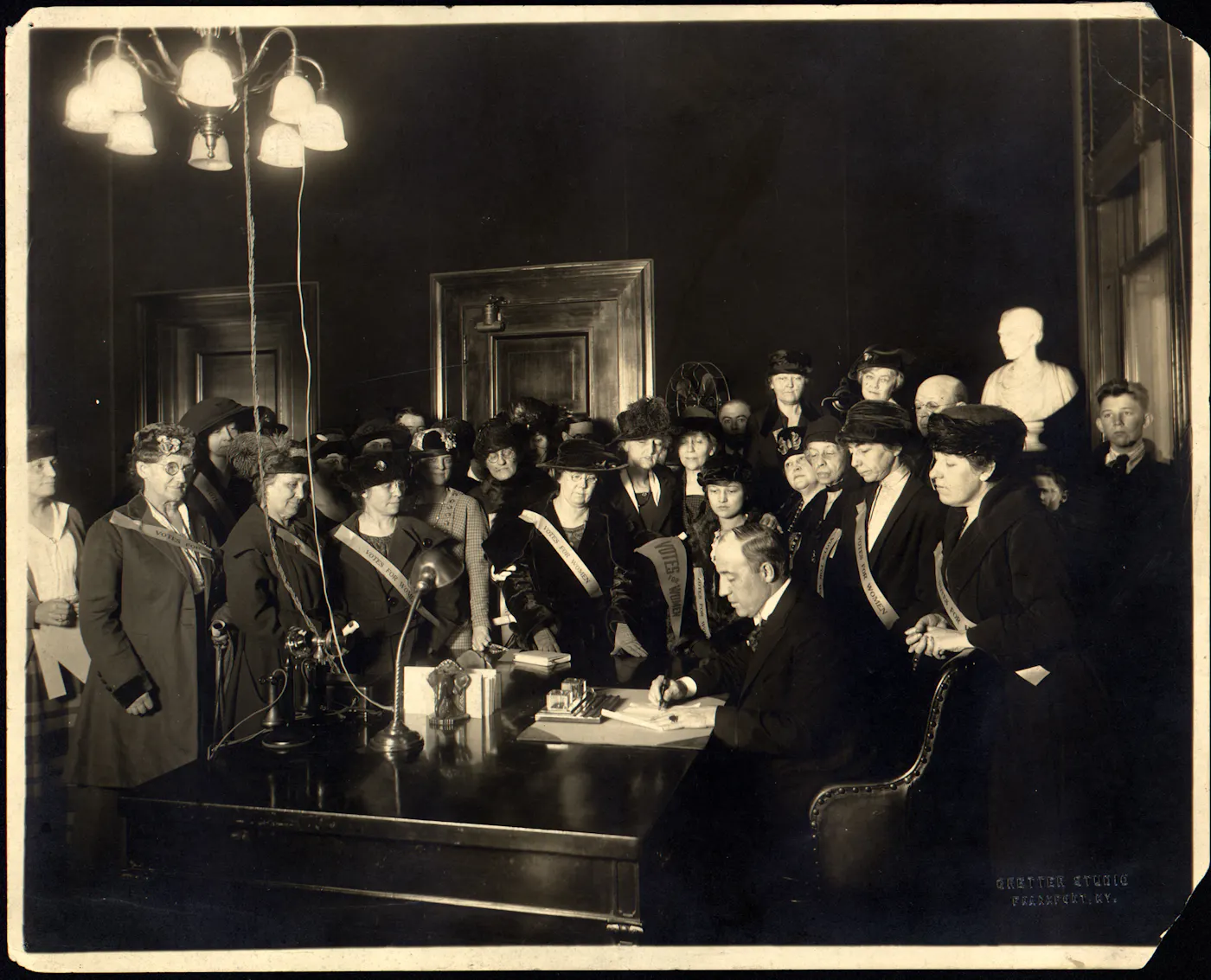 1920
1920Nineteenth Amendment
It’s strange to think that guaranteeing in the Constitution a woman’s right to vote was once a controversial idea. It’s even weirder to realize that there are still people around who think of it that way.
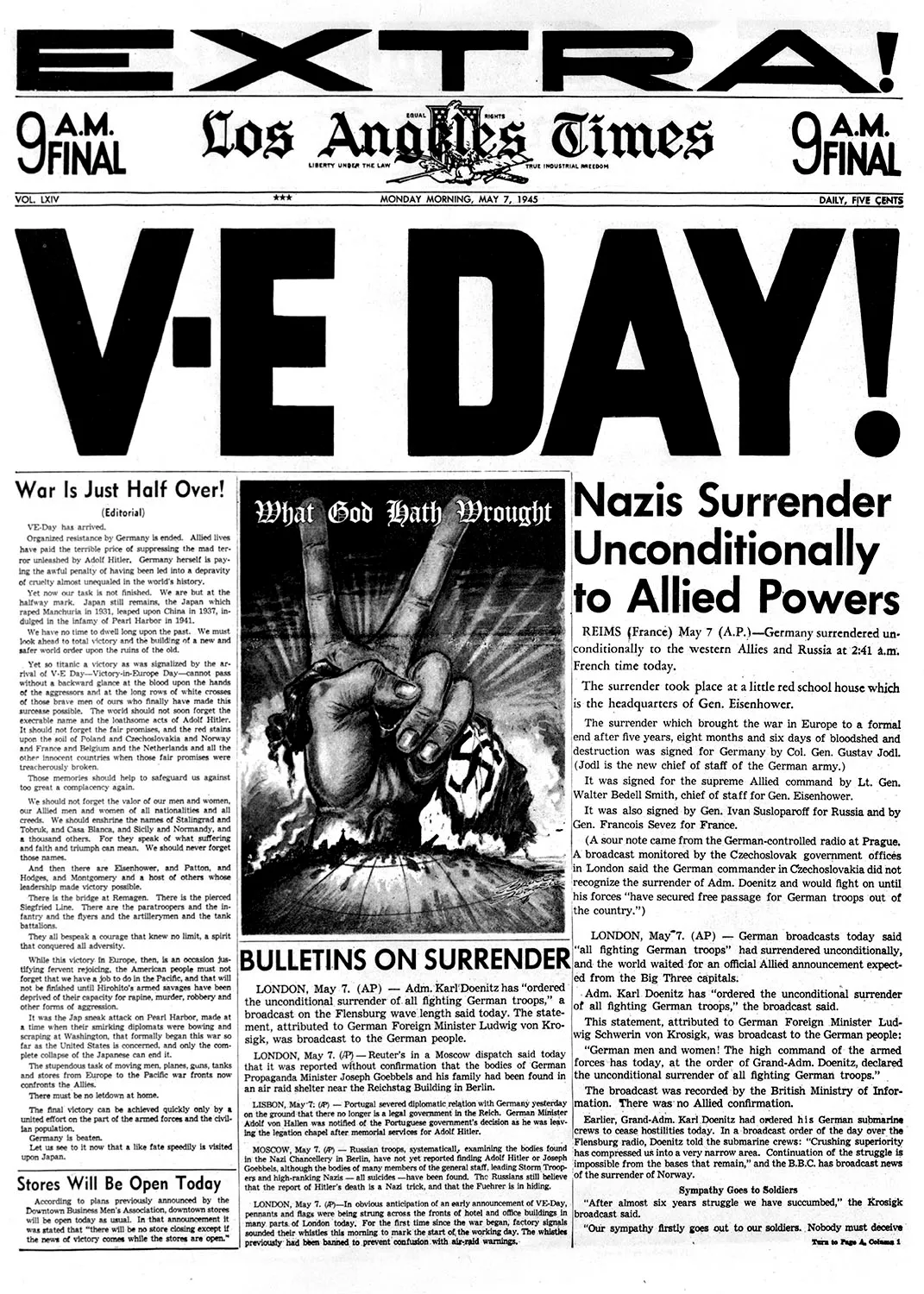 1945
1945Victory in World War II
The United States led the original forces of antifa, liberating the globe and establishing itself as the moral and political leader of the free world. Hitler’s declaration of war on the United States was considered by many to be a huge mistake. We made him pay.
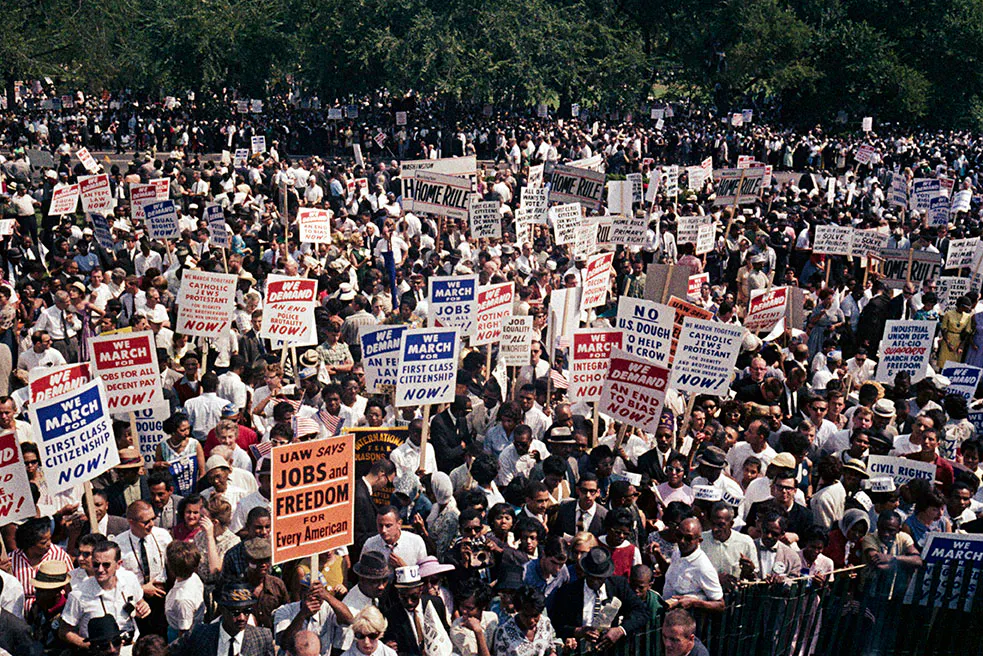 1963
1963March on Washington for Jobs and Freedom
Capped by Martin Luther King Jr.’s “I Have a Dream” speech, this August 1963 event attracted a quarter-million attendees and countless more watching on television. King’s moral and rhetorical might helped galvanize the nation.
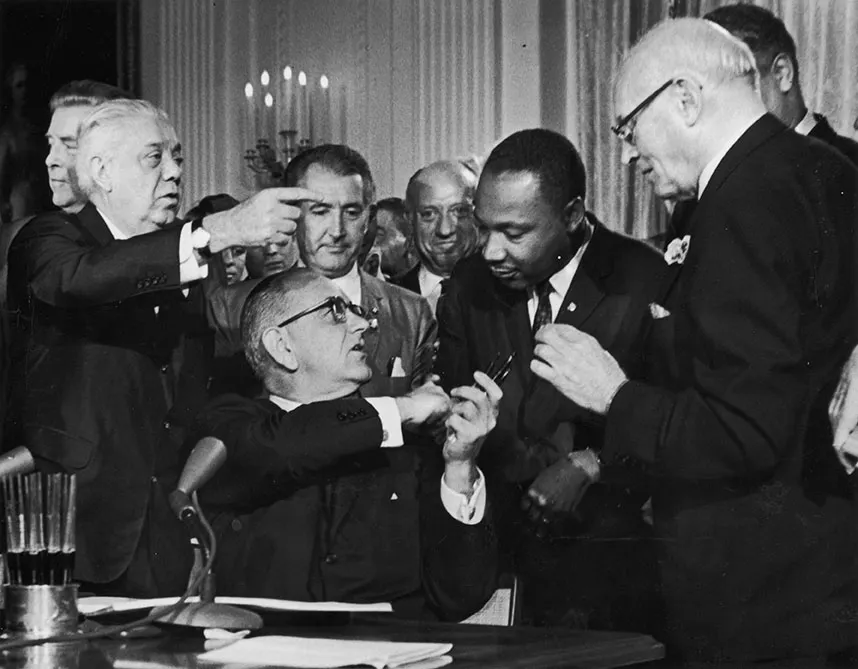 1964–1965
Civil/Voting Rights Acts
A century after the Civil War, Lyndon Johnson signed the Civil Rights Act (1964) and the Voting Rights Act (1965), laws that “actually began to fulfill the failed promise of the Union victory,” said Vanderbilt University political scientist John Sides.
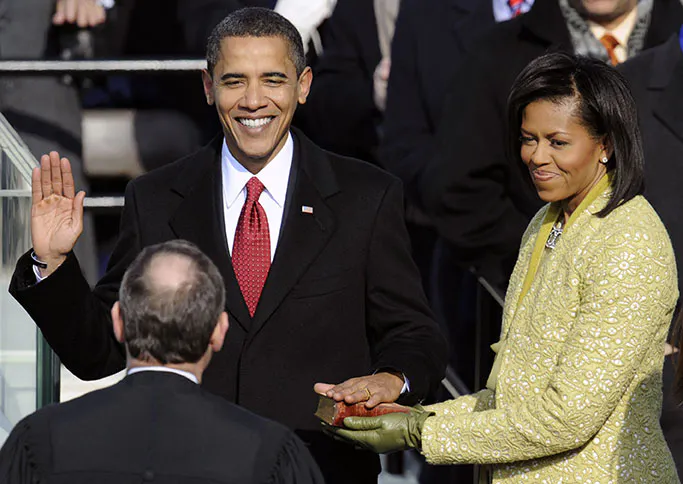 2008
2008Election of Barack Obama
By becoming the first African American to achieve the nation’s highest office, Obama became a living embodiment of our Union bending toward greater perfection.
And the Conservatives Say ...
Because it’s America’s birthday, we decided in full ecumenical spirit to invite a few conservatives to the party. They are, as you’ll see on the facing page, all respected thinkers, scholars, and jurists. And their answers are interesting—they give Dr. King his proper due—and even surprising (how did they omit Phyllis Schlafly?). As the widely respected former circuit court Judge J. Michael Luttig wrote us: “This is an ingenious idea for celebrating the 250th Anniversary of America’s Founding. My lists are American lists, not ‘conservative’ lists. And no, I was not surprised that they often tacked more liberal.”
The Greatest Moments in American History
1. Constitution and Bill of Rights
2. Declaration of Independence
T-3. Victory in World War II
T-3. Abolition of slavery/Thirteenth Amendment
5. Lee surrenders at Appomattox
T-6. Moon landing
T-6. Victory in the Cold War
The Worst Moments in American History
1. 9/11
2. Pearl Harbor
3. Trail of Tears/Indian removal
4. Japanese internment
T-5. Lincoln assassination
T-5. Southern secession
T-5. Arrival and institutionalization of slavery
The Best Presidents
T-1. Abraham Lincoln
T-1. Ronald Reagan
T-1. George Washington
4. Thomas Jefferson
5. Franklin Roosevelt
6. Calvin Coolidge
The Worst Presidents
1. Andrew Johnson
2. James Buchanan
T-3. Joe Biden
T-3. Donald Trump
T-3. Woodrow Wilson
T-6. Warren G. Harding
T-6. Franklin Pierce
The Most Influential Founding Fathers
T-1. Alexander Hamilton
T-1. Thomas Jefferson
T-1. James Madison
T-2. John Adams
T-2. Benjamin Franklin
T-2. George Washington
The Most Consequential Politicians Who Never Became President
1. Alexander Hamilton
2. William Jennings Bryan
3. Henry Clay
T-4. Benjamin Franklin
T-4. Barry Goldwater
T-4. John Marshall
Most Important Americans in Public Life Who Never Held Elected Office
1. Martin Luther King Jr.
2. Thomas Edison
T-3. Frederick Douglass
T-3. Henry Ford
5. Jonathan Edwards
“The great American novel about freedom, conscience, and the courage to defy an unjust society. Huck’s decision that he’d rather go to hell than return Jim to slavery is the most libertarian moment in American literature.”—Veronique de Rugy, Mercatus Center, on Adventures of Huckleberry Finn
The Images That Define American History
T-1. Iwo Jima flag raising
T-1. Washington Crossing the Delaware
T-3. Moon landing
T-3. Statue of Liberty
The Most Important Court Cases
1. Brown v. Board of Education
2. Marbury v. Madison
3. Dred Scott v. Sandford
4. McCulloch v. Maryland
5. Obergefell v. Hodges
The Most Important Women
T-1. Susan B. Anthony
T-1. Eleanor Roosevelt
3. Sandra Day O’Connor
T-4. Frances Perkins
T-4. Elizabeth Cady Stanton
T-4. Harriet Beecher Stowe
T-4. Harriet Tubman
The Most Important People of Color
1. Frederick Douglass
2. Martin Luther King Jr.
3. Barack Obama
4. Jackie Robinson
5. Booker T. Washington
The Most Important Works of Art in American History
1. Adventures of Huckleberry Finn
T-2. Casablanca
T-2. The Wizard of Oz
11-way tie for fourth place
The Liberal Mount Rushmore
1. Franklin D. Roosevelt
2. Martin Luther King Jr.
T-3. Lyndon B. Johnson
T-3. John F. Kennedy
Frederick Douglass, Barack Obama, Eleanor Roosevelt, and Theodore Roosevelt each received substantial support.
Conservative ContributorsRichard Brookhiser, National Review
Veronique de Rugy, Mercatus Center
Robert George, Princeton University
Allen Guelzo, University of Florida
Douglas Holtz-Eakin, American Action Forum
R. Glenn Hubbard, Columbia University
J. Michael Luttig, circuit court judge (ret.)
Harvey Mansfield, Harvard University
Michael McConnell, Stanford University
Henry Olsen, Ethics and Public Policy Center
Amity Shlaes, Coolidge Foundation
Stephanie Slade, Reason
Eugene Volokh, UCLA (emeritus)
The Liberal Mount Rushmore
Sports fans do it obsessively. Who’s on the Yankees Mount Rushmore? The Lakers? Kobe, Jerry West, Magic, and Kareem? What—you’re leaving off Wilt Chamberlain?! The exercise leads to some intense, and fun, arguments.
“This idea troubles me … because it seems to me there’s something intrinsically illiberal about monumental representations of persons. If we must put four progressive depictions somewhere, I vote for Norman Rockwell’s representations of the Four Freedoms.”—Eric Rauchway, University of California, Davis
This was the question we posed to our contributors: Which four progressive titans—elected officials, activists, thinkers, what have you—would you put on the famed mountainside? The illustration above tells you how it came out. King got the most votes, then FDR, then Douglass, and then Lincoln, a somewhat surprisingly distant fourth. We were disappointed no woman made the mountain. The closest competitors, just a couple of votes behind Lincoln, were Jane Addams, Frances Perkins, and Ida B. Wells-Barnett. Barack Obama, John Dewey, and Robert La Follette also came close.
We should note that a few of our respondents wrote to say they reject the whole idea of a Mount Rushmore. “On America’s 250th anniversary, it’s time to move from exceptionalism and hero worship to a politics of memory that embraces complexity, ambivalence, tragedy, greatness, and love,” argued NYU political scientist Cristina Beltrán. Fordham Law’s Julie Suk described a similar sentiment: “A democracy should not give immortal godlike status to four progressive ‘titans,’ but rather it should represent the masses of people who have invisibly built this country and sacrificed their lives to move it closer to its stated ideals of democracy, equality, liberty, and justice for all.”
We think hey, it’s fun to argue over.

The USA at 250
The Most Important Women in American History
1. Eleanor Roosevelt
FDR’s “eyes, ears, and legs,” she traveled the country during the Depression, returning with information about how her husband’s New Deal programs were working. Later a delegate to the U.N., she was key to establishing its Universal Declaration of Human Rights in 1948.
2. Harriet Tubman
Born enslaved, Tubman was a conductor on the Underground Railroad, a spymaster, and the first known woman in U.S. history to plan and lead a military raid. In later years, she was a committed suffragist.
3. Susan B. Anthony
An abolitionist and suffragist, Anthony advocated tirelessly to ensure that all Americans could exercise all of their rights. She was arrested in 1872 for the crime of voting while female. “Failure is impossible,” she once said of the suffragist movement.
4. Jane Addams
The first American woman to earn the Nobel Peace Prize (1931), Addams was a progressive dynamo whose causes and accomplishments included the establishment of Chicago’s Hull House—the first U.S. settlement house—and helping to found the NAACP.
“Her name became synonymous with courage, racial equality, logistical genius, and care for the well-being and human rights of others. She invented modern spy concepts, including safe houses and exfiltration operations.”—journalist and author Liza Mundy on Harriet Tubman
5. Frances Perkins
The first female Cabinet secretary, Perkins was one of FDR’s longest-serving aides. As labor secretary, she pushed for landmark reforms such as the minimum wage, a maximum workweek, and child labor limits. She also helped draft the Social Security Act.
6. Elizabeth Cady Stanton
Co-founder of the 1848 Seneca Falls Women’s Rights Convention, Stanton penned its Declaration of Sentiments, making the then-extraordinary demand for equal rights. She “provided intellectual leadership to the first wave of the women’s rights movement,” Fordham Law’s Julie Suk noted.
7. Ida B. Wells-Barnett
“The Princess of the Press,” Wells-Barnett was born into slavery but went on to become a crusading journalist and suffragist. She focused especially on the scourge of lynching, writing A Red Record, a history and statistical record of such attacks.
8. Betty Friedan
“In the post–World War II period, when women had gone back to the home and were having large numbers of children, Friedan sparked a feminist movement with her critical, bestselling book, The Feminine Mystique,” said Amy Fried of the University of Maine (emerita).
9. Margaret Sanger
The mother of birth control—she coined the term in 1914—Sanger was a driving force in contraceptive legalization and its technological advances. Her decades-long quest for a “magic pill” to prevent pregnancy culminated in the first oral contraceptive.
T-10. Ella Baker
“Perhaps the most critical Civil Rights planner of the 20th century,” Calvin University’s Kristin Kobes Du Mez wrote. She was a key behind-the-scenes organizer at the NAACP, the Southern Christian Leadership Conference, and the Student Nonviolent Coordinating Committee.
T-10. Rachel Carson
Published in 1962, Carson’s Silent Spring helped launch the modern environmental movement. “Carson’s influence was reflected in the proclamation of the first ‘Earth Day’ in 1970, a few years after her death,” human rights activist Aryeh Neier said.
T-10. Hillary Clinton
She may not have shattered the “highest, hardest glass ceiling,” but she built an extraordinary career as an advocate and exemplar for women in the United States and around the world, as a lawyer, first lady, senator, and secretary of state.
T-10. Phyllis Schlafly
The slayer of the Equal Rights Amendment, Schlafly mobilized “the housewife image to fulfill her deep political ambitions—a model for everyone from Ann Coulter in the 1990s to the tradwives of today,” wrote Vanderbilt University’s Nicole Hemmer.
T-10. Gloria Steinem
A groundbreaking journalist, Steinem co-founded the seminal second-wave feminist magazine Ms. in 1971. A lifelong spokeswoman for women’s rights, Steinem founded a number of activist organizations and even originated Take Our Daughters to Work Day.
The Images That Define American History
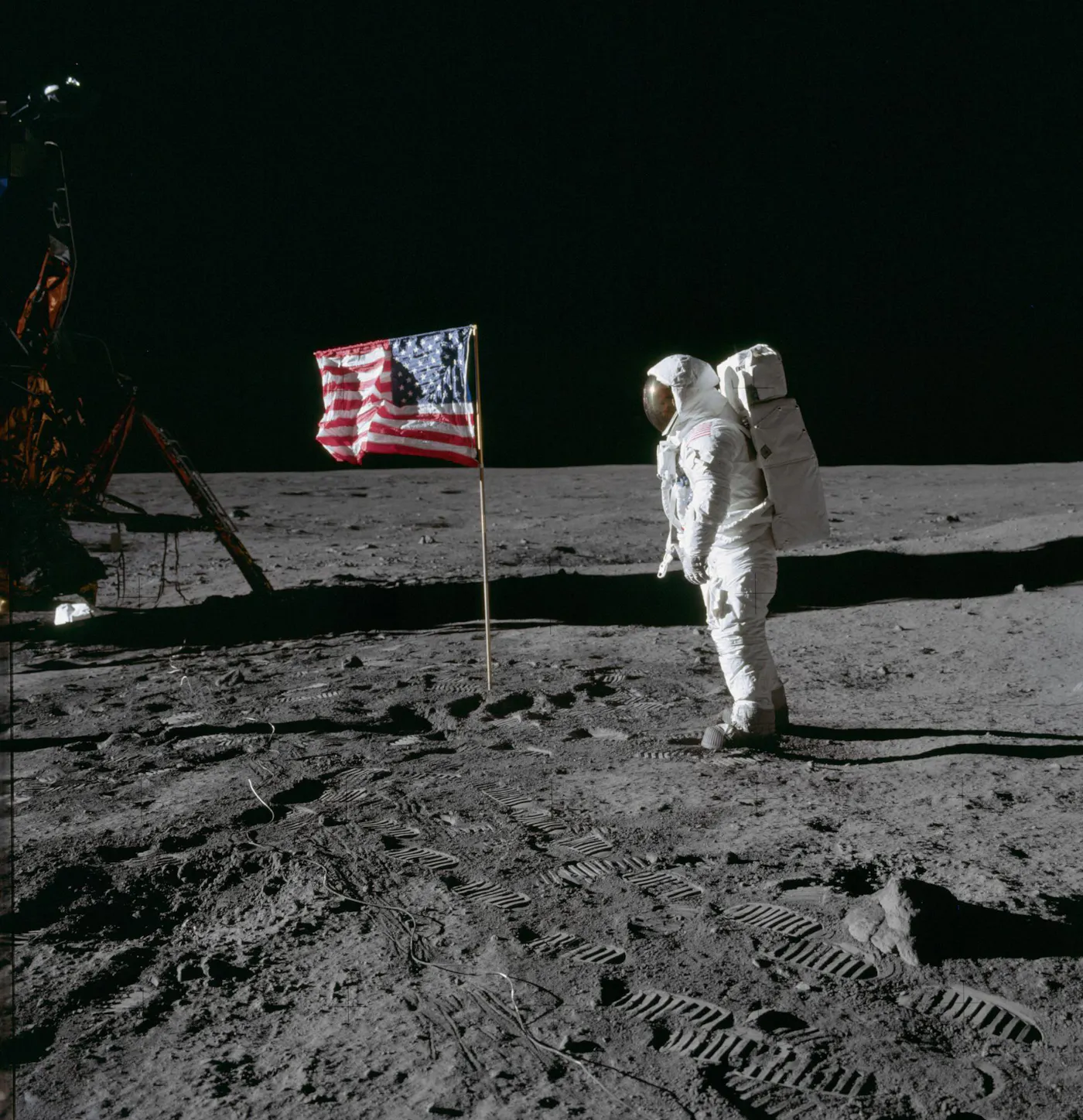
1. The moon landing
“That’s one small step for man, one giant leap for mankind,” and perhaps the defining image of U.S. history, a potent symbol of American ingenuity, persistence, and power.
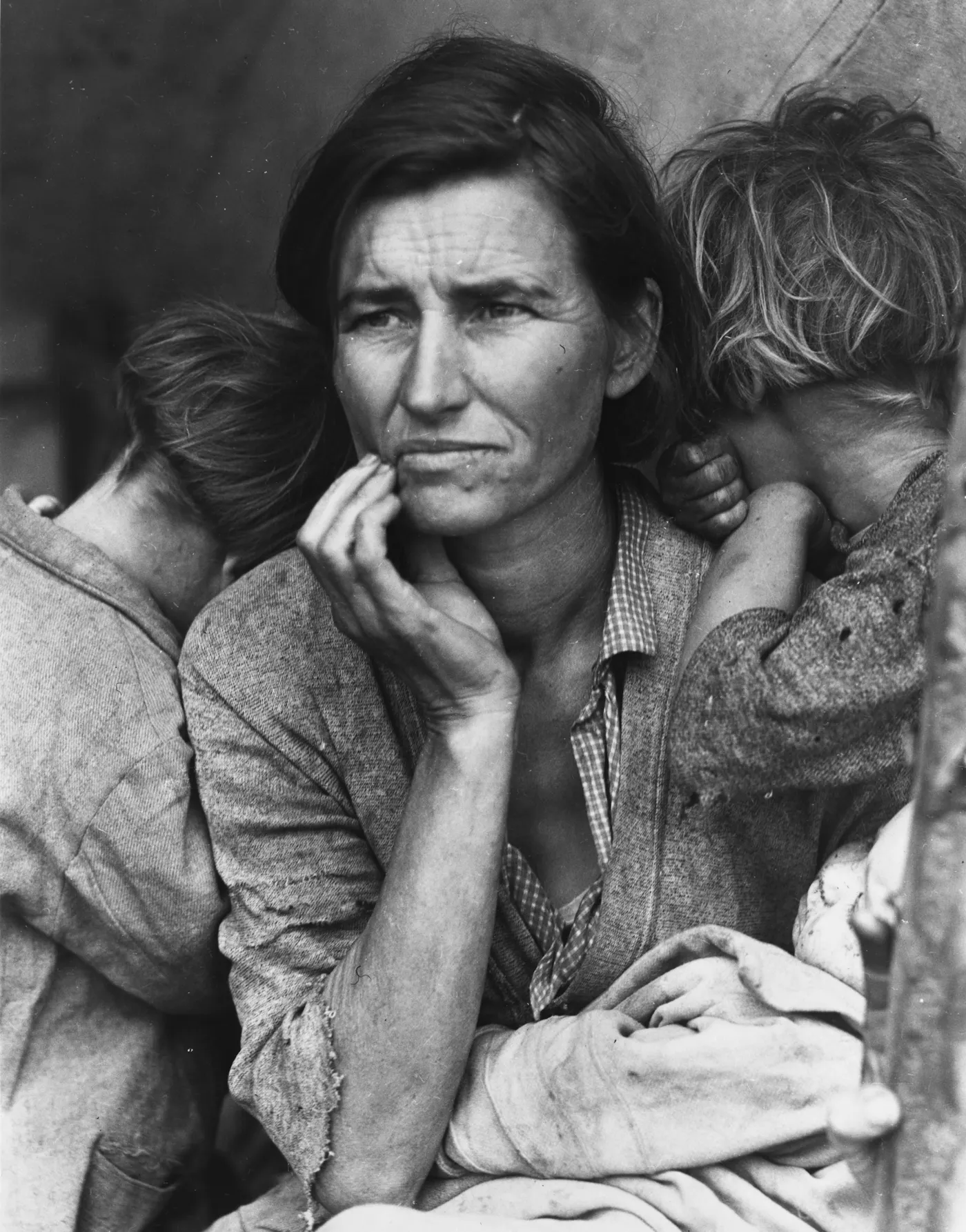
T-2. Migrant Mother
Dorothea Lange’s 1936 classic—depicting a 32-year-old mother of seven surrounded by two of her children and with an infant in her lap, her brow furrowed with resignation and uncertainty—is an image that became synonymous with the desperate poverty facing Americans during the Great Depression.
T-2. Raising the flag at Iwo Jima (at top)
An AP photographer captured this iconic image atop Mount Suribachi in February 1945. Before the year was out, it was on a postage stamp and had won the Pulitzer Prize.
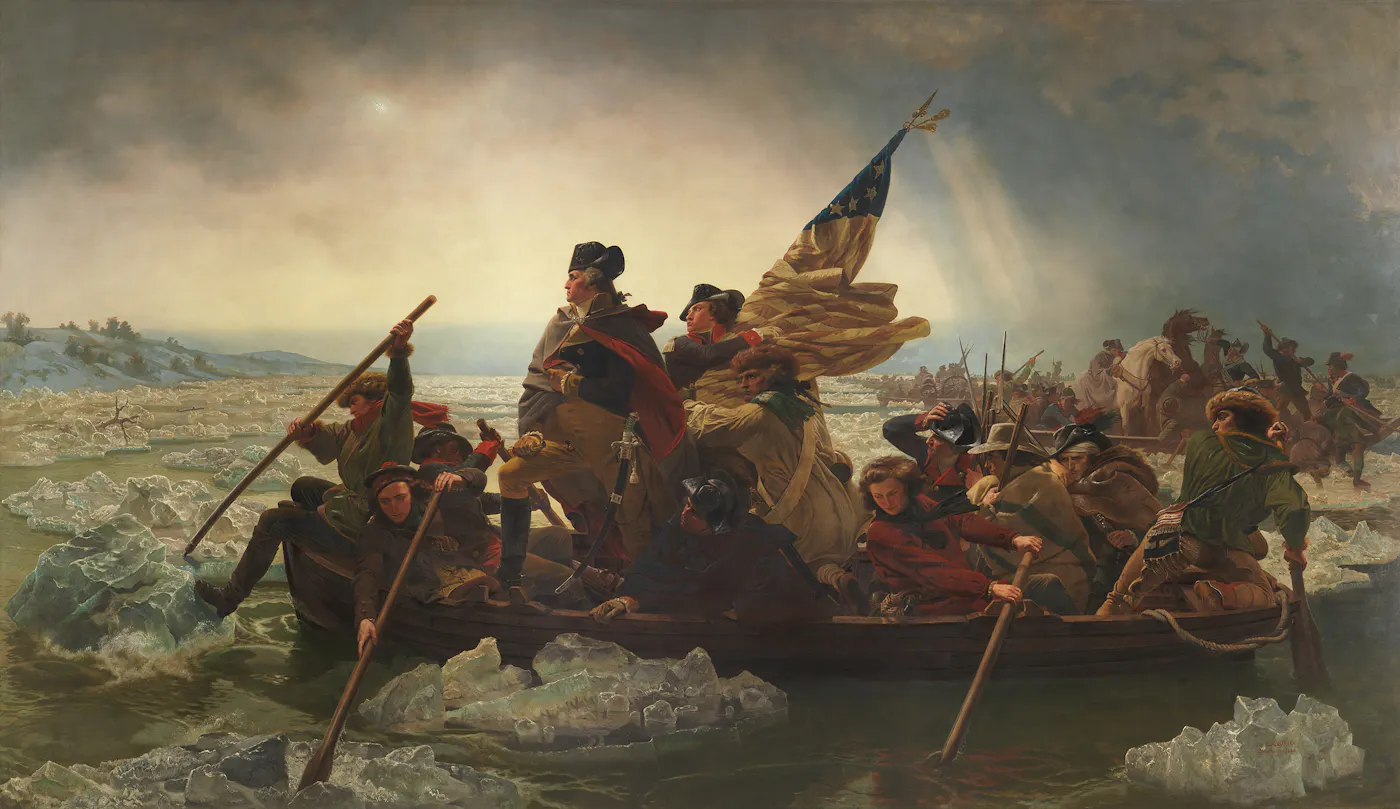
4. Washington Crossing the Delaware
Seventy-five years after the fact, German American painter Emanuel Leutze memorialized George Washington’s Christmas night raid across the ice-choked and storm-sieged Delaware River in one of the nation’s most famous paintings.
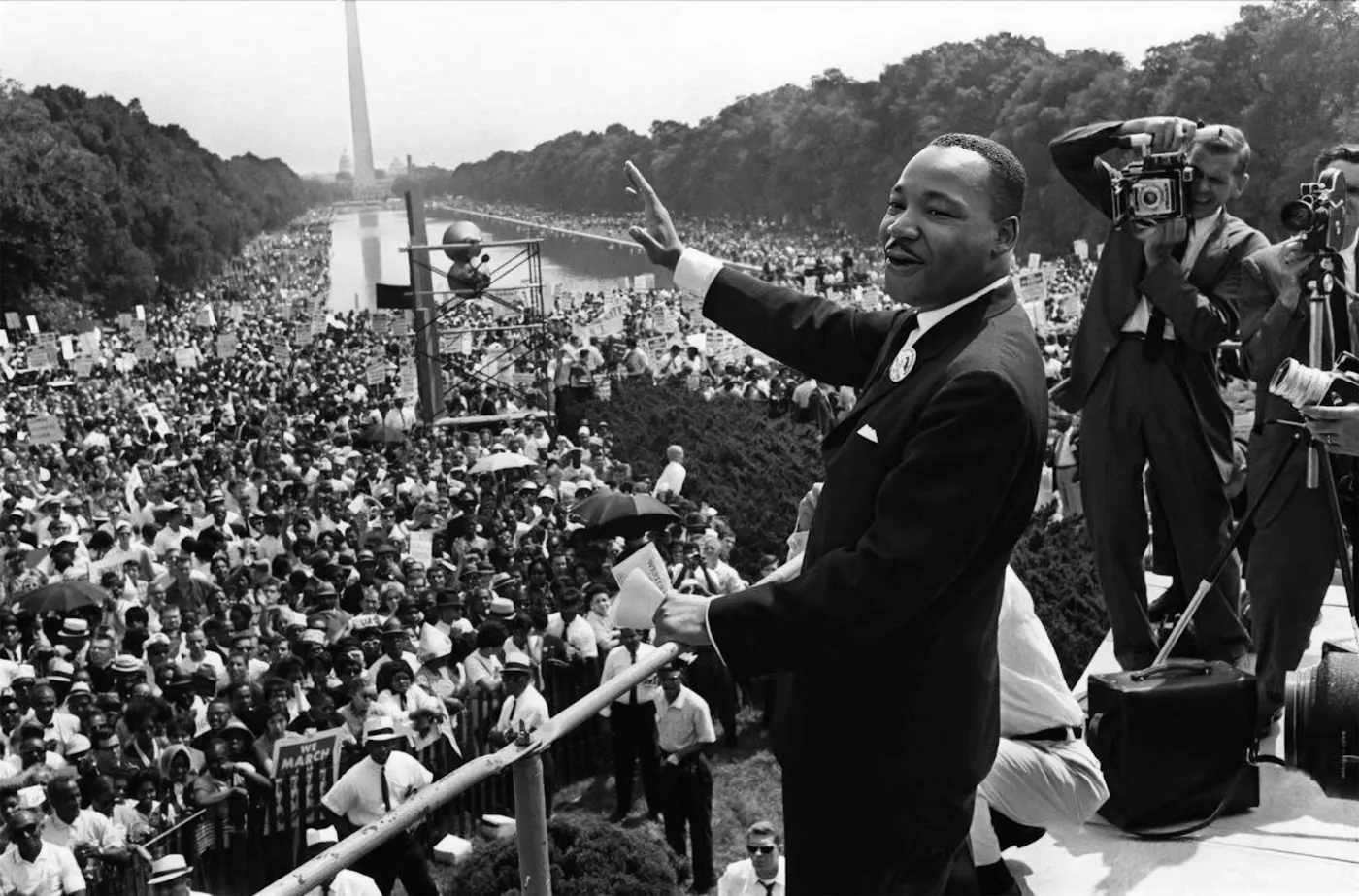
5. MLK leading the March on Washington for Jobs and Freedom
The enduring image of a quarter-million people surrounding the reflecting pool and watching a Black preacher deliver a historic speech in front of the Lincoln Memorial celebrates the best of America.
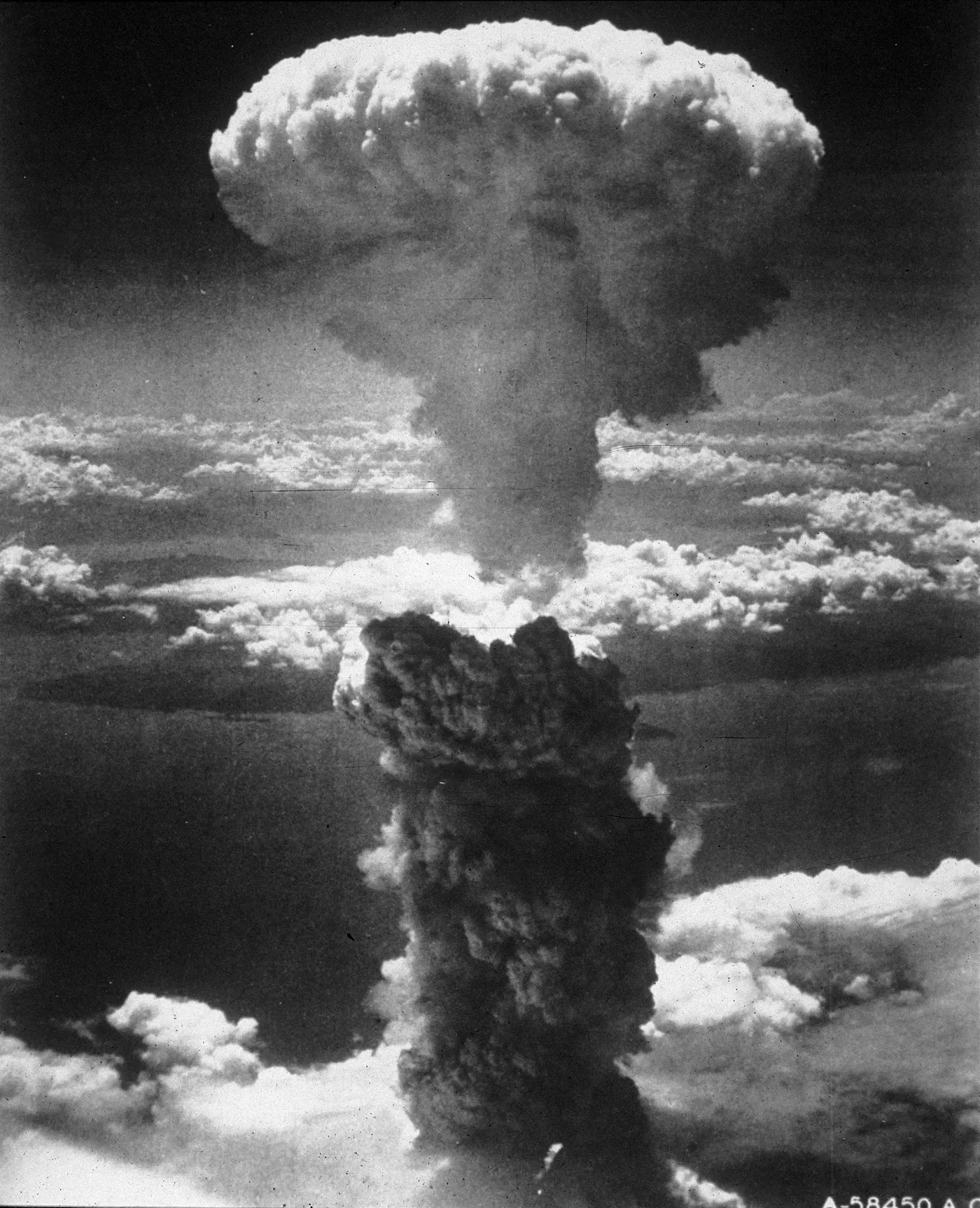
T-6. Mushroom clouds over Japan
The explosive aftermath of the dropping of two atomic bombs by the United States over Hiroshima and Nagasaki in August 1945 is a fraught symbol of strength and terror, power and horror.
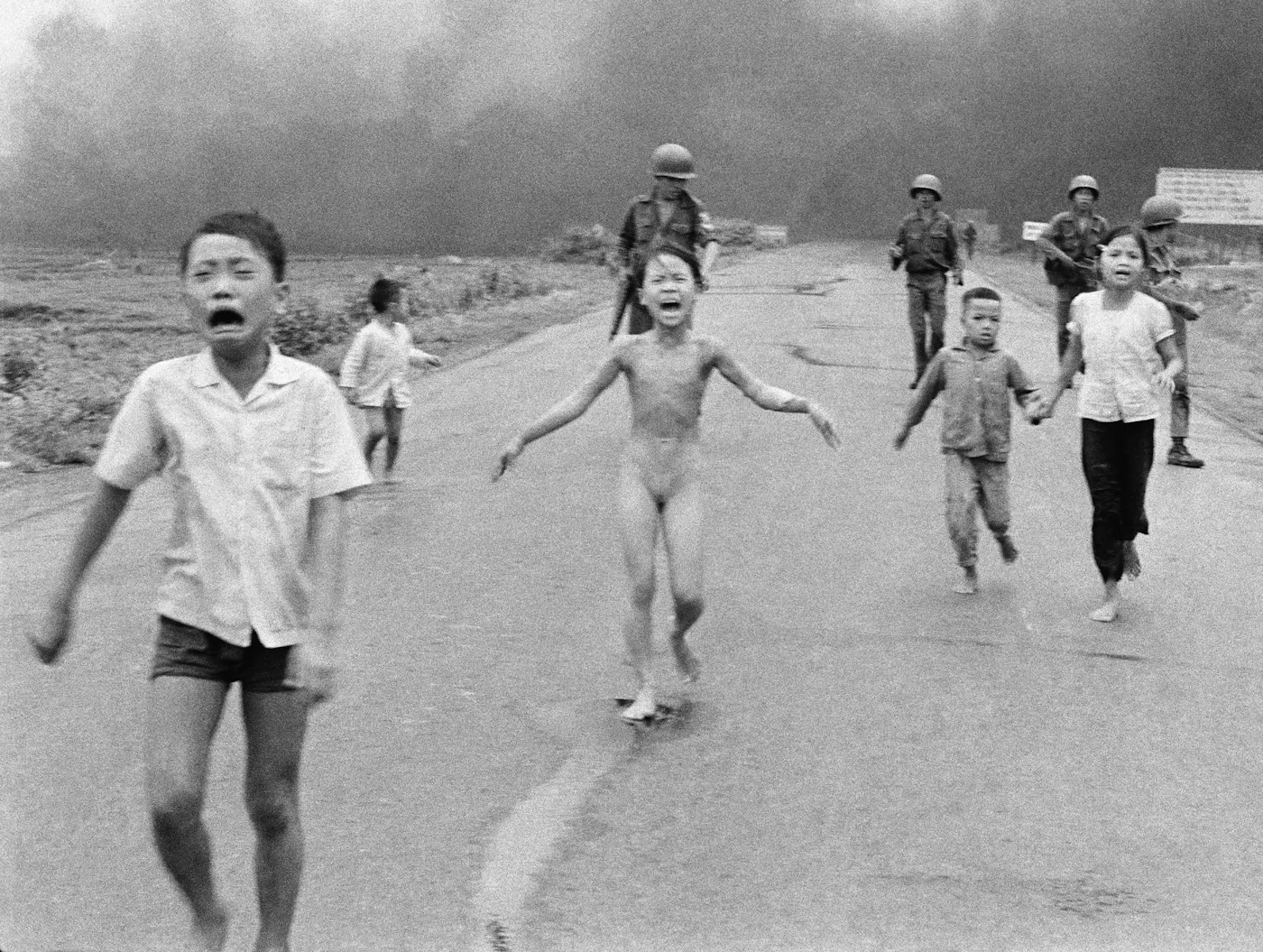
T-6. The Terror of War
Also known as Napalm Girl, this 1972 photo depicts nine-year-old Kim Phuc running naked, along with other children, from a napalm attack. It captured the horror of the war the United States was waging in Southeast Asia.
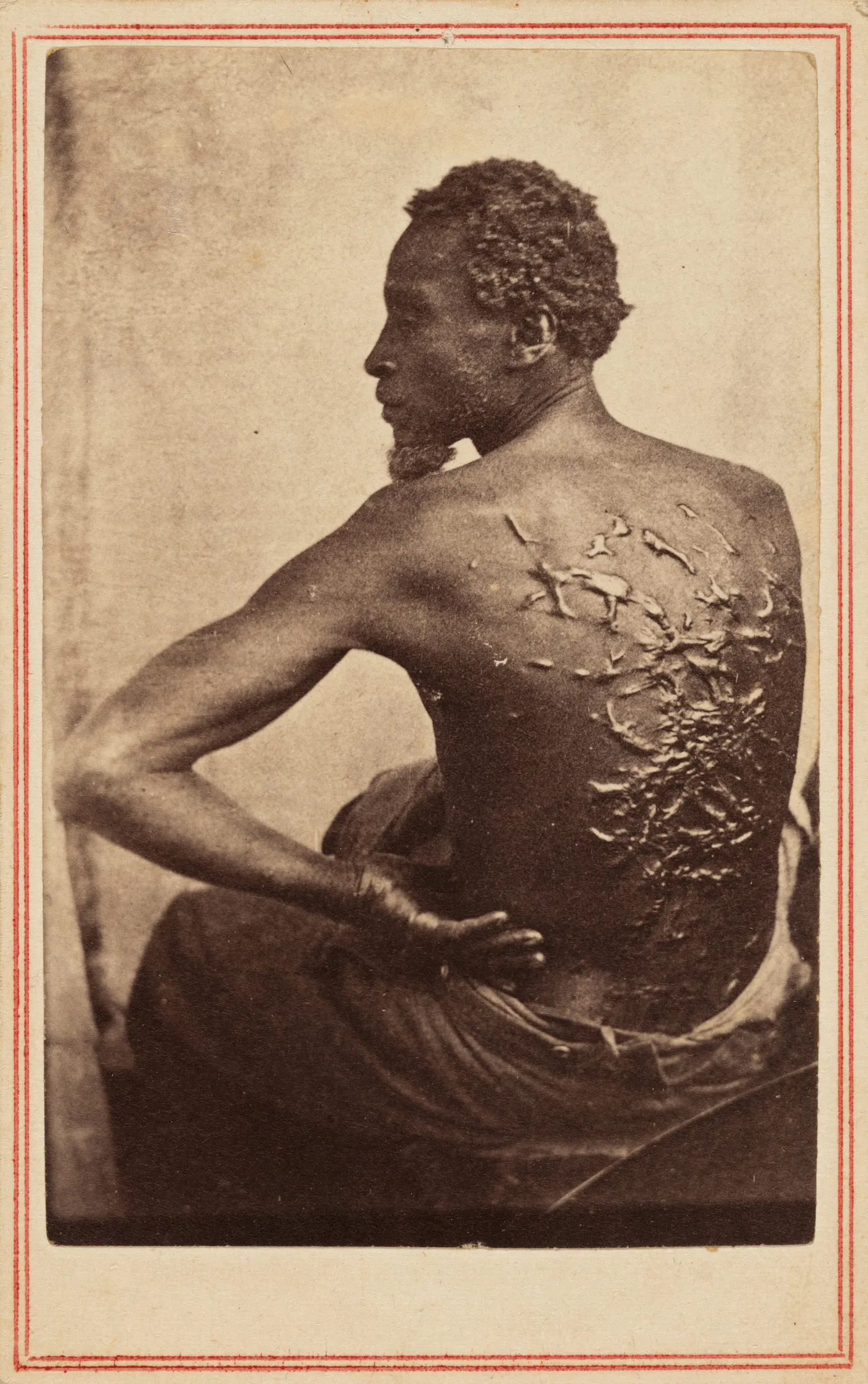
T-8. The Scourged Back
This early 1863 photograph, which received broad attention when published in Harper’s Weekly, exposes the brutality of slavery in a way words never could.
T-8. The Statue of Liberty (Liberty Enlightening the World)
The 305-foot-tall symbol of America’s role as a beacon of democracy and freedom has welcomed countless immigrants to our shores since its dedication in 1886.
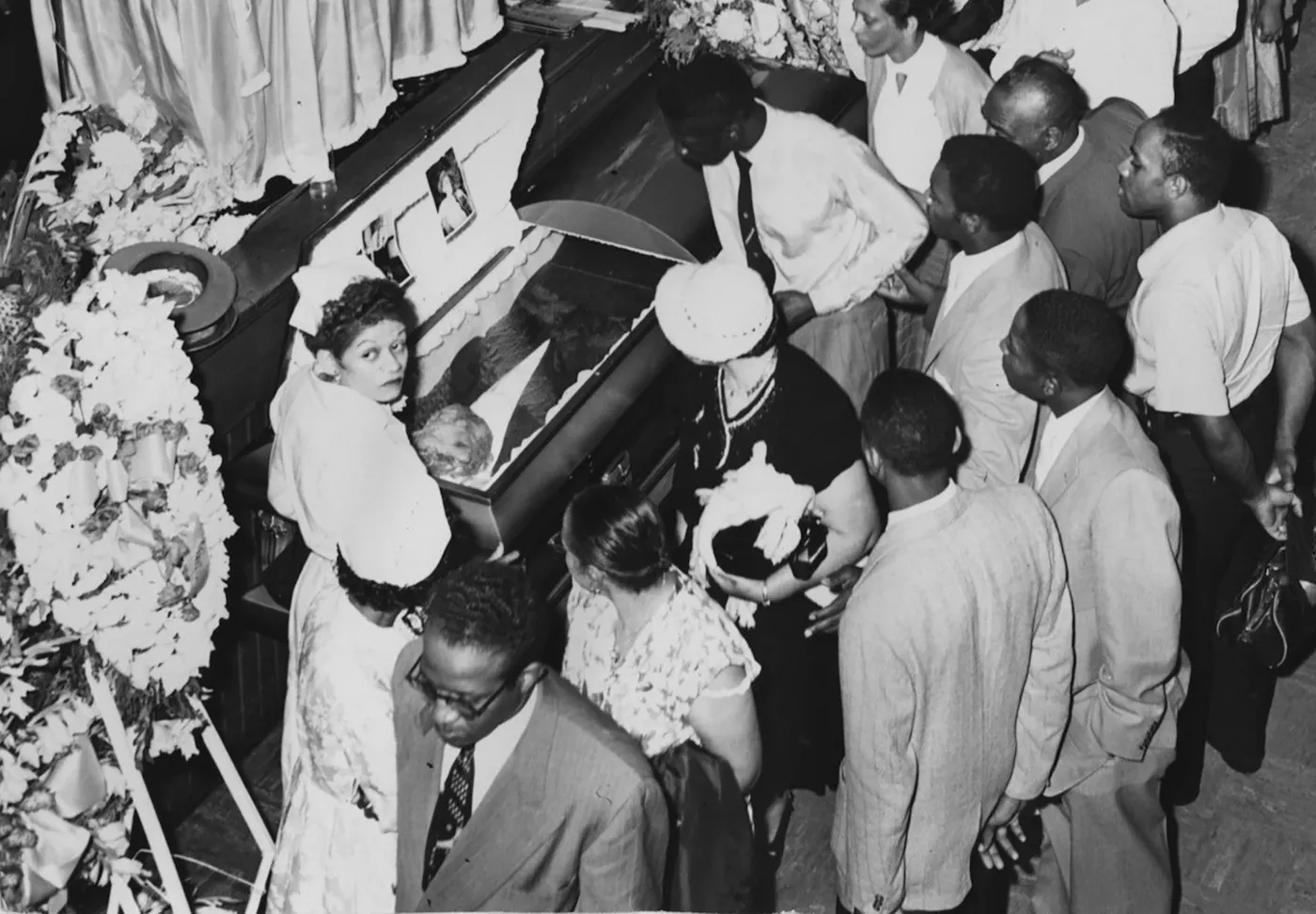
T-8. Emmett Till in his casket
Two white Mississippians kidnapped and savagely murdered this 14-year-old. Till’s mother elected to display his nigh-unrecognizable body in an open, glass-topped coffin—and then Jet magazine published photos of him. The nation could not look away.
T-8. Little Rock Nine photo of Hazel Bryan screaming at Elizabeth Eckford
The hate-filled Bryan and stoic Eckford instantly became the contrasting faces of school desegregation in 1957 Little Rock, Arkansas.
T-8. Ruby Bridges integrating New Orleans schools
Six-year-old Ruby just wanted to go to school, but in 1960, she needed federal marshals to get past screaming white protesters. She made an indelible impression photographically, and then in Norman Rockwell’s 1964 illustration for Look magazine, The Problem We All Live With.
T-8. Eugene “Bull” Connor releasing dogs on and fire-hosing civil rights protesters in Birmingham, Alabama
Connor, the city’s commissioner of public safety and a rabid segregationist, took issue with young people protesting in Birmingham. He didn’t count on the media beaming images of the brutality to the rest of the country.
T-14. American Progress by John Gast
It “once represented unabashed notions of manifest destiny, then came to encapsulate for many the hubris of settler colonialism,” Calvin University’s Kristin Kobes Du Mez noted. Is it any surprise that Donald Trump’s Department of Homeland Security now uses it as a recruiting tool?
T-14. 9/11 images
No American who was alive can forget the scenes from September 11, 2001.
T-16. Declaration of Independence by John Trumbull
Trumbull’s masterwork took more than three decades to complete as he tried to get each of the Founders’ faces correct.
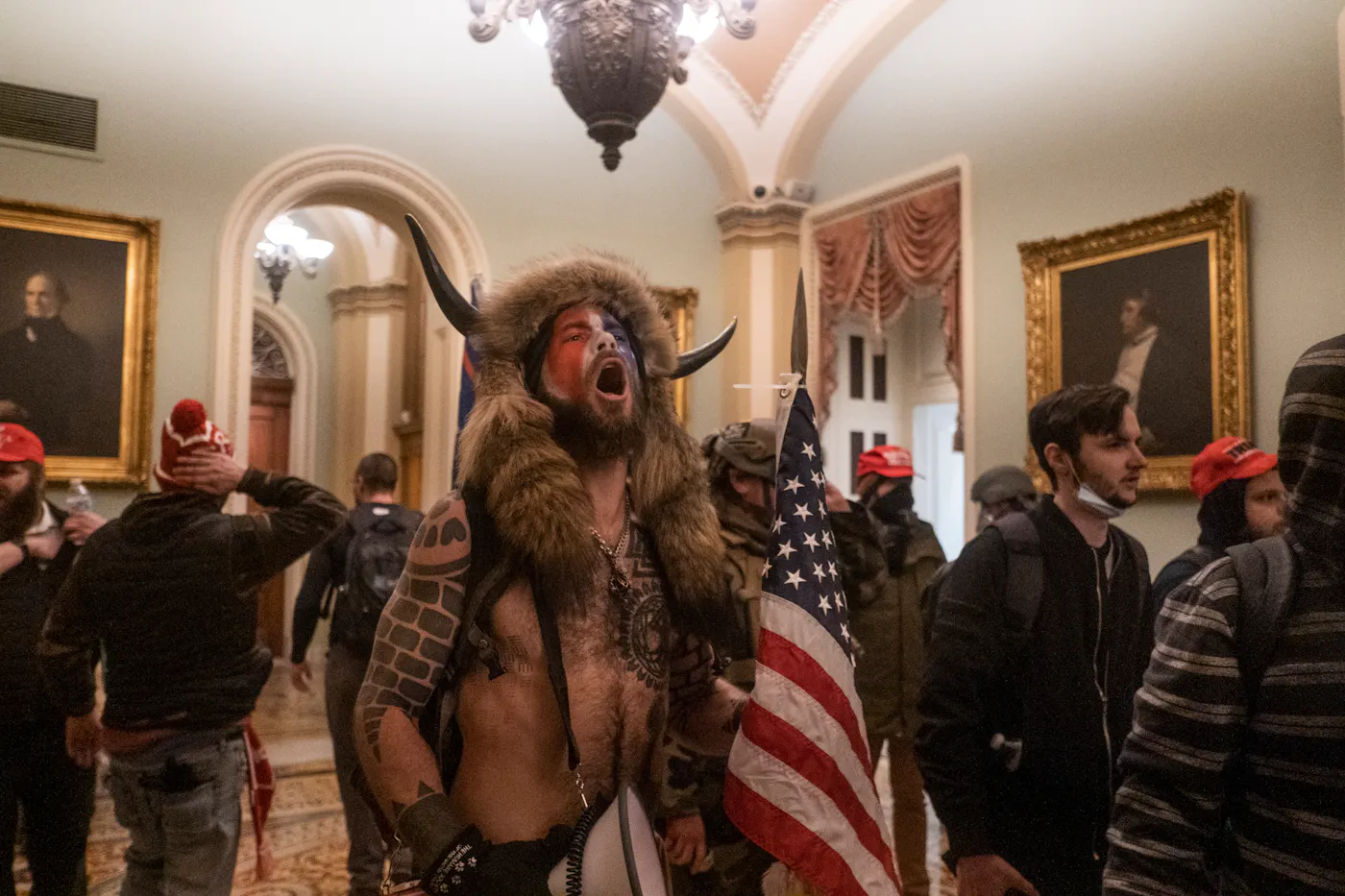
T-16. January 6
No amount of Trump revisionism will remove this stain from our history, as he rallied supporters to violently halt the peaceful transfer of power.
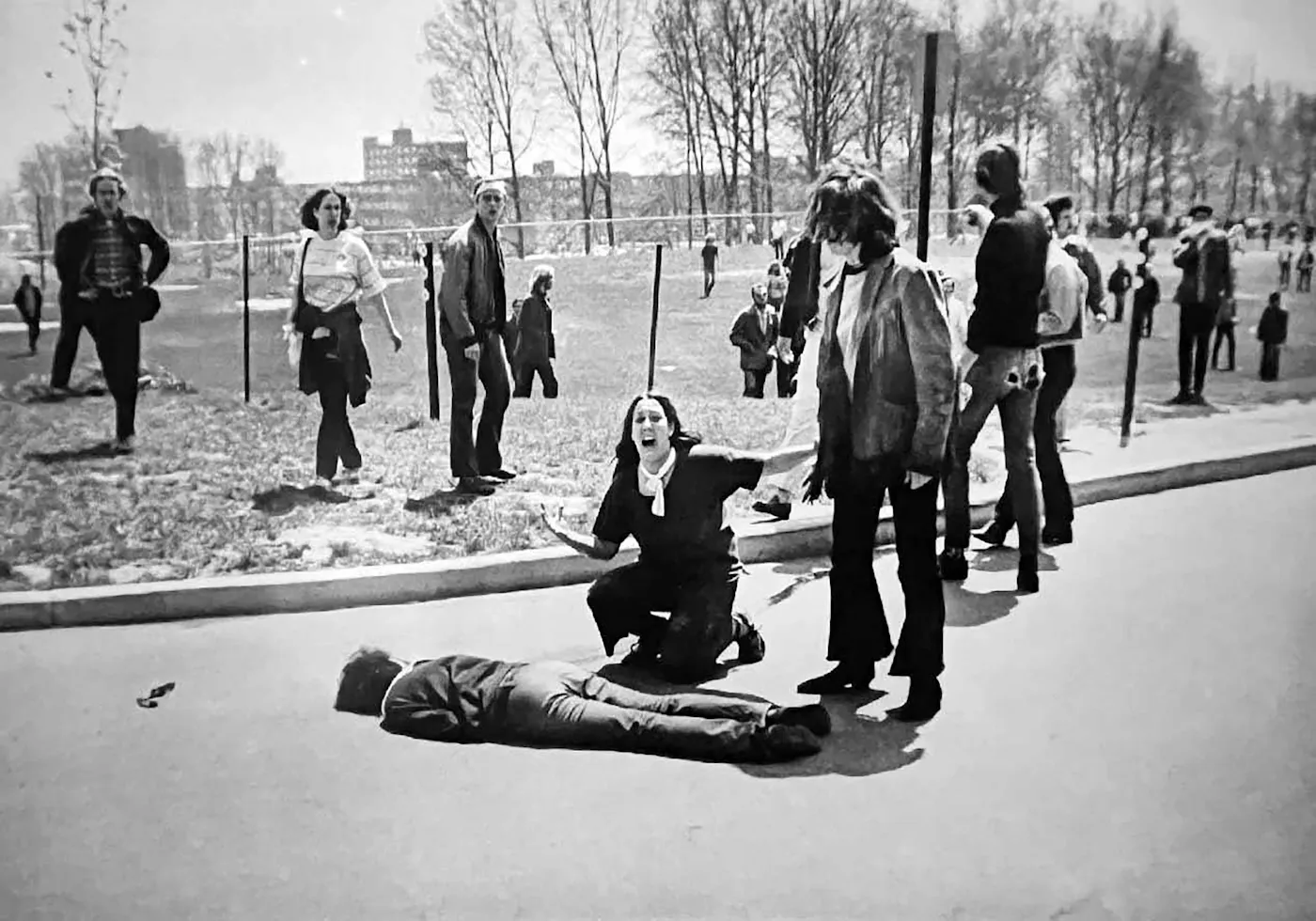
T-16. Kent State
Mary Ann Vecchio’s face captures the anguish and outrage that would sweep the country when Ohio National Guardsmen shot 13 students, killing four, who were protesting the Vietnam War and the U.S. invasion of Cambodia.
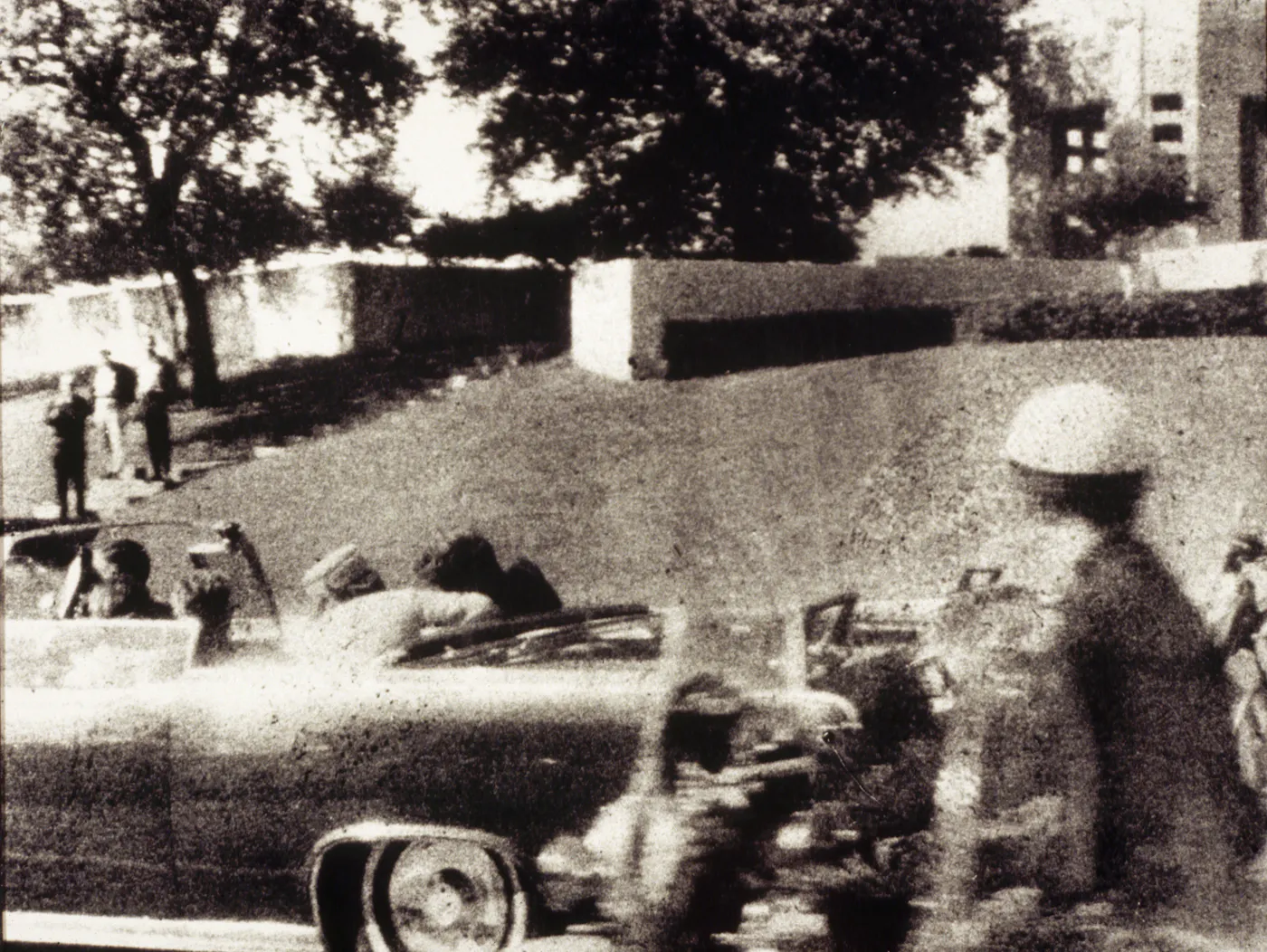
T-19. JFK in Dallas, November 22, 1963
That day in Dallas was a demarcation point for a generation of Americans—afterward, the country’s very path seemed to drift into darkness.
T-19. Bloody Sunday/Selma March
1965’s “Bloody Sunday” saw 600 marchers on their way to Montgomery, Alabama, attacked and brutalized by law enforcement officers after crossing the Edmund Pettus Bridge, yet another shock to the nation’s conscience in the civil rights era.
The Most Influential Founding Fathers
1. James Madison
The Father of the Constitution. Shows the payoff for taking copious notes. The ugly side: He owned more than 100 enslaved people.
2. Thomas Jefferson
And at number two, the author of the American theory of law-based, anti-divine rule. A second hit: the Virginia statute on religious freedom. Slave ownership: more than 600.
“I am not much of a fan of the Founding Fathers terminology (I use Founding Generation), as in a democratic republic it seems to me that the government depended on more than the men inside the various legislative chambers.”—Mary Sarah Bilder, Boston College Law School
T-3. Alexander Hamilton
The anti-Jefferson, the leader of the high-born Federalists, co-author of the vital Federalist Papers, and architect of our financial system. Good life’s work.
T-3. George Washington
His decision in 1783 to stop off in Annapolis and resign his military commission stands as maybe the most important act in early American history. It made the United States a republic. Slave ownership: more than 300.
5. Benjamin Franklin
Stunning polymath, skilled (and randy) diplomat, committed abolitionist in his later years after benefiting from the slave trade earlier in his life; also the only person to sign the Declaration of Independence, the Constitution, and the Treaty of Paris.
6. John Adams
He first rose to prominence opposing the hated Stamp Act. In convincing Jefferson to be the lead author of the declaration, he said: “I am obnoxious, suspected, and unpopular. You are very much otherwise.”
7. Thomas Paine
The English-born Founder whose early pamphlets like “Common Sense” made the popular case for revolution. Also a vigorous foe of slavery and advocate for an early version of the welfare state.
8. James Wilson
Who? This Pennsylvanian was a vital and active delegate to the Constitutional Convention and an important proponent of ratification. He was also one of Washington’s original six appointees to the Supreme Court.
The Most Important Works of Art in American History
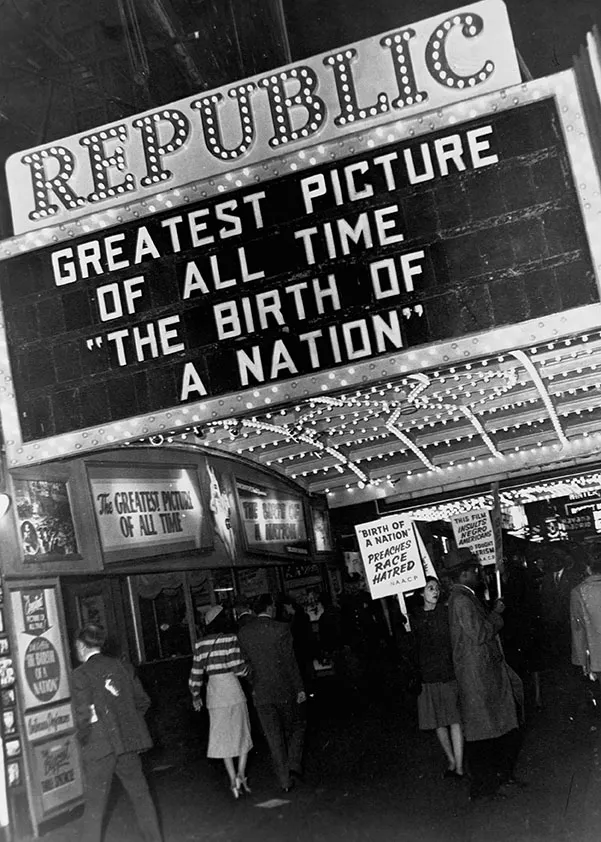
1. The Birth of a Nation by D.W. Griffith (film, 1915)
Racist, “Lost Cause,” Klan-glorifying propaganda, it was also the birth of modern filmmaking. “Thoroughly pernicious, but tremendously important … establishing the importance of film and helping to shape national consciousness about Reconstruction,” said University of Texas law professor Sanford Levinson.
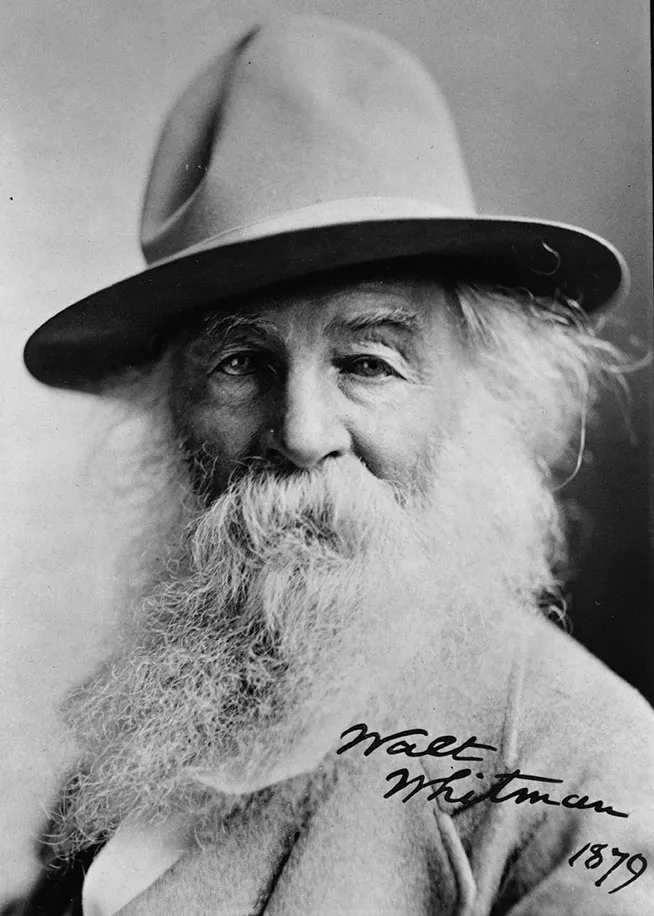
T-2. Leaves of Grass by Walt Whitman (poetry, 1855)
“Here are the roughs and beards and space and ruggedness and nonchalance that the soul loves,” Whitman wrote in the preface to the first edition of this landmark poetry collection. He repeatedly expanded and revised the work until he died in 1892.
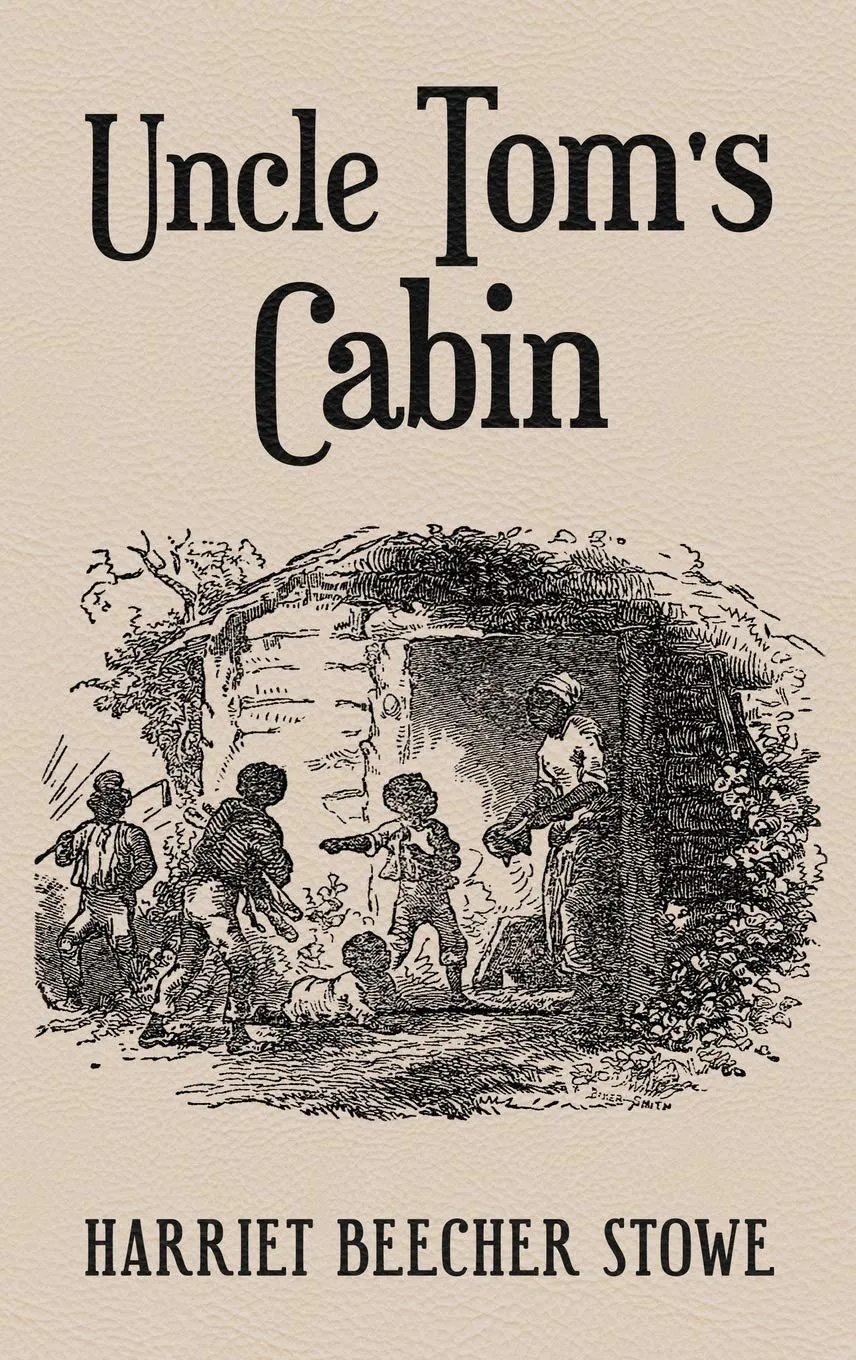
T-2. Uncle Tom’s Cabin by Harriet Beecher Stowe (novel, 1852)
Stowe’s slavery-condemnation novel sold more copies than any book in the nineteenth century, save perhaps the Bible. Credited with changing white attitudes toward slavery, it’s nevertheless not widely read today, due to its negative stereotypes of Black Americans, particularly that of the title character.
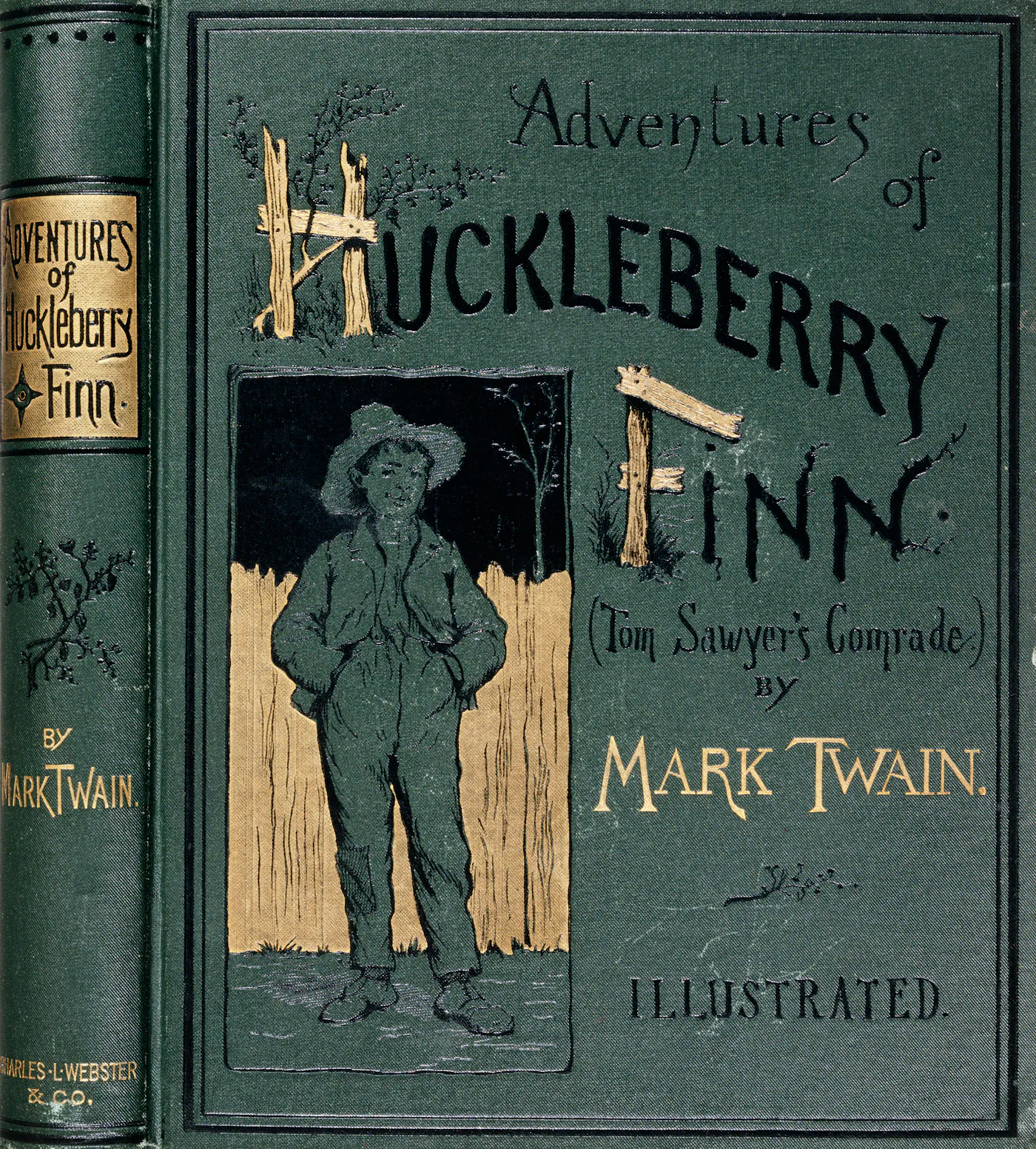
T-4. Adventures of Huckleberry Finn by Mark Twain (novel, 1885)
Ernest Hemingway said all modern American literature comes from Twain’s antebellum tale of a white Missouri preteen helping a slave find freedom. It was and remains controversial, but by this time in his life, Samuel Clemens was a staunch supporter of racial justice.
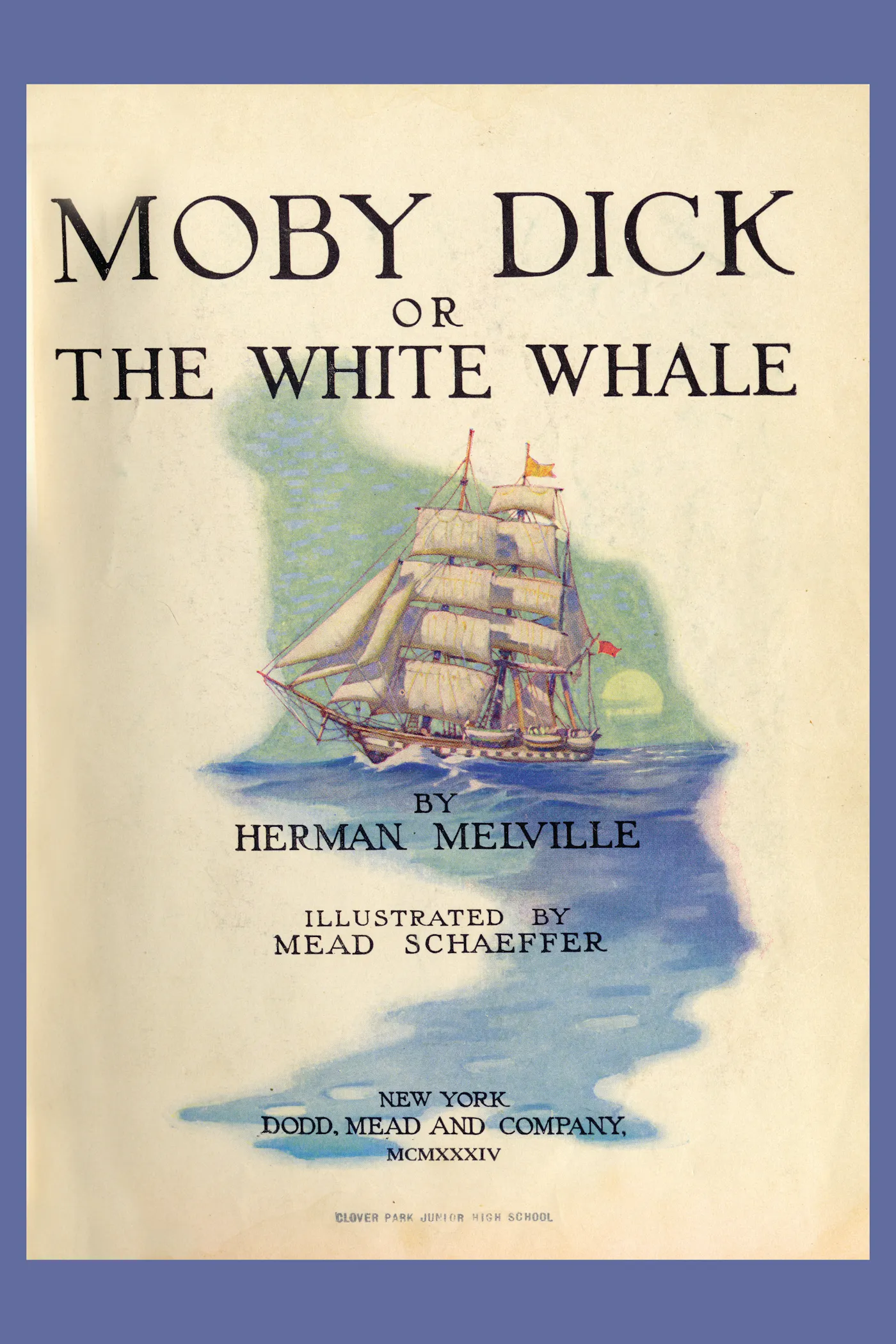
T-4. Moby-Dick; or The Whale by Herman Melville (novel, 1851)
The classic tale of obsession and revenge was initially a whale of a flop. Melville lived another 40 years and had long passed into the great ocean beyond before his magnum opus took its place in the American literary canon.
6. Citizen Kane by Orson Welles (film, 1941)
Welles was 25 and a first-time director when he crafted this dark tale, which still stands up, about a media mogul’s rise, withdrawal, and a futile search for what he’d lost along the way. Rosebud!
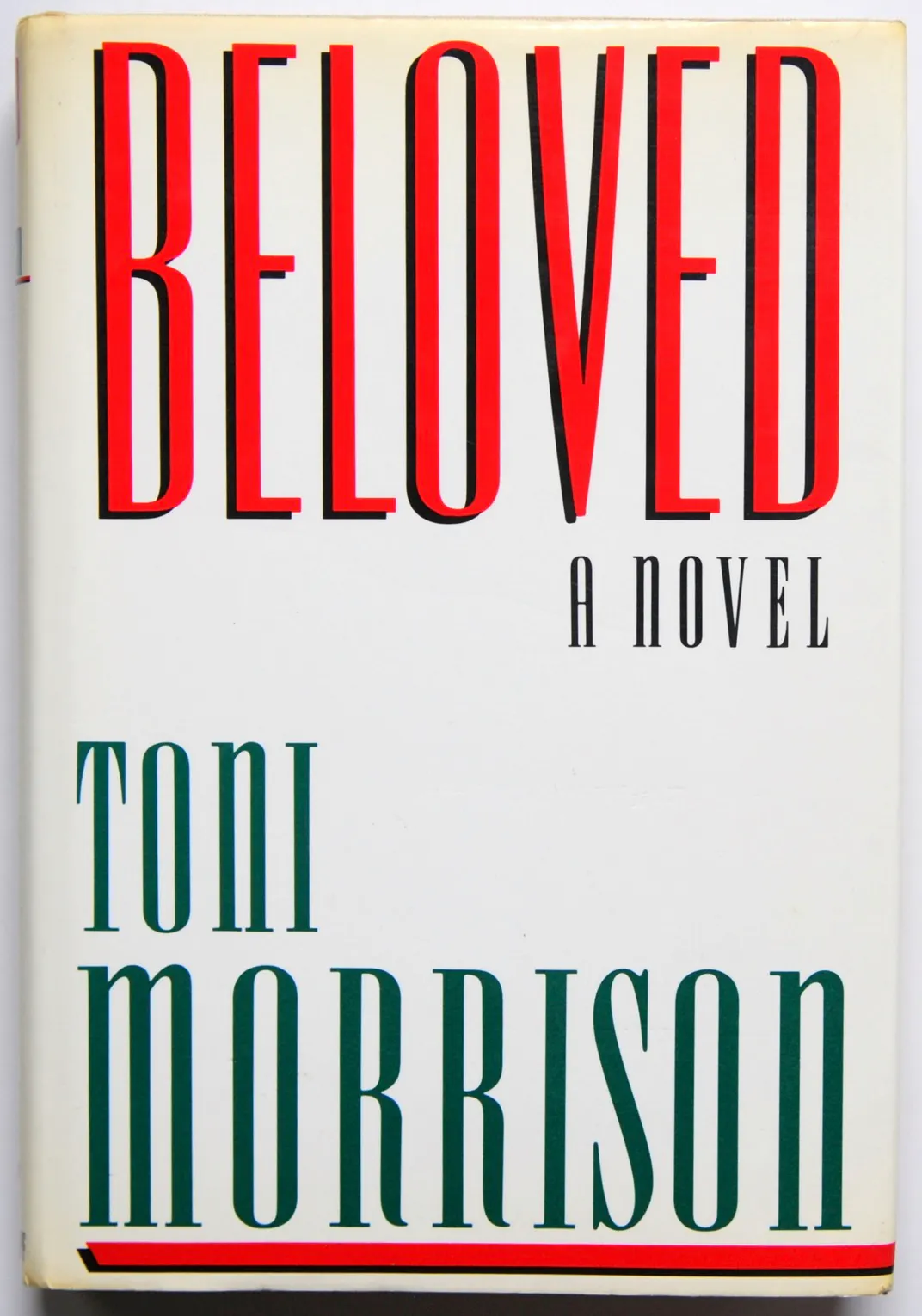
T-7. Beloved by Toni Morrison (novel, 1987)
Her Pulitzer Prize winner is not universally beloved, often appearing prominently on lists of banned books, but this story exploring the trauma of slavery in postbellum Ohio is probably her most acclaimed.
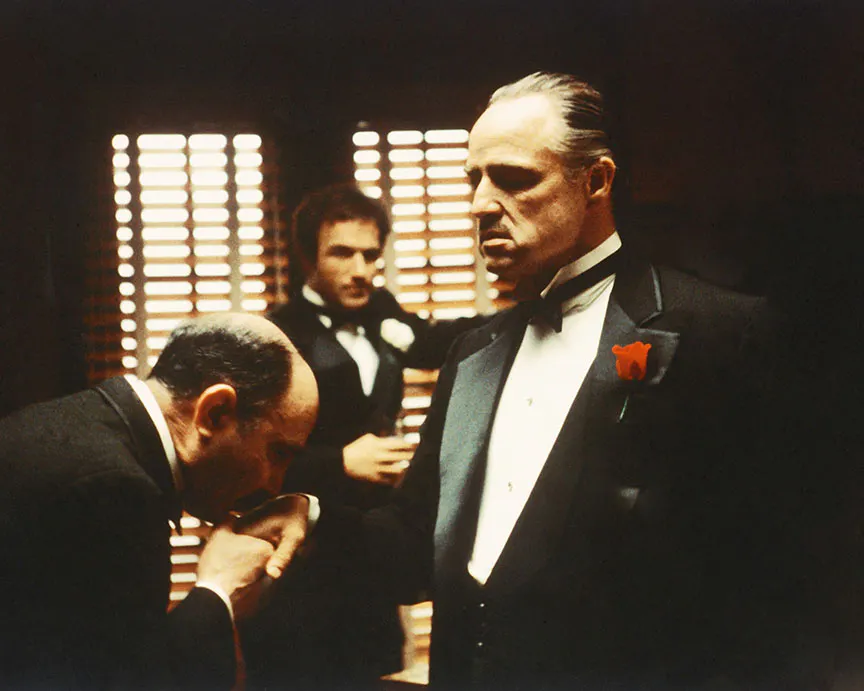
T-7. The Godfather Parts I & II by Francis Ford Coppola (film, 1972 and 1974)
The Corleone family’s embrace and corruption of the American dream is a classic tale of tragedy as triumph. And the cast is pretty good, too. (Yeah, our panel ignores Part III.)
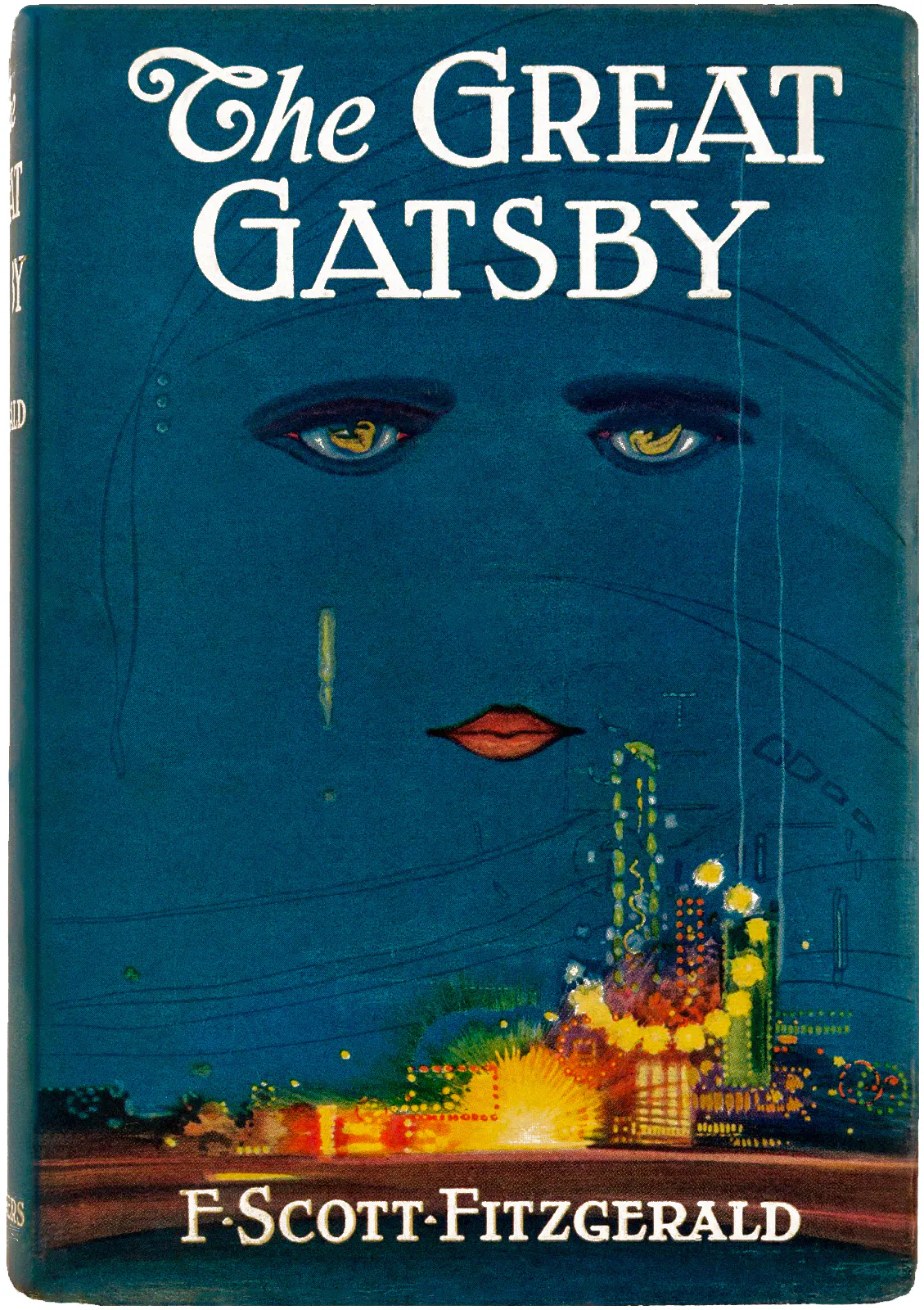
T-9. The Great Gatsby by F. Scott Fitzgerald (novel, 1925)
The American dream’s glory and tragedy unfold in this classic set in the Jazz Age that remains a staple of high school syllabi. Squint hard and you can just see the green light at the end of the dock.
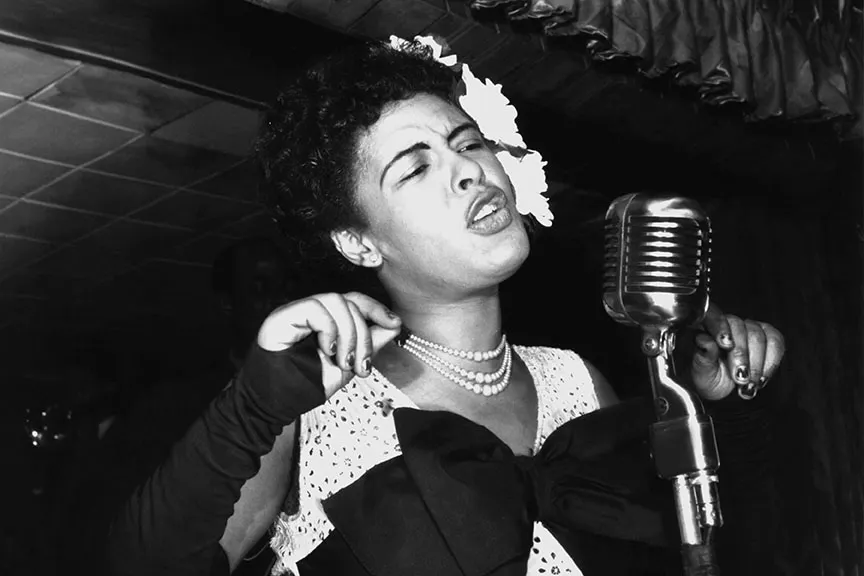
T-9. “Strange Fruit” by Abel Meeropol (song, 1939)
Billie Holiday’s haunting rendition of Meeropol’s composition never directly mentions lynching, but its topic is clear. “Black body swinging in the Southern breeze/Strange fruit hanging from the poplar trees.” Time named it the song of the twentieth century.
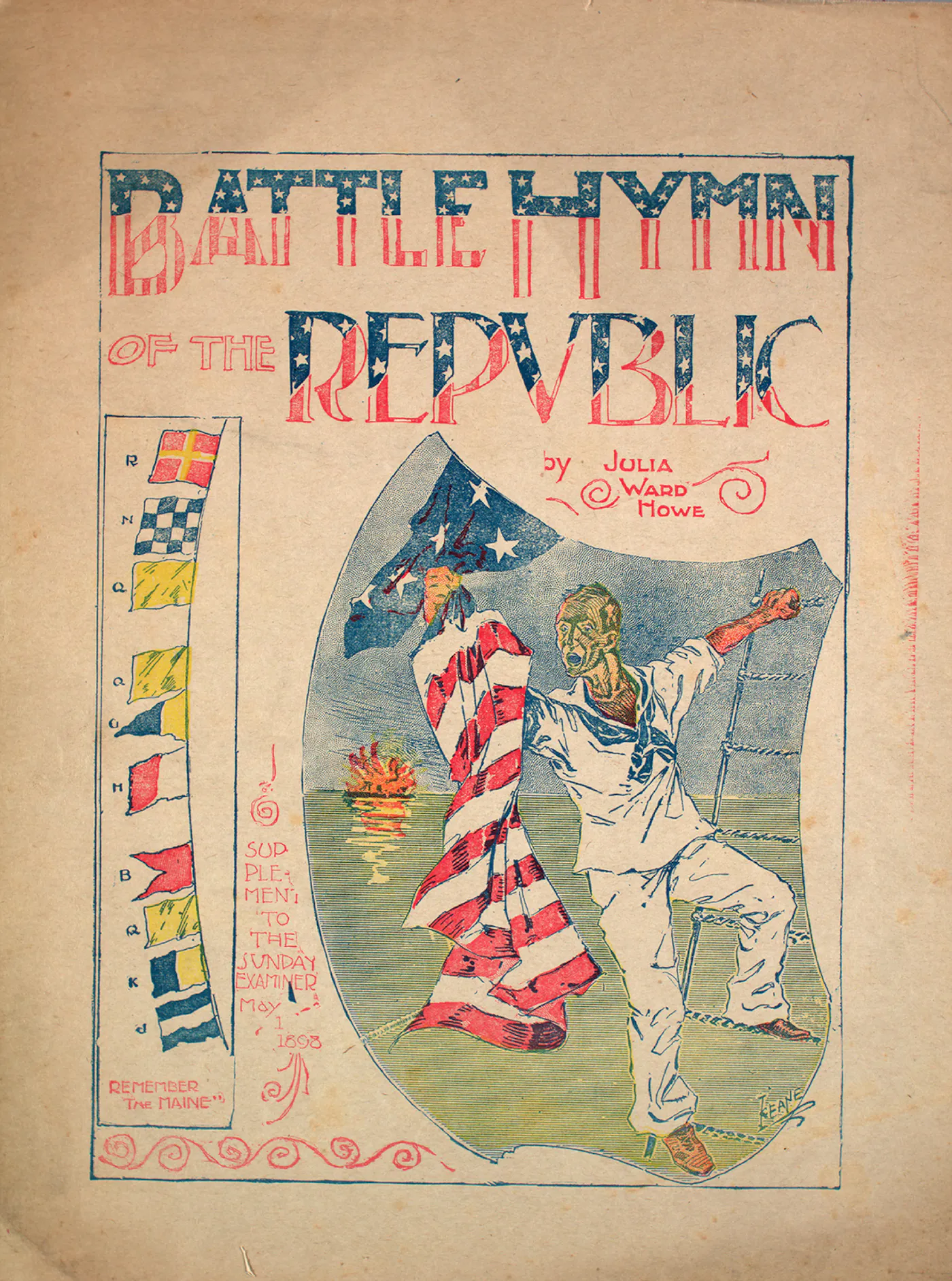
T-11. “Battle Hymn of the Republic” by Julia Ward Howe (song, 1862)
Visiting Washington, D.C., in 1861, Howe heard Union soldiers singing “John Brown’s Body.” She wrote new lyrics for it that were a hit in the North and loathed in the South. Oh well, the victors get to call the tune.
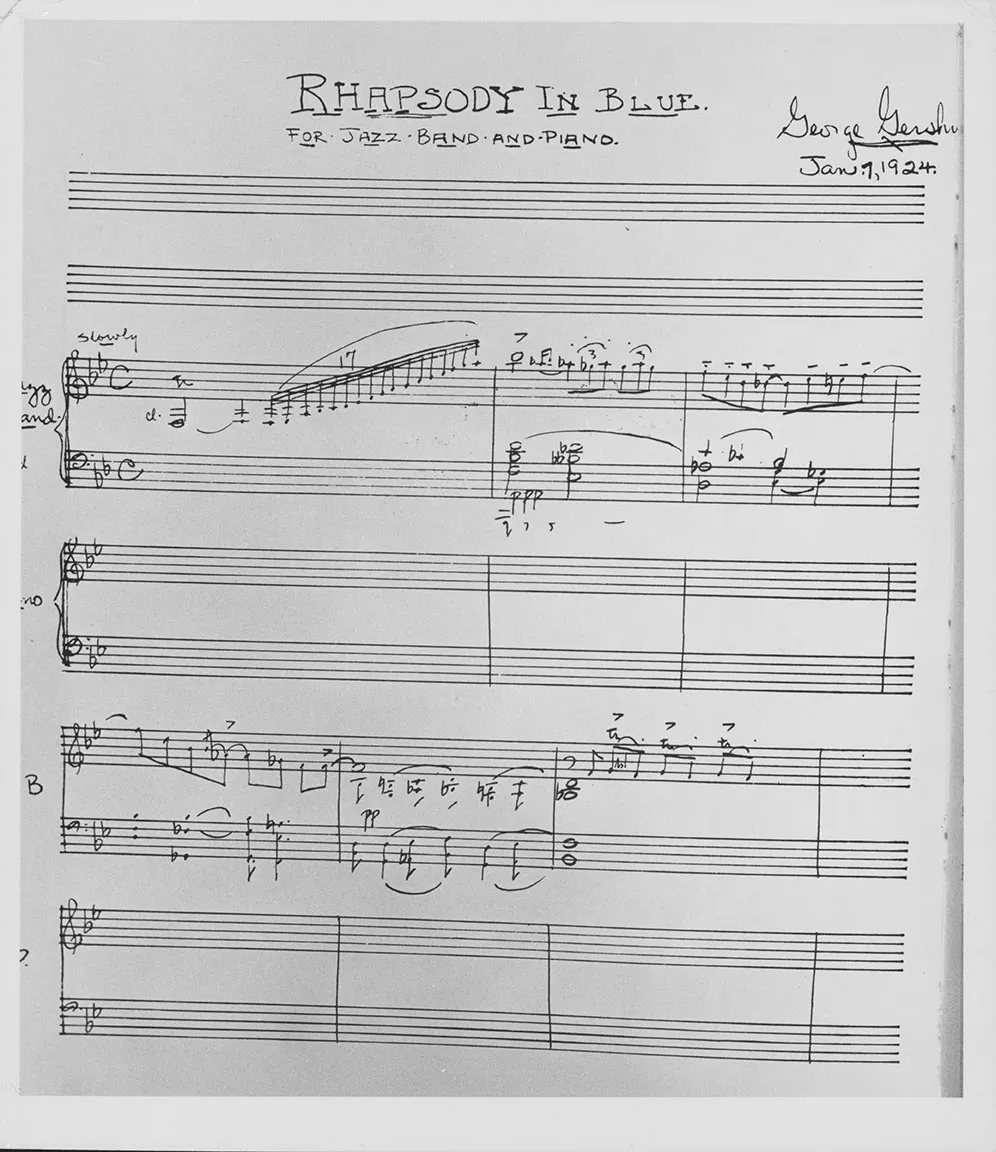
T-11. “Rhapsody in Blue” by George Gershwin (orchestral work, 1924)
A train ride inspired Gershwin’s orchestral mélange of jazz and blues: “a sort of musical kaleidoscope of America—of our vast melting pot, of our unduplicated national pep, of our metropolitan madness,” he later said.
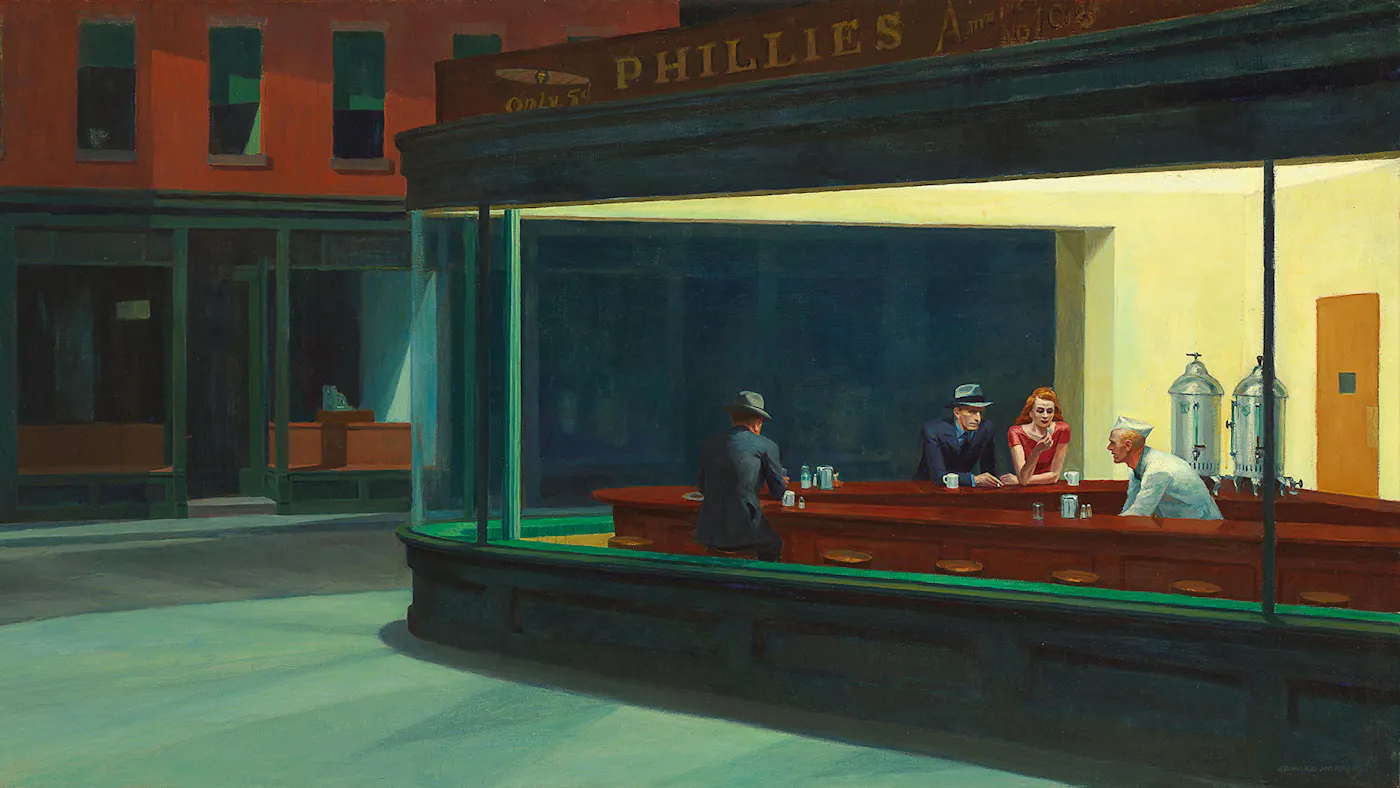
T-13. Nighthawks by Edward Hopper (painting, 1942)
“Unconsciously, probably, I was painting the loneliness of a large city,” Hopper explained. It was magnified by its context—a city under blackout restrictions in the early days of war.
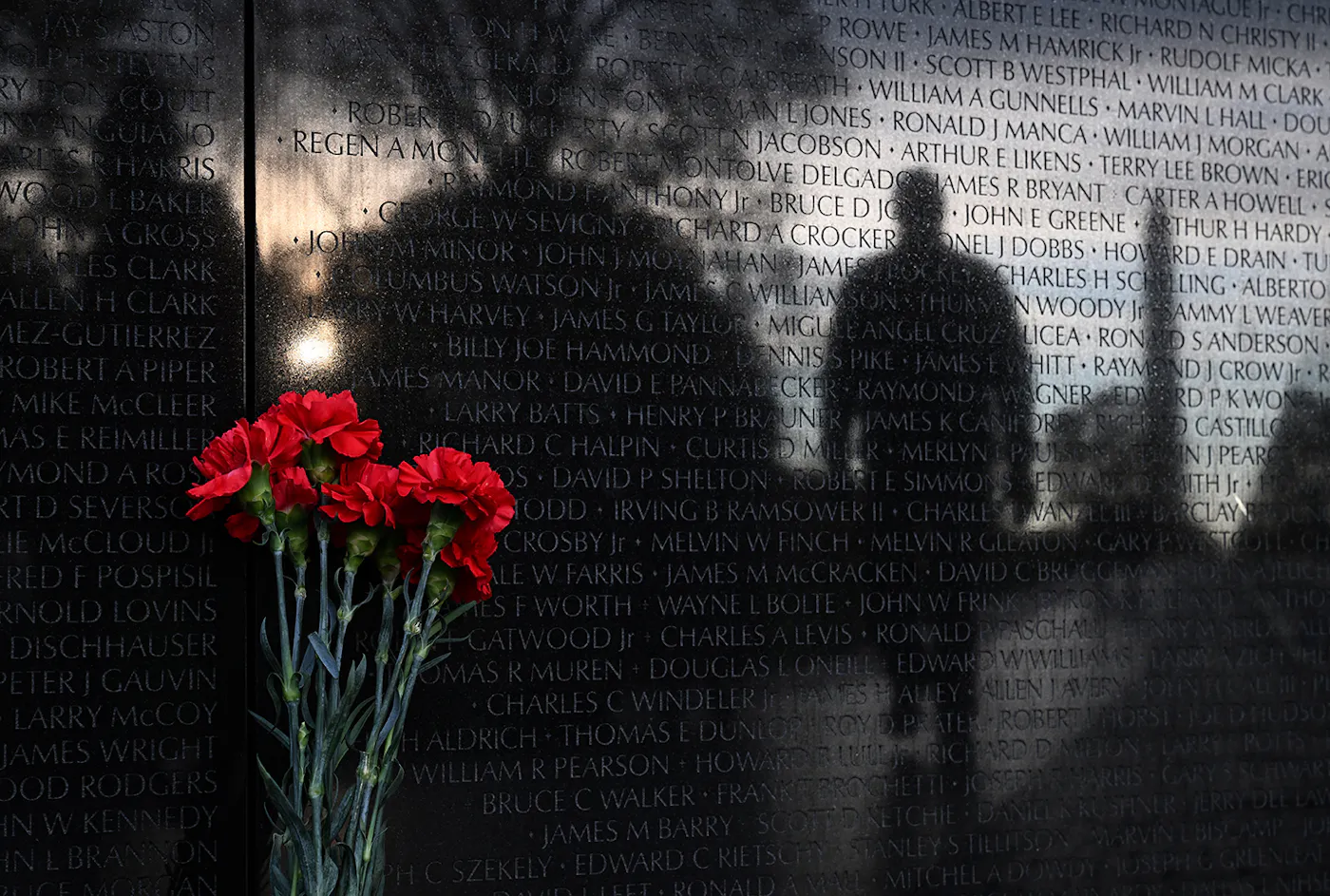
T-13. Vietnam Veterans Memorial by Maya Lin (architectural memorial, 1982)
The names of the 58,000 killed in America’s tragic conflict emanate chronologically from the monument’s center. Both Lin and the design were attacked by the usual suspects, but the public has always appreciated its understated genius.
15. Casablanca by Michael Curtiz (film, 1942)
The lightning dialogue. The flawless cinematography. The thrilling direction. The poignant message. The breathtaking ending. Oh, yeah—the acting wasn’t too bad either.
The 10 Best—and 10 Worst—Presidents in American History
T-1. Abraham Lincoln (1861–1865)
The Great Emancipator and the savior of the Union. And he created the national railroad and the land-grant university system, all while fighting the war!
T-1. Franklin Roosevelt (1933–1945)
His steady confidence, “bold, persistent experimentation,” and optimistic mien guided the nation through the Great Depression and the Second World War, reimagining both the federal government role and the country’s place in the world.
The best presidents used “the federal government to not only expand the American imagination of the ways in which the government can solve society’s biggest problems but also significantly and substantively improve the lives of millions.”—Candis Watts Smith, Duke University
3. George Washington (1789–1797)
His greatest achievement may have been something he didn’t do. “He could easily have become president for life and did not,” University of Texas law professor Sanford Levinson noted.
4. Lyndon Johnson (1963–1969)
More than one expert placed LBJ both on this list and on the “worst” list. But with the passage of time, his accomplishments at home, including Medicare, Medicaid, the Civil Rights Act, and the Voting Rights Act, have come to overshadow Vietnam.
5. Theodore Roosevelt (1901–1909)
An OG populist who used federal power for the general good. “When I am feeling blue or discouraged, I pick up a TR biography and read any random page—it gives a jolt of energy and hope!” said Michael Waldman of the Brennan Center for Justice.
6. Barack Obama (2009–2017)
Not only the first African American president but also the sole one since Eisenhower to twice win a popular vote majority. “Americans could believe that we were capable of living up to the promises of equality and liberty,” said University of Virginia media studies professor Siva Vaidhyanathan.
7. Thomas Jefferson (1801–1809)
“His pen inscribed the nation we still rightly dream of being,” said Richard Parker of Harvard’s Kennedy School of Government. More practically, the Louisiana Purchase was, as one of his successors might have put it, a big effing deal.
8. Dwight Eisenhower (1953–1961)
Using what has come to be known as a “hidden hand” leadership style, Eisenhower halted the Korean War, built the interstate highway system, and presciently warned against the burgeoning “military-industrial complex.”
9. Harry Truman (1945–1953)
Played a critical role in helping establish the postwar, rules-based international order that set the stage for decades of U.S. prosperity at home and leadership around the world. Not bad for a failed haberdasher.
10. John F. Kennedy (1961–1963)
One of the nation’s most rhetorically gifted presidents, Kennedy earned a place on this list for his inspirational words, and also for navigating the world’s moment of maximum peril, the Cuban Missile Crisis.
Worst Presidents
1. Donald J. Trump (2017–2021, 2025–present)
Some experts voted for him twice—once for each term. “Much more corrupt and dangerous to the Constitution than all of the others on this list combined,” observed author and columnist Jonathan Alter. Thank you for your attention to this matter.
“The most striking thing on evaluating this question is how much easier it is to fill the latter category [worst presidents] than the former [best presidents]! The worst president category overflows with possibilities.”—John Fabian Witt, Yale Law
2. Andrew Johnson (1865–1869)
He sought, in the words of Richard Parker of Harvard’s Kennedy School of Government, “to betray the sacrifice of 600,000 lives in combat, and the rights owed millions more.”
3. James Buchanan (1857–1861)
Pro-slavery, he successfully lobbied the Supreme Court on its odious Dred Scott decision. He was, one expert noted, the only president to finish his term with fewer states in the union than when he started.
4. Richard Nixon (1969–1974)
He was so much worse than the “second-rate burglary.” And despite his best efforts and those of his apologists, he is best remembered as the only president to resign his office—in a miasma of disgrace he could never shake.
T-5. George W. Bush (2001–2009)
His administration was a string of disasters and blunders, from 9/11 to the Afghanistan and Iraq wars to the Great Recession. He exhibited a deadly blend of self-assurance and incuriosity.
T-5. Warren Harding (1921–1923)
For a long time, Harding’s administration had a serious claim to the title of “most corrupt” (Google “Teapot Dome”). Harding’s ghost must be grateful to Team Trump.
7. Andrew Jackson (1829–1837)
Jackson “exhibited a fairly consistent disdain for law and established the pernicious tradition of presidents who viewed themselves as ‘tribunes of the people’ … entitled to behave as they wished,” University of Texas law professor Sanford Levinson argued.
T-8. Herbert Hoover (1929–1933)
The Great Depression started on his watch, and he flailed in its face.
T-8. Franklin Pierce (1853–1857)
A pro-slavery Democrat who helped grease the nation’s slide toward Civil War with, among other moves, the 1854 Kansas-Nebraska Act. He was, Theodore Roosevelt later wrote, “a servile tool of men worse than himself ... ever ready to do any work the slavery leaders set him.”
10. Ronald Reagan (1981–1989)
“With an affable demeanor, he laid the foundations for what the current snarling GOP has become,” noted James Fallows, who worked for and then fell out with Reagan’s predecessor, Jimmy Carter.
Our Never-Ending American Argument
A quarter of a millennium has passed since the Founders declared our independence and established a nation based on radical ideas—which they deemed “self-evident”—regarding individual equality, consent of the governed, and rule of law tempered by “inalienable rights.”
We have spent those years defining and redefining what America is and who Americans are. It has never been a clean or simple dialogue: Consensus is often fleeting, with answers’ clarity often varying according to the eyes of their beholders. At worst, it’s an argument that spurred a Civil War and underlies today’s bitterest disagreements. At best, it has generated a creative tension that has produced magnificent advances in art, science, and human liberty.
The American story is not uniform, neither all good nor all bad. “Man’s capacity for justice makes democracy possible, but man’s inclination to injustice makes democracy necessary,” as Reinhold Niebuhr, one of our great theologians, once said. The American genius has been to create a blend toward progress. E pluribus unum: Out of many we are one. Our brief 250 years illustrate Niebuhr’s wisdom: Our achievements stretch from a declaration at a Statehouse in Pennsylvania to Stars and Stripes planted on the moon; our failures are tallied in tragedies starting with human enslavement and running through a bloody series of catastrophes and injustices, some self-inflicted, others perpetrated upon us.
To capture the scope and sweep of the American story, we decided to survey leading scholars and thinkers in a number of fields, such as history, political science, and law. We invited them to contribute lists of their nominees in the categories you will find in this series. Many answered all of the questions, some a few, and a handful answered different questions entirely. All were thoughtful and thought-provoking, and we are deeply grateful for their contributions.
We built these lists from their responses. Some results were predictable—yep, Abraham Lincoln was great—but many surprised. Taken together, they are our attempt to define our nation on its semiquincentennial. And we even gave a handful of conservative thinkers their say.
Historian Arthur M. Schlesinger Jr., my father, was fond of describing history as “an argument without end.” Bruce Springsteen, the nation’s music laureate, riffs along the same lines. “America was born out of disagreement,” he said at a May concert in Washington, D.C. “It’s an argument, an ongoing, blessed, sacred argument—an argument about what course the country should take to form a more perfect union.” We offer these lists in that spirit, as a fresh avenue for the great and ongoing discussion of where we have been, who we are, and what we may yet become.
—Robert Schlesinger, guest editor
MethodologyWe reached out to scores of leading scholars and public intellectuals in fields such as history, the law, economics, political science, and media and asked them to offer their top-fives in over a dozen categories designed to capture our history in its fullness. We also asked the same of a smaller group of our friends on the right.
We received nearly 100 responses. Some respondents completed all 13 lists, some fewer. We made the lists in these pages by simply tallying up the votes. In some instances, we felt logic dictated that we group them thematically—for example, putting the Reconstruction Amendments together, rather than counting them individually. The final lists here are admittedly somewhat subjective, in that in each category we decided on a number that constituted a critical mass of votes; that number was different for each category, since the n of each category was different based on the number of responses (for example, many more participants made best/worst presidents lists than court cases lists). For each category, we chose a cutoff point that seemed to us to represent substantial sentiment favoring inclusion of that person or event.
ContributorsJonathan Alter, author and columnist
Eric Alterman, Brooklyn College
William J. Antholis, University of Virginia’s Miller Center
Cristina Beltrán, New York University
David Harry Bennett, Syracuse University Maxwell School of Citizenship and Public Affairs (emeritus)
Mary Sarah Bilder, Boston College Law School
David Blight, Yale University
Heather Boushey, University of Pennsylvania Kleinman Center for Energy Policy
Nadia Brown, Georgetown University
Andrew Burstein, Louisiana State University
Brandon R. Byrd, Vanderbilt University
David Canton, University of Florida
Lizabeth Cohen, Harvard University
John Milton Cooper Jr., University of Wisconsin-Madison (emeritus)
Robert Dallek, historian
Matt Dallek, George Washington University
William A. Darity Jr., Duke University Sanford School of Public Policy (emeritus)
Matthew Dickinson, Middlebury College
Robert E. DiClerico, West Virginia University (emeritus)
E.J. Dionne, Brookings Institution
Daniel Drezner, The Fletcher School at Tufts University
Kristin Kobes Du Mez, Calvin University
James Fallows, writer
John A. Farrell, writer and historian
Drew Gilpin Faust, Harvard University (president emerita)
Amy Fried, University of Maine (emerita)
Beverly Gage, Yale University
David Garrow, writer and historian
Henry Louis Gates Jr., Harvard University Hutchins Center for African and African American Research
Roxane Gay, writer and cultural critic
David Greenberg, Rutgers University
Darrick Hamilton, The New School for Social Research
Michael Harriot, journalist
Nicole Hemmer, Vanderbilt University
Elizabeth Hinton, Yale University
David Hollinger, University of California, Berkeley (emeritus)
Nancy Isenberg, Louisiana State University
Michael Kazin, Georgetown University
David Kennedy, Stanford University (emeritus)
Randall L. Kennedy, Harvard Law School
Amna Khalid, Carleton College
Larry Kramer, London School of Economics and Political Science
Kevin M. Kruse, Princeton University
Jennifer L. Lawless, University of Virginia Frank Batten School of Leadership and Public Policy
Nicholas Lemann, Columbia University Journalism School
Margaret Levi, Stanford University (emerita)
Sanford V. Levinson, University of Texas at Austin School of Law
David Levering Lewis, New York University (emeritus)
Jen Manion, Amherst College
Jane Mayer, The New Yorker
Liza Mundy, journalist and author
Melissa Murray, New York University School of Law
George Derek Musgrove, University of Maryland, Baltimore County
Aryeh Neier, Open Society Foundations (president emeritus)
Nell Irvin Painter, Princeton University (emerita)
Richard Parker, Harvard University Kennedy School of Government
Claire Potter, The New School for Social Research (emerita)
Andrew Preston, University of Virginia
Lara Putnam, University of Pittsburgh
Eric Rauchway, University of California, Davis
Sam Rosenfeld, Colgate University
Miguel Schor, Drake University Law School
Kate Shaw, University of Pennsylvania Carey Law School
John Sides, Vanderbilt University
Theda Skocpol, Harvard University
Candis Watts Smith, Duke University
Paul Starr, Princeton University
Thomas J. Sugrue, New York University
Julie Suk, Fordham University School of Law
Jeremi Suri, University of Texas at Austin Lyndon B. Johnson School of Public Affairs
James Tejani, California Polytechnic State University
Michael Tomasky, The New Republic
Robert L. Tsai, Boston University School of Law
Siva Vaidhyanathan, University of Virginia
Lynn Vavreck, University of California, Los Angeles
Michael Waldman, Brennan Center for Justice at NYU
Sean Wilentz, Princeton University
Maya Wiley, Leadership Conference on Civil and Human Rights
Isabel Wilkerson, journalist and author
Brenda Wineapple, Columbia University
John Fabian Witt, Yale Law School
Julian E. Zelizer, Princeton University
The Most Consequential Politicians Who Never Became President
1. Henry Clay
“The Great Compromiser,” Clay held just about every major political job except president: senator, House speaker, and secretary of state at various times.
2. William Jennings Bryan
A three-time nominee for president, Bryan mainstreamed populism in the Democratic Party with his soaring rhetoric and potent connection with the common man. While he never won the big prize, many of his policies eventually became law.
3. John C. Calhoun
Vice president under both John Quincy Adams and his nemesis/successor, Andrew Jackson, the father of secession is remembered for his pro-slavery stances, especially through his discredited nullification doctrine.
4. Alexander Hamilton
Not just a Broadway legend, Hamilton helped write the Constitution and then, as the nation’s first treasury secretary, helped establish the U.S. financial system.
5. Barry Goldwater
The Arizona Republican lost badly to Lyndon Johnson in 1964, but his campaign and embrace of conservatism transformed the GOP. A decade later, he was one of those who finally convinced Richard Nixon to quit.
“[Barry Goldwater’s nomination] laid the groundwork for the right-wing takeover of the GOP. His campaign developed electioneering strategies such as direct mail that would contribute significantly to the success of Ronald Reagan and the ultraconservative politicians who followed him.”—Lizabeth Cohen, Harvard University
6. Nancy Pelosi
The first female speaker of the House was one of the most talented legislative leaders of any era. During her two tenures, she oversaw the passage the Affordable Care Act, the Dodd-Frank financial reforms, and the Inflation Reduction Act.
7. Earl Warren
A conservative California governor, Chief Justice Warren “ended up forging a progressive consensus that ended the Red Scare and decided Brown v. Board of Education, Gideon v. Wainwright, Miranda v. Arizona, and Loving v. Virginia,” NYU’s Cristina Beltrán noted.
8. Hillary Clinton
Senator, secretary of state, and Democratic presidential nominee, Clinton is, Fordham Law’s Julie Suk wrote, “a brilliant woman whose flaws awakened the misogyny of American voters that contributed to Trump’s rise.” But she got a lot more votes than he did.
T-9. Shirley Chisholm
People laughed at a Black woman running to be president in 1972. But she made history, and someday, a Black woman will win, and no one will laugh.
T-9. Jesse Jackson
For being on the Lorraine Motel balcony that fateful day; for his groundbreaking presidential campaigns, which gave voice to workers and farmers when doing so wasn’t cool.
T-9 John Marshall
The fourth, and arguably most influential, chief justice of the United States, Marshall secured the judiciary’s role as a coequal branch of the fledgling U.S. government.
T-9. George Wallace
A pro-segregation Alabama governor, Wallace personified the split within the Democratic Party that led Southern conservatives to migrate to the GOP. He won 46 electoral votes (including five states) in 1968, running on a segregationist platform.
T-13. Robert La Follette
A Wisconsin progressive, Fightin’ Bob La Follette pushed for reforms such as the direct election of senators and worker protections. And he was a Republican! He was named, in 1959, one of the chamber’s five greatest legislators.
T-13. Charles Sumner
Most famous for being beaten nearly to death on the Senate floor, he was also a man of unflinching principle (to a fault, according to some critics) and a passionate abolitionist.