
Trump Takes Two Steps Back in Ending His Iran War
On Saturday, Iran’s military announced it had closed shipping along the Strait of Hormuz, saying the US violated its deal to end the war by allowing Israel to continue to bomb Lebanon. Iran had just signed on to a preliminary agreement with the US to reopen the strait and allow for safe passage of commercial vessels for 60 days.
Lebanon’s state media and civil defense officials reported that Israeli strikes killed at least 16 people on Saturday morning, and the country’s health ministry said at least 47 people were killed on Friday. The Israel Defense Forces stated on Friday that four of its soldiers were killed in Lebanon. It also claimed its airstrikes hit 80 targets connected to the militant group Hezbollah, killing “dozens” of its members.
This isn’t the best start.
Israel and Hezbollah had agreed to a ceasefire in Lebanon on Friday after the fighting looked like it would break up talks between the US and Iran in Switzerland. Earlier in the day, Iranian officials declined to meet with US negotiators, citing the fighting in Lebanon. JD Vance, on who Trump and Republicans have pushed responsibility for the negotiations, also postponed a trip to Switzerland.
As I wrote on Wednesday, the first point in the US-Iran deal released this week requires Iran, the US, and all of their allies to immediately end all military operations, with the text explicitly including a close to bombing in Lebanon. But Israel did not agree to the deal, after repeatedly stating it will continue attacking southern Lebanon. Trump has recently criticized Israel for its military campaign in Lebanon, noting that it could dismantle his announced deal.
Before Israel and the United States launched their current war, roughly 20 percent of global crude oil and natural gas transited through the strait. Closing the passage has led to massive increases in petroleum prices.
This week, the Trump administration said it would commit to finalizing an agreement to end the war in 60 days. Getting Iran to close the Strait of Hormuz again isn’t the best start.
Aptos’ Nick Bjorn recognized as SCCAL’s top boys golfer

Aptos High junior Nick Bjorn was named the Santa Cruz Coast Athletic League’s Most Valuable Player for his superb play on the golf course during the 2026 spring season.
Bjorn was runner-up in the SCCAL individual championship at Pasatiempo Golf Club in Santa Cruz on April 28. He earned medalist honors in seven of the 10 league matches played this season, helping lead Aptos to an SCCAL regular season team championship.
Aptos coach Paul Zech was named the SCCAL’s Coach of the Year, while freshman Brayden Wilson earned all-league first team honors.
Below is a complete list of All-SCCAL honorees for boys golf, boys tennis, boys volleyball and girls beach volleyball.
Santa Cruz Coast Athletic League 2026 all-league teams Boys golf Individual AwardsMost Valuable Player: Nick Bjorn (Jr.), Aptos
Sportsmanship Award: Cash Moran (Sr.), Soquel
Coach of the Year: Paul Zech, Aptos
First TeamTanner Brewer (Sr.), SLV
Brayden Wilson (Fr.), Aptos
Kyler Samples (Sr.), Harbor
Seamus Drees (Sr.), Scotts Valley
Riley Shank (So.), Soquel
Garret Dahlen (Jr.), SLV
Second TeamAndrew Roberts (Fr.), Harbor
Peter Roboloth (Jr.), Soquel
Gunther Krueger (So.), Harbor
Gavin Easton (Sr.), Santa Cruz
Brogan Beasley (Sr.), Scotts Valley
Gavin Doherty (Jr.), Scotts Valley
Honorable MentionSantiago Toledo (Sr.), Santa Cruz
Fischer Howard (So.), Santa Cruz
Lochlin Bishoffberger (Jr.), SLV
Carson Chubb (So.), SLV
Cade Mosely (Fr.), Harbor
Nico Marinovic (Sr.), Harbor
Cole Christensen (Jr.), Soquel
Kyle Lambrecht (So.), Soquel
Jack Garvey (Jr.), Aptos
Adrian Creamer (Jr.), Scotts Valley
Hudson Spielvogel (So.), Scotts Valley
Zane Siechen (Sr.), Scotts Valley
Boys tennis Individual AwardsMost Valuable Player: Hudson Ward (Sr.), Soquel
Coach of the Year: Kumaran Arulanantham, Santa Cruz
First Team SinglesBen Zaretsky (Sr.), Aptos
Jeremy Arulanantham (Jr.), Santa Cruz
Tenzin Fathman (Fr.), Santa Cruz
Hudson Ward (Sr.), Soquel
Second Team SinglesStellan Wu (Fr.), Santa Cruz
Torin Miller (Sr.), Soquel
Raphael Bouchet (Jr.), Scotts Valley
Aditya Hannon (Sr.), Scotts Valley
First Team DoublesKai Vargas (Jr.), Santa Cruz
Oscar Sapunor (So.), Santa Cruz
Ian Burchell (Sr.), Santa Cruz
Sam Galli (So.), Scotts Valley
Second Team DoublesNate Wexler (So.), Scotts Valley
Zabel Oatey (Jr.), Harbor
Sawyer Amos (Jr.), San Lorenzo Valley
Nico Salinas (Jr.), Aptos
All-Sportsmanship TeamGeorge Jertberg (So.), Aptos
Lukas Novotny (Fr.), Santa Cruz
Everett Callendar (Jr.), SLV
Freddy Padilla (So.), Scotts Valley
Abraham Bachar (Jr.), Harbor
Elias Garcia (Sr.), Soquel
Boys volleyball Individual AwardsMost Valuable Player: Cooper Lastition (Sr.), Harbor
Mark Brewer Award: Nikowa D’Costa-Hemp (Sr.), Mt. Madonna
Coach of the Year: PK McDonald, Mt. Madonna
First TeamSolomon Coleman (Jr.), Mt. Madonna
Lucas Kamalani (Sr.), Santa Cruz
Guillermo Mazier (Jr.), Santa Cruz
Grady McKee (Sr.), Harbor
Nikowa D’Costa Hemp (Sr.), Mt. Madonna
Matty Rayray (Jr.), Santa Cruz
Josh Rejfir (Sr.), Harbor
Second TeamDavid Monclus (Jr.), Mt. Madonna
Rocklin Paco (Jr.), Harbor
Charlie Hess (Sr.), Santa Cruz
Keoni Raatior (So.), Soquel
Zach Livingston Shults (So.), SLV
Xavier Knight (Sr.), SLV
Ryan Wait (Sr.), Harbor
Honorable MentionHans Hagge (Sr.), Mt. Madonna
James Lagerwey (Sr.), Aptos
Sean Mullen (Sr.), Aptos
Thomas Obrero (Sr.), Soquel
Johnny Abbott (Jr.), Soquel
Guillermo Mazier Bittar, Santa Cruz
Nathan Monroe, Santa Cruz
Troy Thompson (Sr.), Scotts Valley
Will Shanks (Sr.), Scotts Valley
Zack King (Sr.), SLV
Hunter Lallemand (Sr.), SLV
JJ Laughlin (Jr.), Harbor
Freddie Morgali (Sr.), Harbor
Girls beach volleyball First Team [A-Division]Emma Benedetti (So.) and Lana Walding (So.), Soquel
Leela Whiting (Fr.) and Haisley Flanagan (So.), Santa Cruz
Cecile Novembre (Jr.) and Dylan Schutz (Jr.), Harbor
Cia Johnson (So.) and Caitlin Lavelle (So.), Aptos
Hayden Smith (Sr.) and Rylee Giesen (Sr.), Scotts Valley
Kenzie Smith (Sr.) and Emily Mumford (Fr.), Aptos
Second Team [A-Division]Lyla Vyvyan (Jr.) and Ruby Hyatt (So.), Soquel
Chloe Schantz (So.) and Maggie Redwine (Jr.), Santa Cruz
Kaia Harrah (So.) and Lena Jordan (So.), Aptos
Eliana Russell (Sr.) and Chloe Goodman (So.), Santa Cruz
Liberty Niesen (Jr.) and Lise Corstorphine (So.), Harbor
Coco Castro (Sr.) and Marina Tucker (Sr.), Harbor
First Team [B-Division]Mayla Spahn (Jr.) and Jessie Ingram (So.), Monte Vista Christian
Hollyn Hearne (Sr.) and Xienna Novoa (Sr.), King City
Stephanie Velasquez (Sr.) and Ella Rubbo (Fr.), King City
Monze Camacho (Fr.) and Fernanda Cid (Fr.), King City
Gretel Martin (Fr.) and Hope Tyler (Fr.), St. Abraham’s
Farrin O’Hara (Sr.) and Amelie Pan (Jr.), Pacific Collegiate School
Second Team [B-Division]Norah Rondia (So.) and Audrey Nelson (So.), MVC
Jocelyn Jacquez (Fr.) and Melody Sanchez (Fr.), King City
Kamila Lindsay (Fr.) and Mia Sudek (So.), PCS
Sariah Braddock (Fr.) and Ruby Brownlee (Fr.), St. Abraham’s
Cecilia Tannaci (Jr.) and Lily Graney (Fr.), PCS
Sam Bertoldi (Sr.) and Claire Marshall (So.), MVC
Every new iOS 27 feature that’s worth knowing about
So thirsty: Young Trumps shill energy drinks to quench familial greed
The Trump family seems to follow strict gender roles: The men drum up business and broker deals while the women are the face of brands and commodities. Kai Trump, the 19-year-old daughter of Donald Trump Jr. and ever-present granddaughter of the sitting president, is no exception—and she’s taking advantage of her proximity to the spotlight. Donald Trump’s daughter Ivanka opted to step…
Aptos’ Cole McGillicuddy earns first team honors | All-SCCAL baseball
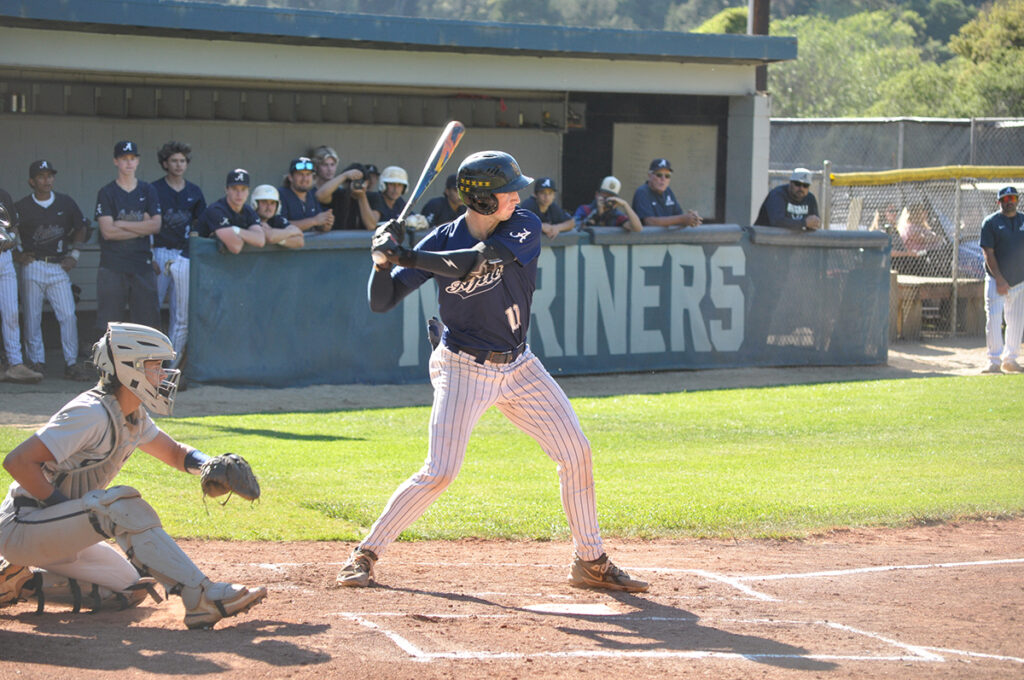
Aptos High junior Cole McGillicuddy earned All-Santa Cruz Coast Athletic League First Team honors for the 2026 baseball season.
The Cal-Berkeley commit batted a .500 average (33-for-66), including six home runs, 11 doubles, 30 RBIs, 28 runs scored and 14 stolen bases, according to the Max Preps website.
On the mound, McGillicuddy owned a 4-2 record with a 3.40 ERA while tallying 40 strikeouts in 10 appearances for the Mariners, who were runners-up in the SCCAL standings with a 9-6 record in league play.
Teammate junior Finn Cormier earned All-SCCAL Second Team honors. He batted a .321 average (17-for-53), including three home runs, a pair of doubles, 18 RBIs, 14 runs scored and seven steals.
Below is a complete list of the 2026 All-SCCAL baseball teams.
Santa Cruz Coast Athletic League 2026 all-league baseball teams Individual AwardsPlayer of the Year: Jake Escalante (Sr.), Soquel
Pitchers of the Year: Joey Raffo (Sr.), Harbor; Luke Shoemaker (Jr.), Soquel
Coach of the Year: TJ Moran, Soquel
First TeamConnor Corlett (Sr.), Soquel
Dylan Hull (Sr.), Soquel
Noah Solano (Sr.), Harbor
Cole McGillicuddy (Jr.), Aptos
Hudson Summerrill (Sr.), Soquel
Rex Thompson (Jr.), Scotts Valley
Pierre Bell (So.), Harbor
Brady Downs (Sr.), Soquel
Cam Fusari (Sr.), Santa Cruz
Cash Moran (Sr.), Soquel
Trey Sousa (Sr.), Soquel
Second TeamElliott Smith (So.), Scotts Valley
Adam Fowler (So.), Santa Cruz
Luke Santee (Jr.), Soquel
Finn Cormier (Jr.), Aptos
Bryce McDonnell (Jr.), Scotts Valley
Brody Egner (Sr.), San Lorenzo Valley
Caleb Cmaylo (Sr.), Santa Cruz
Sam Whelan (Sr.), Soquel
Larrabee Mitchell (Jr.), SLV
Matteo Caltabiano (Sr.), Santa Cruz
Honorable MentionDamien Espinoza (So.), Aptos
Alec Mendoza (Jr.), Aptos
Logan Felich (Jr.), Harbor
Evan Lampel (Fr.), Harbor
Liam Fields-Rapley (So.), SLV
Spencer Bruce (Jr.), SLV
Merrick Smith (Fr.), Santa Cruz
Merrick DaCosta (Fr.), Santa Cruz
Monte Jordan (Jr.), Scotts Valley
Dash Baker (Jr.), Scotts Valley
Anthony Skinner (So.), Soquel
Scotty Miller (Jr.), Soquel
Why Amazon hates 'human-in-the-loop' AI governance
Rediscovering Marcus Garvey
Caribbean Matters is a weekly series from Daily Kos. Hope you’ll join us here every Saturday. If you are unfamiliar with the region, check out Caribbean Matters: Getting to know the countries of the Caribbean. This month is Caribbean American Heritage Month. The National Parks Service explains that on June 20,1965, “Dr. Martin Luther King, Jr. laid a wreath at Marcus Garvey’s grave in…
Fight results …
A cartoon by Pedro Molina. Related | Trump’s birthday bash leaves an ugly, swampy stain on DC…
Our Hidden Fungal Networks Could Reach Beyond the Solar System
This story was originally published by Inside Climate News and is reproduced here as part of the Climate Desk collaboration.
Hidden underground around the world lie 110 quadrillion kilometers of arbuscular mycorrhizal fungal networks—webs of ultrathin threads that, if connected in a single line, would stretch almost a billion times the distance between the Earth and the sun, according to new research published in Science on June 11.
These fungal communities form intimate relationships with the roots of plants, which they provide with nutrients like phosphorus and nitrogen in exchange for carbon, 1 billion tons of which the networks sequester underground annually, previous research has found. If the fungal network wasn’t storing it, that carbon would be warming the atmosphere.
But those networks have never been mapped globally until now. The new study led by Society for the Protection of Underground Networks (SPUN), an organization founded to map mycorrhizal fungi networks, used a combination of literature review, soil samples from around the globe, machine learning, and laboratory testing to estimate the distribution and mass of these systems and map where they are densest.
“This is the moment where we went from knowing that this system exists to really knowing where it is, how dense it is and where it’s been,” said Toby Kiers, executive director and co-founder of SPUN and a co-author of the study.
“You’re getting a win-win. The plants are growing better, and carbon’s being drawn down. ”
For decades, researchers have known arbuscular mycorrhizal fungi form intimate symbiotic relationships with roughly 80 percent of the globe’s plant species and are found nearly everywhere plants are. But the extent of those networks and where they are densest, such as grasslands, and where they are being lost, like in agricultural areas, hasn’t been well understood until now.
“[The study] helps us come to grips with how important these below ground organisms can be to everything that we see above ground,” said James Bever, a professor of ecology and evolutionary biology at the University of Kansas who studies the interactions between plants and microbes like fungi in soils but was not involved in the new study.
Justin Stewart, an evolutionary ecologist at SPUN and lead author of the study, said previous studies the team had done on biodiversity of fungi were similar to asking someone to describe the forest outside their home.
“They could say, ‘Well, there are three tree species in it.’ That’s great. That tells me about the biodiversity,” he said. “But you don’t actually know how big the forest is, how far apart the trees are. You don’t have information on its structure.”
Mycorrhizal fungal networks are made up of hyphae, each smaller than a strand of human hair. These living pipes transport the nutrients and carbon between the plants and fungi.
Because they are so long and thin, Stewart said, they can reach deeper into soils than roots, getting nutrients deep underground that plants can’t reach, while simultaneously storing carbon where it can stay put for a long time under the right conditions.
“You’re getting a win-win,” Stewart said. “The plants are growing better, and carbon’s being drawn down. That all depends on having dense fungal networks and soils that are active and alive.”
Quantifying these fungal networks started with a review of existing studies on mycorrhizal fungi. Those studies contained 16,000 core samples taken from ecosystems around the world to understand the length of the fungal threads in a volume of soil. Each sample was geolocated, and from there the team was able to use machine learning to create predictive maps of fungal networks globally, and identify where the model is performing well and where uncertainties show more data is needed.
Working with AMOLF, a research institute in Amsterdam, they developed a technique using a robot with a camera that recorded fungal networks growing over time in a lab, to get better estimates of their widths. From there, the team was able to calculate the network’s mass, which amounted to about five times the weight of all humans on Earth.
The study only covers living arbuscular mycorrhizal fungal networks, Stewart said, and doesn’t include dead fungal networks, which also help to store carbon and add to the total biomass and influence of the networks on ecosystems. Research into dead fungal networks is still being explored.
Ninety percent of fungal communities across the globe are unprotected.
The study also found where these networks are most threatened. Fungal network densities across croplands are about half of what they are in wild ecosystems. Meanwhile, wild grassland ecosystems hold about 40 percent of the world’s arbuscular mycorrhizal biomass. Yet those grasslands are among Earth’s least protected ecosystems, and they are converted into farmland at four times the rate of forests, posing a potential threat to these networks and the benefits they bring to plant life and carbon storage.
Previous research from SPUN has found 90 percent of fungal communities across the globe are unprotected, and many ecosystems, like the deserts of the American Southwest, are understudied.
What exactly is driving mycorrhizal fungi losses, and the consequences of that decline, need to be explored next, the researchers said, which is why the SPUN team will be at this year’s United Nations Climate Change Conference—COP31—to present to policymakers about the importance of the networks and the role they could play in protecting ecosystems and sequestering carbon.
Understanding mycorrhizal fungi more deeply at the ground level is key, said Corentin Bisot, an AMOLF biophysicist and co-author of the study.
“We’re still far from completely understanding how, if you have a grassland next door, and you want to [increase] microbes and fungi there,” Bisot said. “We don’t have the toolbox for you to do it.”
This study, Stewart said, is just the first map. And like the first maps the Spaniards drew of California—which presented the state as an island, he said, there will be new discoveries about the density of fungi networks around the globe to grow the public’s understanding of them.
Big Tech Is a Thief and a Liar, Says New York Times Publisher
The publisher of The New York Times recently made an extraordinary speech about AI, journalism, and the public square that’s received surprisingly little public reaction. What makes A.G. Sulzberger’s speech extraordinary is that it was unabashedly crusading, and crusading is a stance New York Times publishers have rarely if ever adopted over the newspaper’s 175-year history. What makes the scant reaction surprising is that the speech’s audience—fellow leaders of some of the world’s most powerful news organizations—have a commercial self-interest in the crusade Sulzberger is advocating for. What’s more, the accusations Sulzberger made, the plainspoken language he used, the alleged villains he called out by name—Google, Meta, OpenAI—are the stuff of high drama.
Sulzberger’s core argument when addressing the annual WAN-IFRA World News Media Conference on June 1 was that Big Tech is stealing the news media’s property and undermining democracy, and that the only solution is for news organizations to work together to resist it.
Big Tech’s “hijacking of the public square is made possible by the original sin that animates their AI products—a brazen theft of intellectual property that has occurred at an unprecedented scale,” Sulzberger argued. “Tech giants strip-mine news websites without permission or compensation. They repackage these stolen goods as their own, siphoning off the audiences and revenue that otherwise would go to the news organizations that created this work.”
If such stealing is allowed to continue, he continued, we risk a “future where a crucial wellspring of a healthy society and a stable democracy—the truth, understanding and accountability provided by original journalism—continues to dry up.… The news industry’s only path to counteracting [Big Tech’s machinations] … is by working together” to protect the industry’s property rights, including through lawsuits. (The Times, he noted, has spent $20 million on such lawsuits.)
In sum, the publisher of one of the world’s most influential newspapers has accused some of the richest, most powerful companies on earth of being criminals; of building their vast fortunes on a foundation of lies and theft at grand scale. And he urged the rest of the media to join the Times in fighting back, for the sake of not only their own commercial survival but the survival of a free press and the democracy it nourishes.
Bravo to Le Monde, Variety, and Press Gazette for writing about the speech, and to The Seattle Times for publishing excerpts on its opinion page. But given the big names, enormous sums, and profound stakes involved, why has there been so little other coverage? Why are those outlets the exceptions?
Here’s a hint: The Times itself didn’t report on the speech. Instead, the business side of the paper issued a press release containing the text. But there was no mention of the speech in the news, business, opinion, or other sections of the paper. That absence reflects a view long held by newsroom traditionalists: We (almost) never report on ourselves. The corollary—nor do we report on our competitors—likely explains why the rest of the media has been silent.
Perhaps such coverage is still to come; certainly Sulzberger’s call to arms warrants the attention of any specialist outlet focused on the news media. And maybe there are executive conversations taking place right now that will result in other newsrooms joining Sulzberger’s movement. After all, his speech did invite journalists and news executives to get in touch, offer their own ideas, and explore possible collaborations.
Covering Climate Now welcomes this opportunity, and we urge fellow journalists around the world to consider pursuing it, as well. We find Sulzberger’s analysis of the dangers facing our industry and our society persuasive, and highly pertinent to our core concern of how journalism reports on the climate emergency and its solutions.
AI, in case it isn’t obvious, is bad for the climate because its data centers demand gargantuan amounts of scarce water and costly electricity, but it is also bad because building AI chatbots, among other things, sucks away revenue that rightfully belongs to news outlets. That theft is one reason why, as Sulzberger noted, the U.S. has “lost 75% of its journalists and more than 3,000 newspapers” over the last two decades. That’s 3,000 newspapers that will never tell the climate story.
Even for news outlets that remain in business, shrunken revenues make it challenging to cover even routine subjects, much less a story like climate change. AI is no friend to a free press or a livable climate, and it’s time journalists grapple with how we respond.
This article is published as part of the global journalism collaboration Covering Climate Now.
EU won't force publishers to grant dead video games an afterlife
Britain sending Ukraine an extra 30,000 drones – now 150,000 all up
The Beautiful Game Is More Unaffordable Than Ever
The World Cup is here.
For the first time, the tournament is happening in three countries at once: the United States, Mexico, and Canada. It’s bigger than ever, with more teams, more games, more viewers, and more money on the line.
jQuery(document).ready(function(){prx("https:\/\/play.prx.org\/e?ge=prx_149_b658d68c-4af8-4b2d-9beb-46f37d431691&uf=https%3A%2F%2Ffeeds.revealradio.org%2Frevealpodcast", "prx-1", "embed")});Subscribe to Mother Jones podcasts on Apple Podcasts or your favorite podcast app.
This special World Cup episode of Reveal looks beyond the spectacle of the beautiful game to the organization behind it: FIFA. The global soccer body stands to take in billions from the tournament, while fans face soaring ticket prices and host cities pay massive sums for transportation, security, and infrastructure.
“Sport is this incredible glue that brings people together,” human rights advocate Mustafa Qadri tells Reveal. But he says that also makes it “highly vulnerable to cynical people coming in and exploiting it for their own gain.”
This week, reporters Alex Shephard, Tim Murphy of Mother Jones, and Reveal producer Artis Curiskis follow the money, power, and politics behind the World Cup—and ask who gets to be part of the world’s biggest game.
PVUSD threat suspect arrested

A 22-year-old woman accused of threatening the Pajaro Valley Unified School District Board of Trustees last month has been arrested.
Tanya Diaz was charged with making a criminal threat, a felony. She was booked into Santa Cruz County Jail on $25,000 bail, according to jail records. She was no longer in custody as of Friday afternoon.
Police do not believe there is an active threat to the community or PVUSD staff.
Board President Carol Turley did not respond to a request for comment.
Watsonville Police did not specify the nature of the threat.
Trustee Misty Navarro said during the board meeting Wednesday that it came after the May 20 meeting, when the board voted 5-2 to approve more than 100 teacher layoffs.
Navarro then read a comment she said was posted on the Lookout Santa Cruz website.
“Who do we need to shoot for this? I think we should start taking these people out, they’re not going to stop just saying.”
A handful of people had “liked” the comment, Navarro said, adding that it remained on the Lookout website for six hours before it was removed despite her requests.
The Pajaronian has reached out to Lookout for comment.
Navarro said the threat reflects the often vitriolic culture that has come to define board meetings.
Navarro pointed to comments made during Wednesday’s board meeting, including Trustee Gabe Medina calling her a “racist” and a “white supremacist” without offering evidence.
“I have a balance of logic and emotion, and I will vote in the way that I believe is the best for my community,” Navarro said. “But I will not do so at my own peril. And I do not believe that my volunteer service warrants a death threat, which is why I said 100 percent, please prosecute this person to the full extent of the law.”
After the district reported the threat, investigators served a search warrant at Diaz’s residence in the 200 block of Mesa Verde Drive.
No firearms were found during the search, and no guns are registered to Diaz, police said. During the investigation, she admitted that she wrote the threatening social media comment.
“The Watsonville Police Department takes all threats seriously, whether made in person or online,” WPD stated in a Facebook post. “Every threat is thoroughly investigated to ensure the safety of our community.”
“I raise this tonight because it does not exist in isolation,” Navarro said, pointing to a recent San Jose Mercury News story detailing a significant rise in threats against public officials, particularly women.
“This district is not exempt from that trend,” she said. “We owe one another and the public we serve a basic standard of conduct when it does not include language inviting violence against elected trustees. I ask that Lookout and this community hold the same standard.”
He made your free video player run smoothly. Now he’s doing that for robots.
Tickets to Sister Act – Preview Night

Juneteenth evokes resilience as Trump continues war on Black history
Juneteenth is the celebration of Black emancipation from slavery in the United States. The commemoration began after President Abraham Lincoln signed the Emancipation Proclamation in 1863 and the news finally reached Galveston, Texas, on June 19, 1865, freeing 250,000 Black people still enslaved in the isolated state. It became a federally recognized holiday under President Joe Biden in 2021.
New cards for 2026
Support my Patreon for early access and exclusives. Follow me on Mastodon, Bluesky, or at my website. Related | Iran soccer team calls foul on Trump’s World Cup ‘disaster’…
 ALT
ALT